About one week before hospitalization, Anh Khang noticed a swollen, white-tipped lump on his left eyelid, suspected to be a stye. The pus collection later ruptured on its own, leading to bacterial invasion and an abscess.
Dr. Doan Thi Phuong Nhi, a first-degree specialist at the High-tech Eye Center, Tam Anh District 7 General Clinic, stated that Anh Khang had a left eyelid abscess. However, the lesion had not spread deeply, and his vision remained unaffected. She emphasized the importance of early and proper management for eyelid abscesses. Delayed treatment risks the infection spreading into the eye socket, impairing vision, and leading to severe complications like sepsis and meningitis.
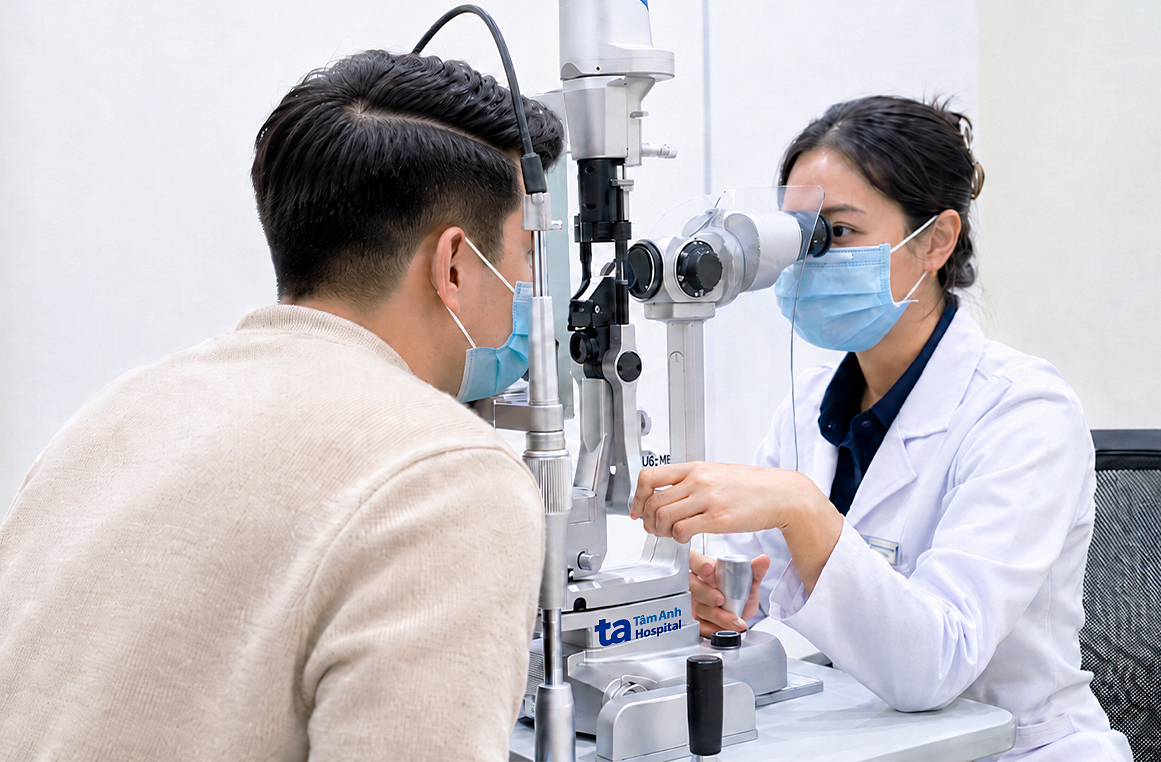 |
Dr. Nhi examines Anh Khang's eye. *Photo: Tam Anh General Hospital* |
Doctors performed an incision to drain the abscess and removed necrotic tissue. Due to the wound's depth, the patient required daily dressing changes and wound cleaning for three days, alongside prescribed antibiotics and anti-inflammatory medication.
During a follow-up one week later, the surgical wound showed good progress, free of swelling, redness, or pain. Doctors cautioned that spontaneously ruptured styes have a higher scarring risk than those surgically incised at a medical facility. Patients must maintain proper hygiene to prevent wound infection or stye recurrence. They should avoid rubbing their eyes and wear protective glasses to guard against inflammatory agents such as hot weather and dust. Any signs of eyelid swelling, redness, pain, or pus warrant immediate hospital evaluation.
An eyelid abscess is a soft tissue infection, often resulting from bacterial invasion through lesions like styes, chalazia, dacryoadenitis (inflammation of the lacrimal gland), or trauma. Hot weather and dusty environments increase the risk of developing styes and chalazia. Styes are acute inflammations of the eyelid margin glands, causing swelling, redness, pain, and potential pus formation. Chalazia stem from blocked oil glands, typically less painful but leading to a foreign body sensation and discomfort.
Doctors recommend maintaining eye hygiene, avoiding eye rubbing, thoroughly removing makeup, and not sharing face towels. If eyelid swelling, pain, or an unusual lump occurs, individuals should seek prompt medical attention. Self-squeezing or puncturing styes or chalazia is strongly discouraged, as it can spread infection and lead to an abscess.
Ngoc Kim Tham
*Patient's name has been changed
| Readers can submit ophthalmology questions here for doctors to answer. |