On 30/3, doctors at Cam Khe Medical Center treated a 39-year-old father and his 9-year-old son after they sustained hundreds of honey bee stings. The father received 200 stings, and the son 80. This incident represents the most severe bee sting case the Department of Emergency, Intensive Care, and Anti-poisoning has ever handled, according to Doctor Nguyen Hong Nhung.
Upon arrival at the hospital, both patients exhibited chills, difficulty breathing, rapid pulse, and low blood pressure. They reported severe pain in the stung areas, which were red and swollen, with some dark, necrotic spots. Doctors initiated emergency treatment following anaphylaxis protocol, focusing on removing bee venom from their skin. Fortunately, both individuals overcame the critical period.
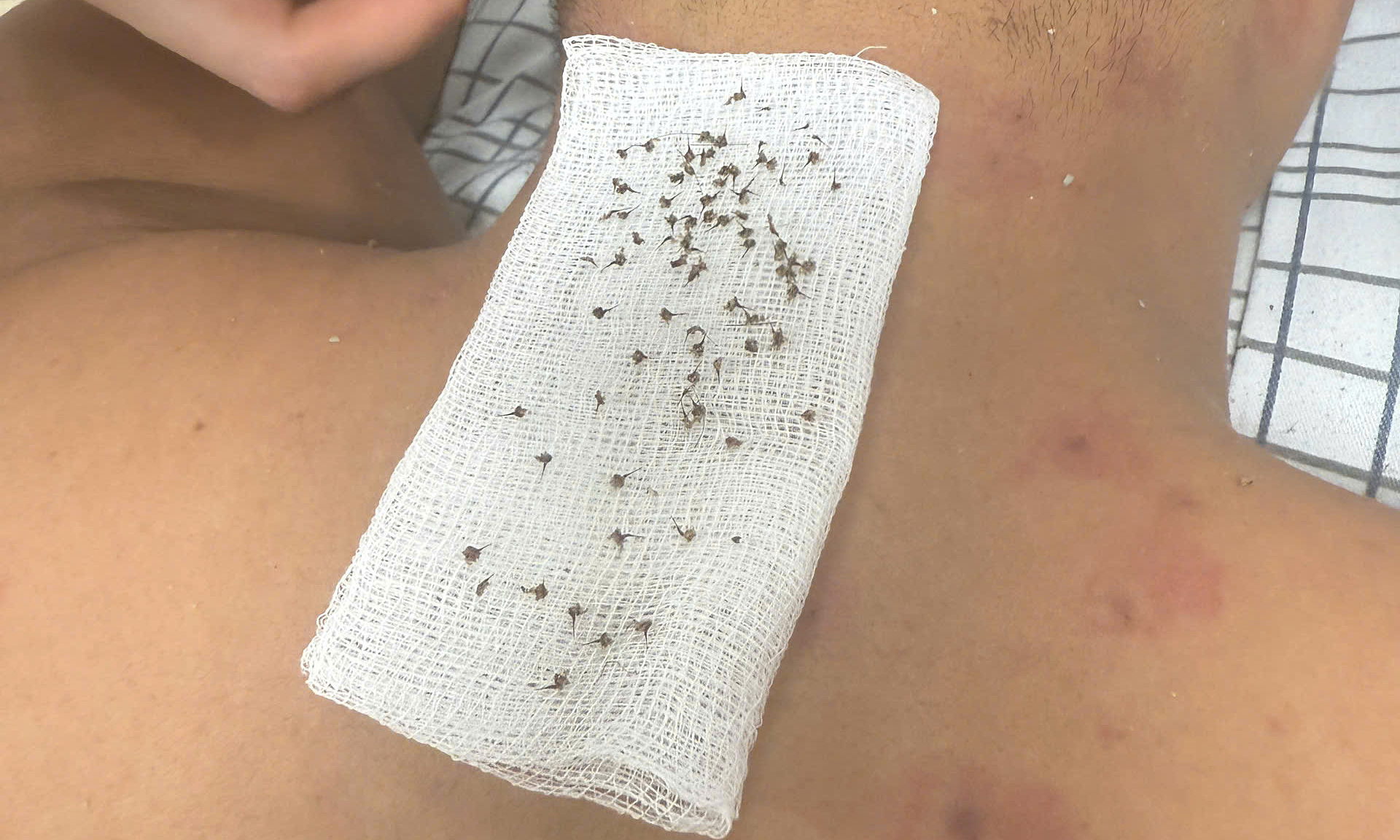 |
Doctors removing bee venom from the patient's skin. *Photo: Hospital provided.* |
Anaphylaxis is a severe allergic reaction that can manifest within seconds to hours, potentially leading to rapid death if not treated promptly. Bee venom contains various toxins that can cause different complications depending on the severity of the exposure. "Mild cases involve pain, stinging, and swelling at the sting site. Severe cases can lead to allergies, anaphylaxis, difficulty breathing, low blood pressure, hemolysis, altered consciousness, kidney failure, multiple organ failure, and even death," said Doctor Van.
If stung by bees, it is crucial to remain calm and quickly move away from the area. The stinger should be removed gently by scraping it out or using tweezers, avoiding squeezing with fingers, which can spread the venom. Clean the stung area with soap and warm water, drink plenty of water to help flush out toxins, and apply a cold compress to reduce pain and swelling. Subsequently, seek immediate medical attention at the nearest healthcare facility for examination and treatment.
To prevent bee stings, never disturb bee nests. Regularly clean and clear dense bushes around your home to deter bees from nesting. When venturing into forests or going on picnics, avoid wearing brightly colored or overly loose clothing, going barefoot, or using perfumes, shampoos, and other sweet-scented cosmetics, as these can attract bees. If contact with bees is unavoidable, wear protective gear such as thick clothing, a hood, and glasses to minimize the risk of stings.
Thuy An