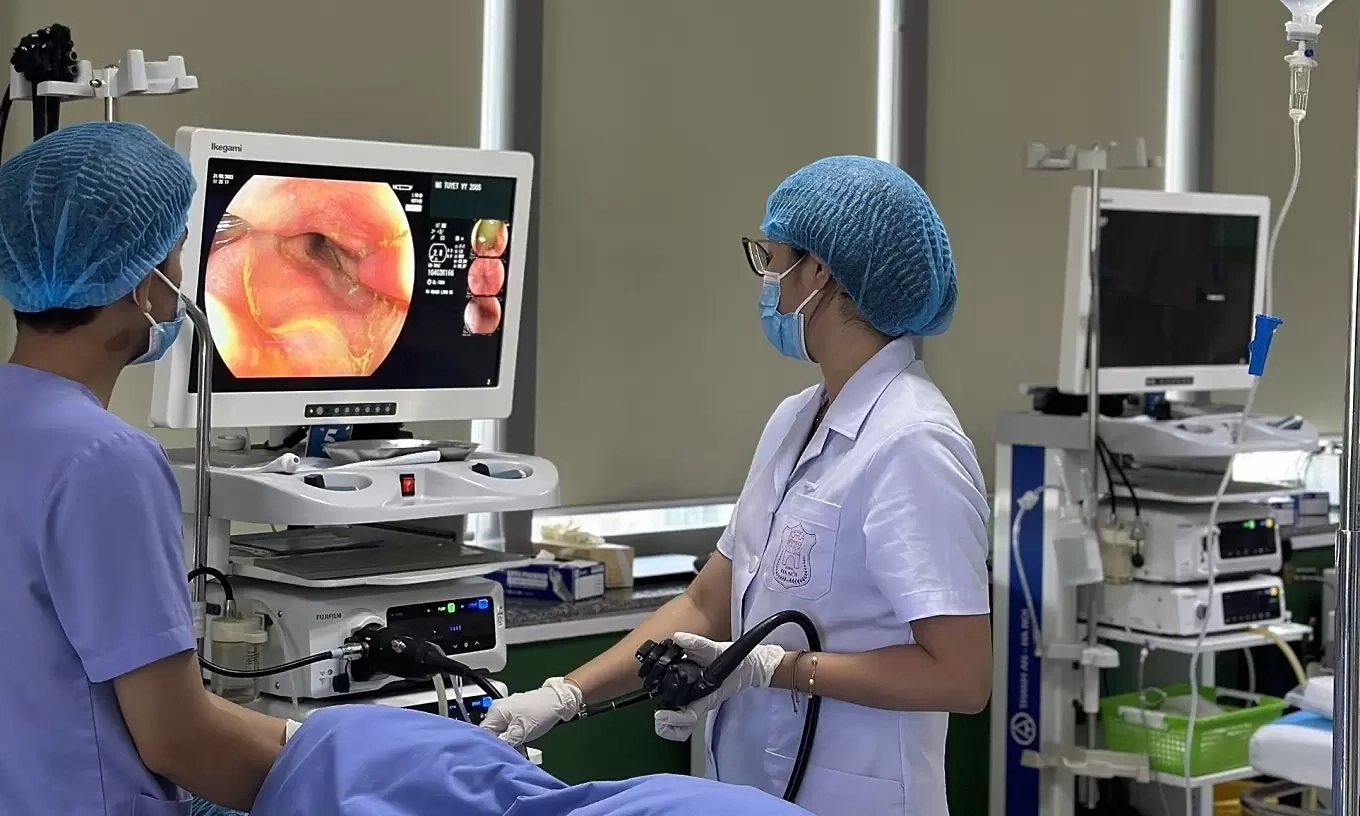
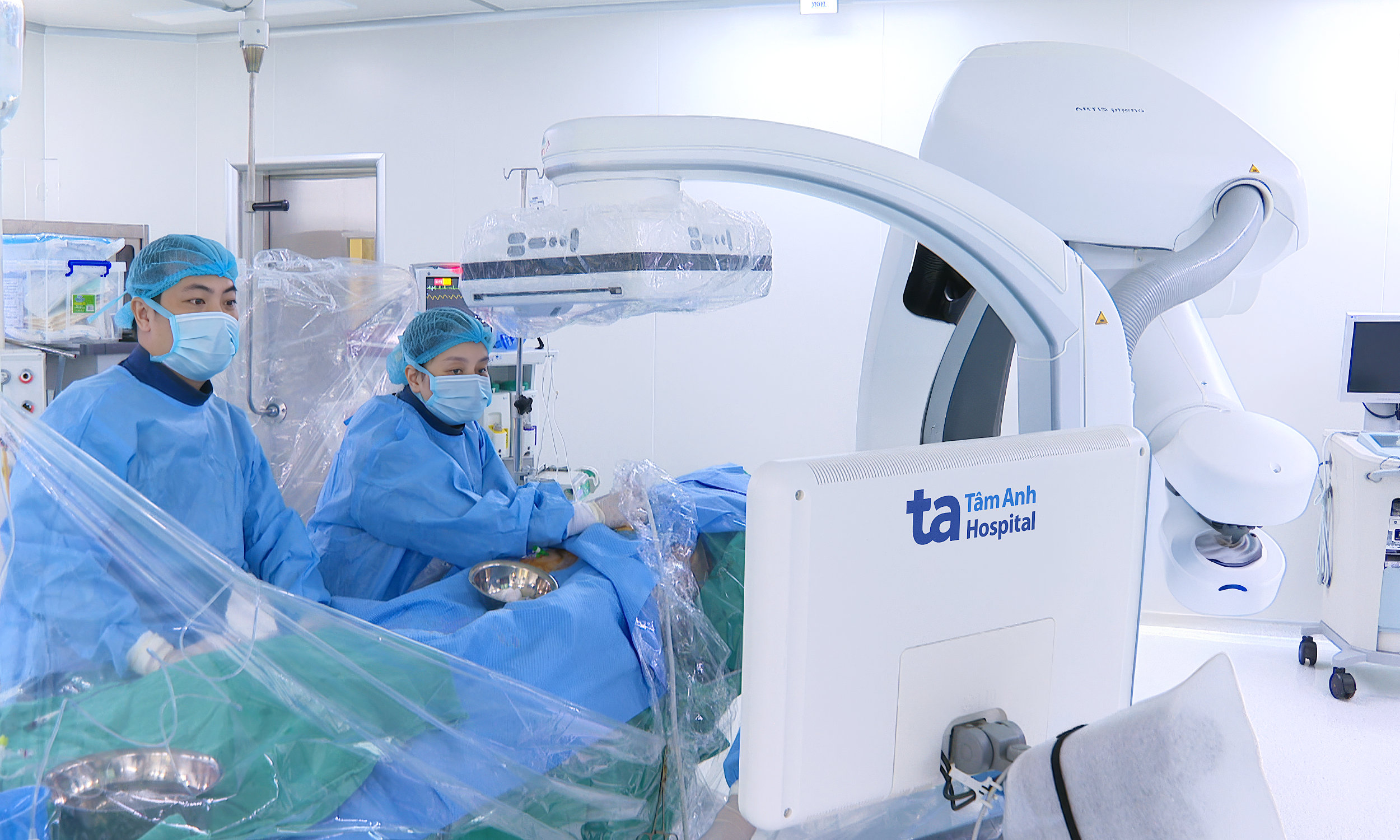
Five years ago, Ms. Nhuong was diagnosed with thyroid nodules. Subsequent follow-ups for three consecutive years indicated they were benign, leading her to skip check-ups for the past two years. During a recent routine health examination at Tam Anh General Hospital Ho Chi Minh City, an ultrasound revealed numerous nodules in both thyroid lobes, the largest measuring 1.5x1.2 cm, with microcalcifications and irregular borders. She also presented with multiple swollen lymph nodes on both sides of her neck, the largest measuring 1.8x1.2 cm, with rough borders. A fine needle aspiration (FNA) guided by ultrasound on the left thyroid nodule and a cervical lymph node confirmed metastatic thyroid cancer to the cervical lymph nodes.
Dr. Huynh Ba Tan, from the Department of Surgical Oncology at the Oncology Center, suggested that Ms. Nhuong's thyroid nodules likely developed silently during the two years she missed follow-up appointments, allowing cancer cells to proliferate and invade the lymph nodes in her neck. However, he noted it is also possible that a malignant tumor appeared alongside benign ones but was small and obscured by the benign nodules, thus not detected by ultrasound.
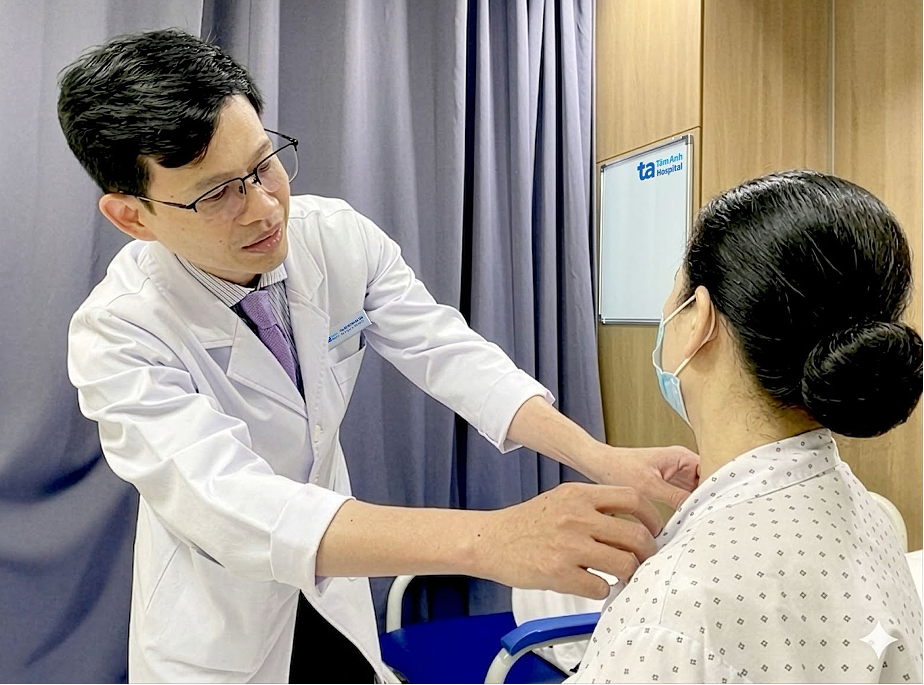 |
Doctor Tan examines Ms. Nhuong after surgery. Photo: *Tam Anh General Hospital* |
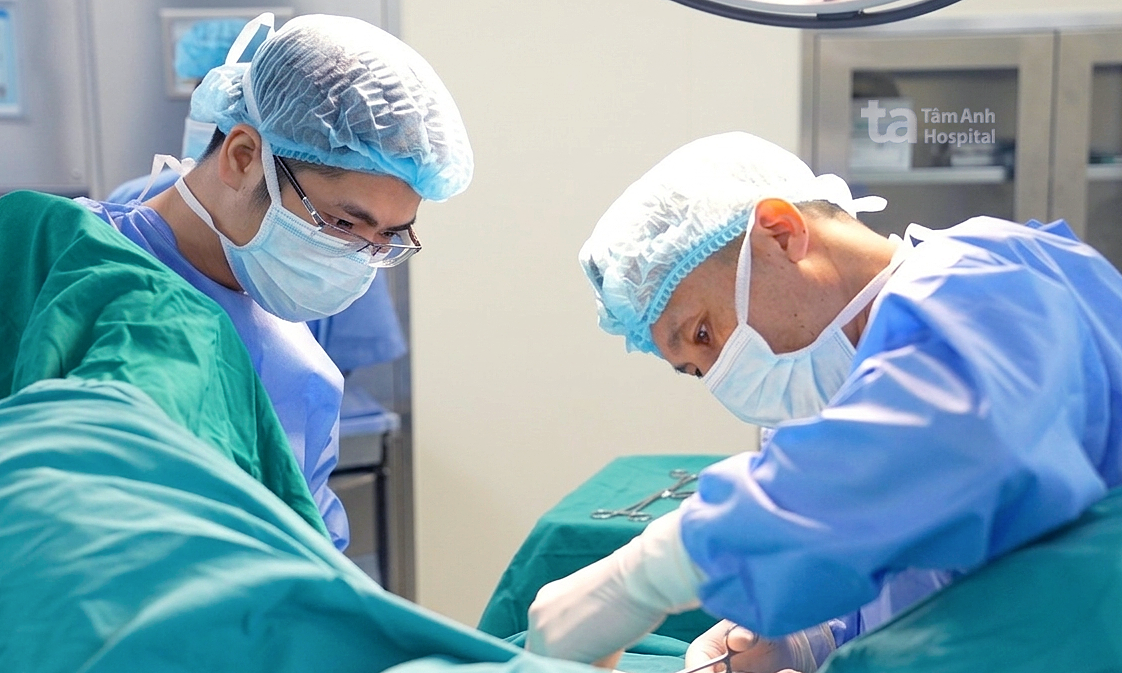
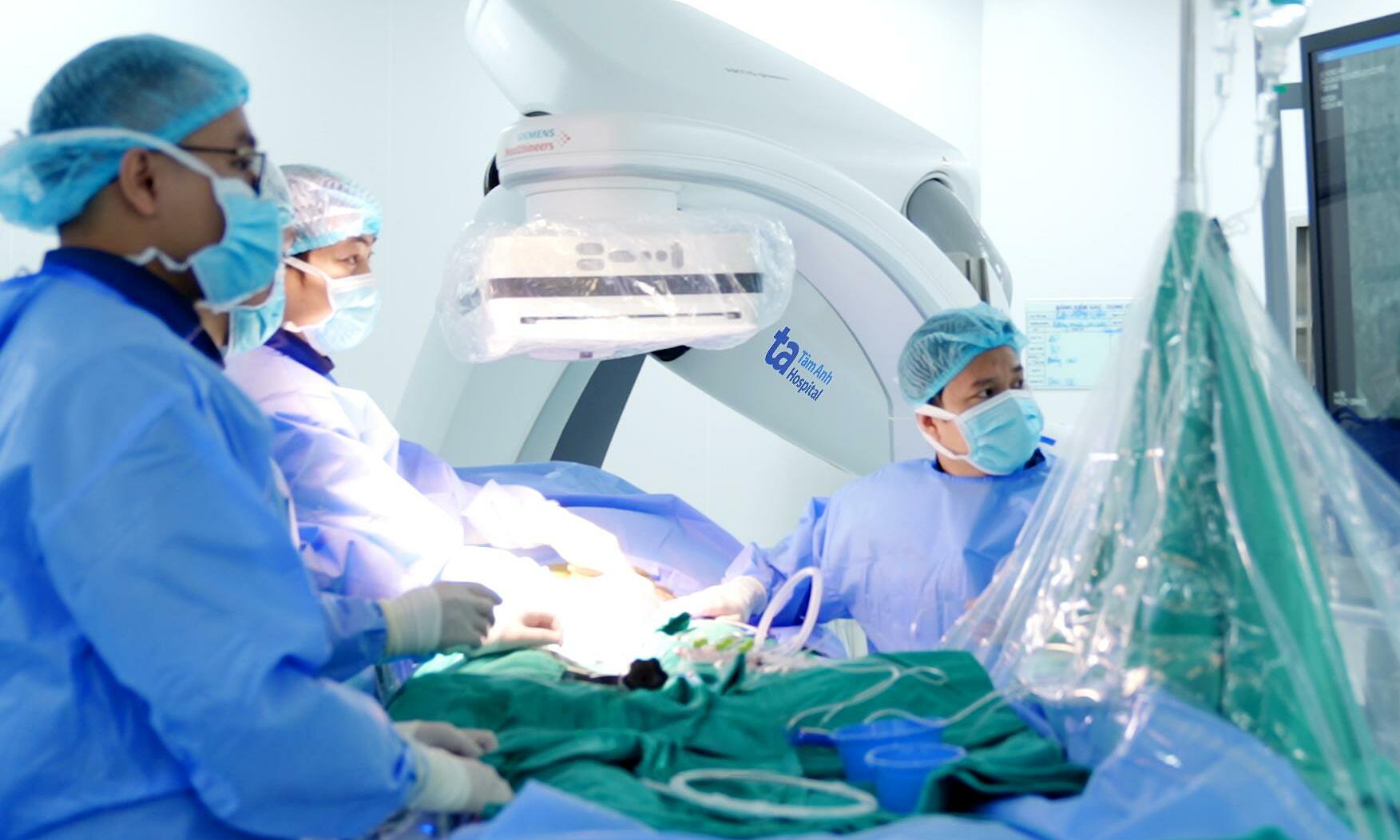
The patient underwent surgery for a thyroidectomy and cervical lymph node dissection, with careful preservation of the laryngeal nerve and parathyroid glands.
According to Dr. Tan, metastatic cancer involving multiple cervical lymph nodes with deep invasion increases the risk of chyle leakage during dissection. Chyle, a milky white lymphatic fluid rich in fat, protein, and immune cells, can leak if the thoracic duct is damaged. The thoracic duct, with its thin walls, is often embedded in surrounding fatty and connective tissue and tightly adhered to by cancerous lymph nodes, making it difficult to discern. This poses a risk of rupture during surgery, which could lead to fluid leakage into the surgical wound and impair the immune system. The surgical team meticulously identified the thoracic duct, separated the lymph nodes from it, and then removed them.
Following the surgery, the patient recovered well, experiencing no chyle leakage, hoarseness, or numbness in her hands or feet. She continued her treatment with radioactive iodine, followed by thyroid hormone medication.
Thyroid nodules encompass various types, including thyroid cysts, thyroid nodules, and thyroiditis. Most thyroid nodules are benign and rarely become malignant. However, Dr. Tan explained that some nodules initially appear benign but actually contain low-grade cancer cells that may not be detected on ultrasound images or could be missed during a biopsy.
Thyroid cancer is common and has a high cure rate. However, patients with lymph node metastasis face a high risk of recurrence and require radioactive iodine treatment after surgery. Doctors will determine the appropriate dosage for each patient.
Individuals with thyroid nodules, especially those with multiple nodules, should attend regular check-ups as scheduled by their doctor to detect any abnormalities and ensure timely treatment. Prompt examination is crucial if symptoms such as difficulty swallowing, hoarseness, shortness of breath, neck pain, or palpable neck lymph nodes occur. Depending on the condition, doctors may recommend monitoring, periodic thyroid ultrasound every 6-12 months, thyroid function tests, or a biopsy if necessary.
Nguyen Tram
*Patient's name has been changed
| Readers can submit questions about cancer here for doctors to answer. |