Ho Chi Minh City recorded over 8,000 cases of hand, foot, and mouth disease during the first three months of the year, which is twice as high as the same period last year and represents a 353% increase compared to the 5-year average. The proportion of severe cases, classified as grade 2B or higher, has risen 5 times. At central pediatric hospitals, 50% of severe cases are transfers from southern provinces, with many children suffering critical complications requiring dialysis and ECMO to fight for their lives.
Associate Professor Doctor Nguyen Vu Thuong, Deputy Director of Pasteur Ho Chi Minh City, attributes the current hand, foot, and mouth disease outbreak primarily to its approximate three-year epidemic cycle. Every 36 months, a new cohort of children enters preschool age, a group with almost no immunity, creating an "antibody gap" in the community. When this factor coincides with erratic weather and increased travel during the early year holidays, the risk of an outbreak increases sharply.
However, the immunity cycle is not the only factor. Doctor Thuong states, "gene sequencing data from Pasteur Ho Chi Minh City indicates that changes in the virus strain are the decisive factor."
In 2023, the south experienced a hand, foot, and mouth disease epidemic predominantly caused by the EV71 subgroup B5. During the current outbreak, from late 2025 to early 2026, subgroup C1 is dominant. International studies show that antibodies from patients infected with B5 have reduced protective capability against C1, meaning even children who previously contracted the disease remain at risk of reinfection with the new variant.
56% of hand, foot, and mouth disease samples in early 2026 were infected with the EV71 virus strain. This strain directly attacks the patient's central nervous system, increasing the risk of severe illness three times compared to common viruses.
 |
Associate Professor Doctor Nguyen Vu Thuong, Deputy Director of Pasteur Ho Chi Minh City, discusses epidemic prevention in Ho Chi Minh City on 29/3. Photo: Song Khue
From a clinical perspective, Doctor Nguyen Dinh Qui, Specialist Level 2, Head of the Department of Infectious Diseases at Children's Hospital 2, warns that "the devastation caused by EV71 is rapid." Within just 24 hours, a child can transition from continuous high fever unresponsive to antipyretics, to startled sleep and limb tremors—signs indicating brain damage has begun and immediate medical intervention is necessary.
Nearly 80% of EV71 cases are in children under three years old, making daycare centers and kindergartens hotspots. The virus spreads quickly; one sick child can infect one to five other children, even during the asymptomatic stage. Additionally, about 50% of adults infected with the virus show no symptoms, inadvertently becoming silent carriers for children through daily activities.
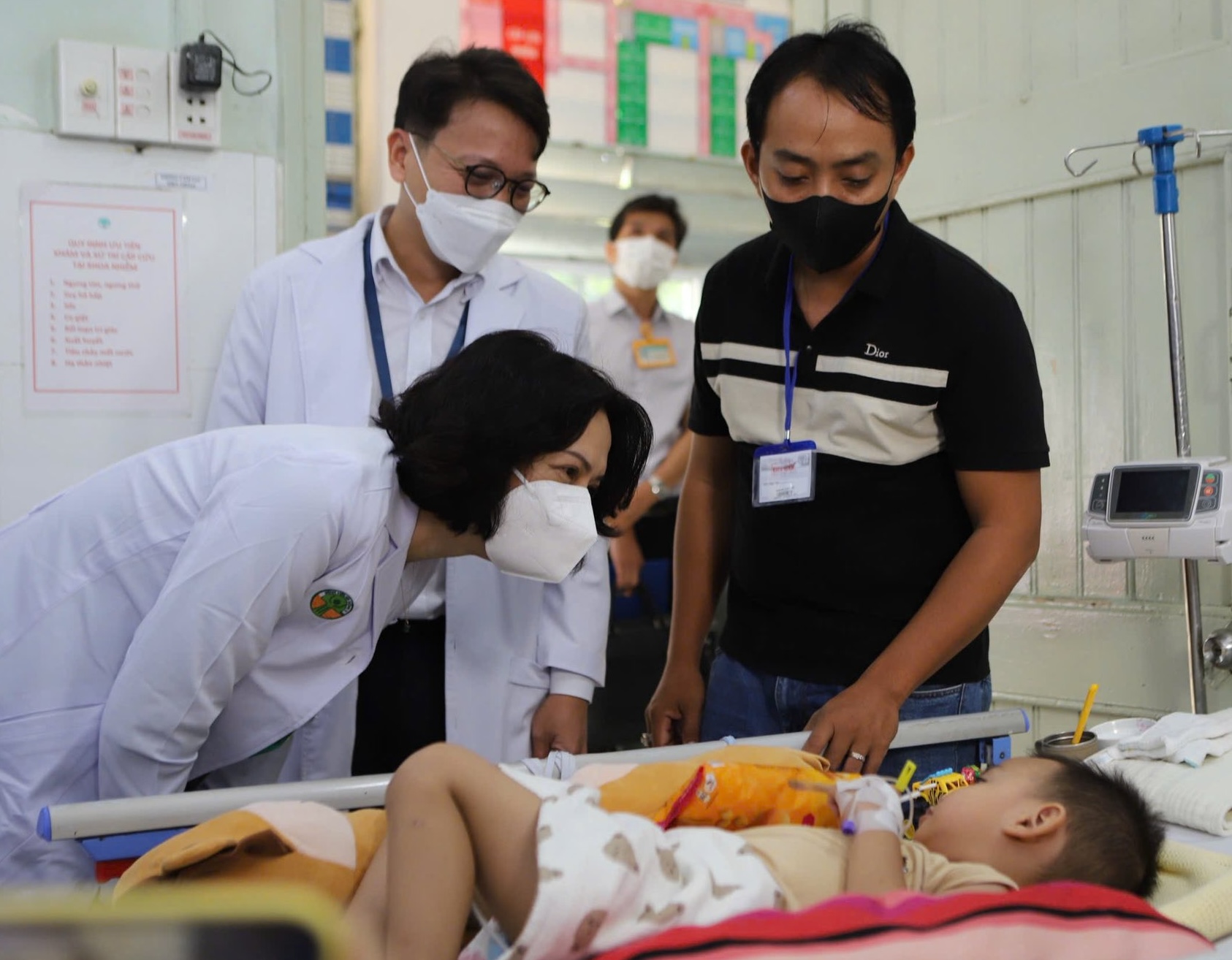 |
Deputy Minister of Health Nguyen Thi Lien Huong visits a child with hand, foot, and mouth disease at Children's Hospital 2, on 29/3. Photo: Ha Quyen
Hand, foot, and mouth disease primarily spreads via the gastrointestinal tract and direct contact with secretions, blisters, or contaminated objects. Infected children typically present with symptoms such as fever, mouth sores, and blisters on the palms, soles, buttocks, or knees.
Since it is challenging to intervene with the natural immunity cycle or the hot, humid weather that facilitates disease spread, experts emphasize that the key to epidemic control lies in tightening hygiene and disinfection at home and in schools. Most importantly, parents must seek medical attention immediately if a child has a fever for two days that does not subside or shows signs of being startled, disoriented, lethargic, irritable, limb tremors, frequent vomiting, or an unsteady gait, to prevent fatal complications in time.
Le Phuong