Vomiting blood is a serious surgical emergency symptom, requiring immediate medical attention regardless of the cause. While it can be a warning sign of cancers such as stomach or esophageal cancer, it often stems from various benign conditions. Therefore, it does not automatically indicate late-stage cancer or that treatment options are exhausted.
Most cases of vomiting blood are caused by benign medical conditions. These include peptic ulcers, acute gastritis, esophageal varices, esophageal burns, esophageal tears from alcohol consumption, and acute esophagitis. These conditions, though serious, are typically treatable.
However, if vomiting blood is accompanied by specific symptoms, it may signal a higher risk of cancer. These warning signs include rapid, unexplained weight loss, persistent dull abdominal pain, a palpable mass in the upper abdomen, difficulty swallowing, or black stools. Anyone experiencing these symptoms alongside vomiting blood should seek urgent medical evaluation.
It is especially dangerous when high-volume fresh blood is vomited, accompanied by dizziness, sweating, a rapid heartbeat, or fainting. In such instances, emergency medical care is critical.
To accurately diagnose the underlying condition, doctors typically perform a gastrointestinal endoscopy. This procedure is considered the "gold standard" as it allows doctors to directly observe the internal organs, pinpoint the precise location of the bleeding, and take a biopsy sample if cancer cells are suspected.
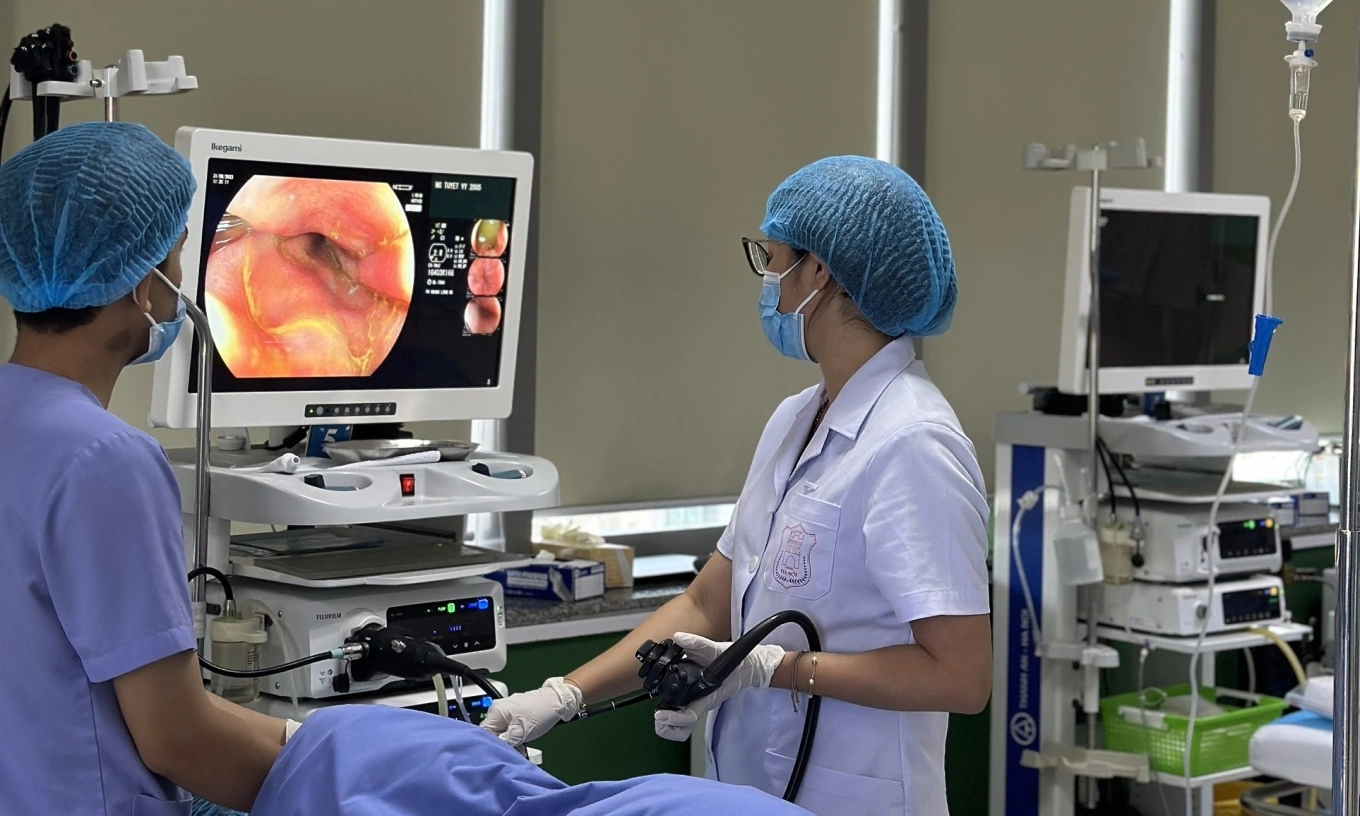 |
A doctor performing an endoscopy on a patient. *Photo: Supplied by doctor*
Doctor Ngo Van Ty
Oncology Department, Hanoi Medical University Hospital