Ms. Ha's filamentary keratitis initially stabilized with treatment but later recurred, worsening over the past two months and making it difficult for her to open or close her eye. According to Master of Science, Doctor Le Thanh Huyen from the High-Tech Eye Center at Tam Anh General Hospital, filamentary keratitis occurs when tear production decreases or tears evaporate too quickly. This deprives the corneal surface of essential moisture, leading to damage of the corneal epithelium. Dead cells combine with mucus to form these "filaments" that adhere to the cornea, causing a gritty sensation, light sensitivity, red eyes, and tearing. Opaque white crystals may be observed when light is shone into the eye, sometimes causing a burning sensation, glare, and continuous tearing. As the epithelium becomes more damaged, tears evaporate faster, exacerbating dry eyes and advancing filamentary keratitis.
Prolonged filamentary keratitis poses several potential complications. Continuous shedding of the corneal epithelium can, over time, impair its self-healing ability, creating a favorable environment for bacteria, virus, or fungi to invade. This can lead to secondary keratitis or corneal ulcers. In severe cases, imperfect epithelial regeneration may result in corneal scarring, which can blur or deform the corneal surface and directly impact vision, especially if filaments adhere to the central cornea. This complication not only causes discomfort but may also necessitate surgical intervention or even corneal transplantation to restore vision.
 |
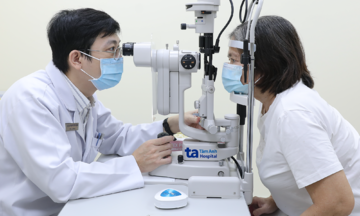
A doctor examines Ms. Ha's eye. Photo: Tam Anh General Hospital |
Ms. Ha's condition had persisted for a long time, increasing her risk of complications. Doctor Huyen prescribed a punctum plug procedure to block the tear ducts, allowing tears to remain on the eye longer. This was combined with the use of artificial tears to reduce irritation and protect the cornea.
After evaluating the size of the punctal opening, the doctor selected an appropriate plug type for insertion into the punctum of the lower eyelid. The procedure is simple, minimally invasive, and performed quickly in the clinic. At her follow-up appointment after two weeks, Ms. Ha's eyes were less red, less dry, and no longer felt irritated. Doctor Huyen noted that even with controlled filamentary keratitis, Ms. Ha still requires monitoring and follow-up appointments as prescribed, because punctum plugs can dislodge after some time, especially with frequent eye rubbing.
Dry eyes can progress beyond discomfort to conditions like filamentary keratitis and superficial punctate keratitis, leading to corneal damage and directly affecting vision. According to Doctor Huyen, artificial tears are a basic and safe method for treating dry eyes. Unlike conventional eye drops, artificial tears mimic the structure of natural tear film, supplementing the mucus, water, and oil layers to maintain long-lasting moisture. Patients can also use warm compresses on their eyes and maintain environmental humidity at approximately 45-60% to prevent dry eyes.
Khue Lam
| Readers can submit questions about ophthalmic diseases here for doctors to answer. |