Spinal disc degeneration is a condition where the intervertebral discs lose their natural elasticity and shift from their original position. It most commonly affects the cervical (neck) and lumbar (lower back) spine. This condition can lead to arthritis and complications such as spinal stenosis.
Doctor Nguyen Duc Anh, Head of Neurosurgery and Spine Department at Tam Anh General Hospital Hanoi, states that individuals with disc degeneration may experience pain during movements like twisting, and stiffness in the back after waking up. The pain can extend to the limbs, causing numbness and tingling. While degeneration is a natural bodily process, lifestyle adjustments can significantly help slow the progression of spinal disc degeneration.
Adjusting sitting posture
Proper sitting posture reduces pressure and strain on the spine. Conversely, poor posture increases stress on joints and surrounding muscles, accelerating degeneration and potentially leading to spinal curvature and other related conditions.
Individuals with spinal disc degeneration should choose chairs and desks that suit their back length and reach. When working, keep elbows at a 90-degree angle to the arms and sit with a straight back. Position the computer monitor at eye level to avoid tilting the head down or looking up. Ensure feet are flat on the floor to reduce strain on the back.
Avoid overly soft or sunken chairs, and ensure your backrest provides firm support. Placing a small pillow behind your lower back can provide additional comfort for your spine.
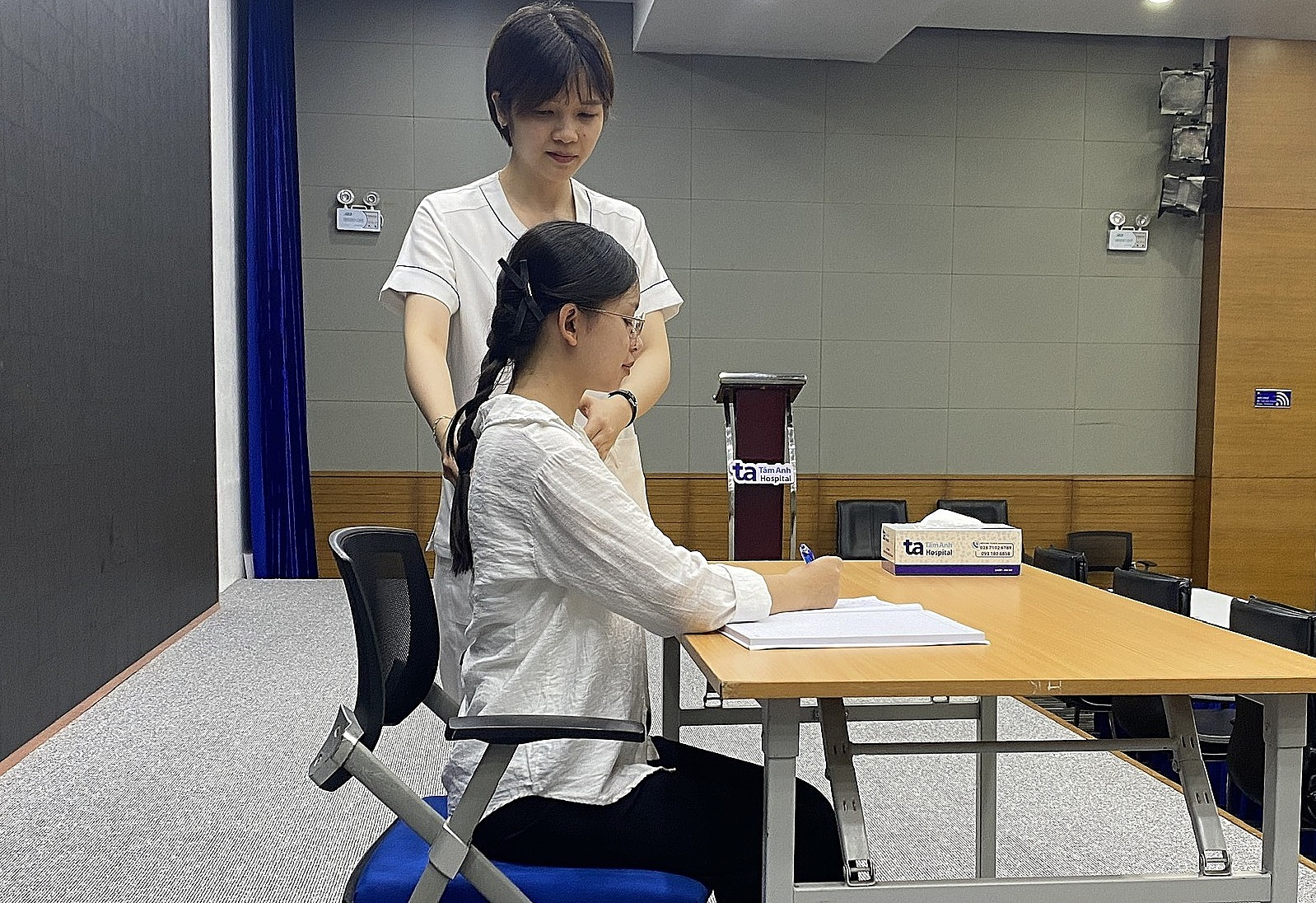 |
Sitting with correct posture protects and prevents spinal degeneration. *Illustration: Tam Anh General Hospital*
Those with spinal disc degeneration should frequently change sitting positions, alternating between sitting upright and leaning back. Limit leaning forward, as this increases pressure on the discs. Avoid crossing your legs, which can negatively affect the spine. Keep your feet flat on the floor, using a footrest if needed, to help your spine relax.
Exercise
Full-body stretching and walking exercises can help prevent disc degeneration from progressing. Doctor Duc Anh advises patients to walk for 30 minutes or engage in other full-body physical activity about five times each week to enhance overall health.
Cycling and swimming are suitable for individuals with disc degeneration, as these activities engage core muscles that stabilize the spine. Water exercises can reduce pressure on the spine and joints, offering significant benefits. Practicing yoga, lower back exercises, and back stretches can further improve spinal strength and overall health.
Maintaining a healthy weight
Excess weight places strain on the body's muscles, bones, and joints, including the intervertebral discs. Overweight or obese individuals should aim to lose weight and maintain a healthy body weight to help manage the condition.
Dietary changes
Doctor Duc Anh advises incorporating foods and supplements that support the musculoskeletal system and strengthen the discs. Patients should prioritize items such as: cod liver oil, caviar, spinach, oysters, various fish (flounder, salmon, mackerel, anchovies, herring), almonds, radishes, chestnuts, papaya, avocado, and broccoli. These nutrient-rich foods are beneficial for disc health and can help prevent spinal degeneration and bone spurs.
Comfortable sleeping posture
During sleep, the muscles, tendons, and ligaments surrounding the spine relax and rest. Therefore, use a supportive mattress and pillow to ensure spinal comfort. Develop a habit of maintaining a natural spinal alignment while sleeping. If you sleep on your back, place a pillow under your knees; if you sleep on your side, position a pillow between your knees. This helps relax the hips and back.
Thuan Le