On the 6th day of Tet, Linh's one-year-old youngest child suddenly developed a persistent high fever. Before she could fully process this, her husband and mother-in-law, who live in Dong Da, also fell ill, suffering from severe coughs and aching joints.
"Caring for three sick family members simultaneously was exhausting," the 35-year-old mother shared. "Coming home to apartment walls and floors constantly dripping with condensation, and clothes taking a whole week to dry, left me utterly frustrated, to the point of tears."
In Ha Dong, Minh's family experienced a similar debilitating situation. Concerned about the persistent humidity, he and his wife kept all windows tightly shut to prevent moisture from entering. This seemingly cautious habit inadvertently transformed their sealed apartment into a breeding ground for bacteria.
On the evening of 25/2, Minh's two children developed fevers exceeding 39 degrees C. By the next morning, both he and his wife were suffering from headaches and extreme fatigue. "Initially, I thought my children just had a common cold," the auditor explained, "but I never expected the entire family to be down in just one night." After an examination at Benh vien Nhi Ha Noi, doctors diagnosed the family with influenza and pharyngitis, prescribing medication for home treatment.
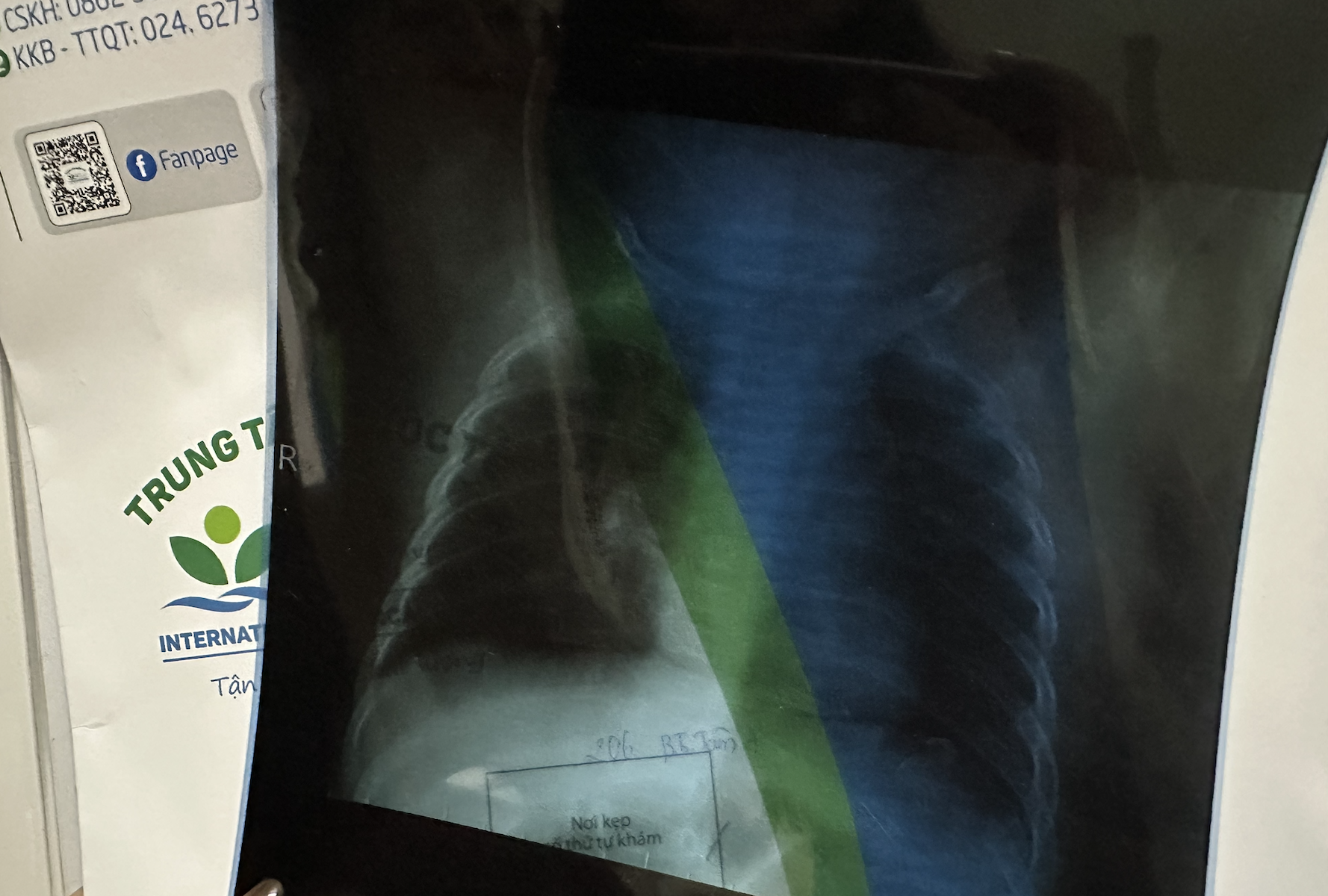 |
Linh's child's lung X-ray confirmed mild pneumonia, accompanied by otitis media with effusion and a severe cough, necessitating hospitalization. Photo: Provided by interviewee.
Following the 2026 Tet holiday, Ha Noi's clinics and hospitals have seen a surge in patients seeking treatment for respiratory illnesses. Specifically, major hospitals including Benh vien Nhi trung uong, Benh vien Nhi Ha Noi, Benh vien E, and Benh vien Tai Mui Hong, reported a 10-15% increase in flu cases compared to the previous month.
This surge is partly attributed to the sudden and erratic weather shifts in northern Vietnam, characterized by prolonged humidity followed by dry, sunny spells, with temperatures fluctuating 5-10 degrees C in a single day. "The unique transitional weather of northern Vietnam, alternating between humid and dry conditions and rarely stable, creates an ideal environment for viruses to proliferate," stated Doctor Phan Ngoc Minh, former Head of the Ear, Nose, and Throat Department at Benh vien da khoa Phu Tho. A study in the journal PLOS Pathogens supports this, noting that influenza viruses transmit most effectively in cold, dry conditions but persist considerably longer in humid air.
Doctor Vu Quoc Dat, Deputy Head of the Department of Tropical Diseases and Harm Reduction Intervention at Benh vien Dai hoc Y Ha Noi, echoed this sentiment, highlighting the post-Tet period as a critical time. He explained that unpredictable weather and high humidity foster flu outbreaks. Moreover, the return of people to Ha Noi after the long holiday, children returning to school, and widespread participation in crowded festivals with limited mask-wearing, all contribute to broad virus transmission.
Ha Noi's air quality index (AQI) has also consistently remained in the warning range of 140 to 160, significantly exceeding safe levels, further contributing to the rise in respiratory illnesses. The World Health Organization (WHO) states that humidity above 80% combined with polluted air creates an ideal environment for bacteria to multiply.
Doctor Nguyen Huy Hoang, an Internal Medicine specialist at the Vietnam Association of Underwater and Hyperbaric Medicine, warned that the current humid weather and significant temperature fluctuations pose a serious threat to three vulnerable groups: Children, especially those under 5 years old, are susceptible to severe illness, with risks of airway edema and superinfection. The elderly face a "double risk": musculoskeletal injuries from slippery floors, and acute cardiovascular events or strokes due to cold-induced vasoconstriction and elevated blood pressure. Furthermore, mold and dust mites can easily trigger dangerous complications in individuals with chronic conditions such as asthma, chronic obstructive pulmonary disease (COPD), and diabetes.
"Most concerning is the rampant spread of influenza strains, particularly influenza A (H1N1, H3N2), known for their continuous mutation and high infectivity," Hoang stated. "The disease can lead to devastating complications, such as acute pneumonia, threatening lives in a short period."
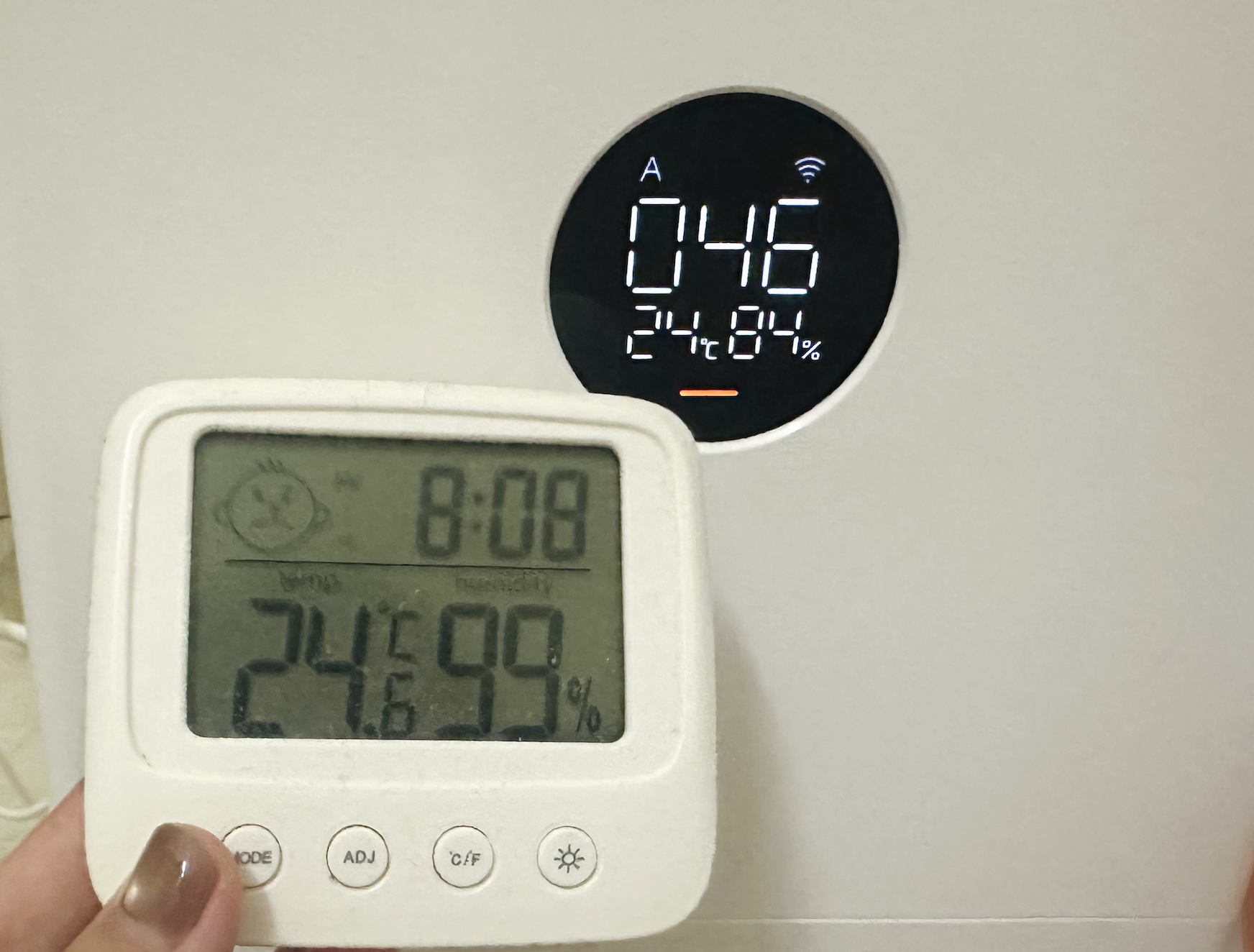 |
Air purifiers and dehumidifiers operate at full capacity due to humidity consistently exceeding 80%. Photo: Provided by interviewee.
To prevent severe outcomes, doctors advise against underestimating influenza. A crucial principle is to never self-administer antibiotics for home treatment. Patients must strictly adhere to medical protocols and immediately seek hospital care if severe symptoms, such as chest tightness, difficulty breathing, or paralysis, emerge.
By Thuy An