Many parents hold common misunderstandings about strabismus, or misaligned eyes, in infants. These misconceptions—that strabismus is always normal, that a child's misaligned eyes definitively mean they have the condition, that it doesn't affect vision, or that it will resolve on its own—can prevent early detection and appropriate treatment, potentially impacting a child's visual development. Distinguishing between these conditions helps parents know when their child needs an eye exam.
During the first few months of life, a baby's eye coordination is not yet fully developed, so their eyes may occasionally not align. This temporary misalignment is often normal. According to the American Academy of Pediatrics (AAP), babies under about four months of age may occasionally have misaligned eyes. However, if one or both eyes are frequently turned inward or outward after this period, the child needs to be evaluated. Parents should pay attention to the frequency and timing of its occurrence. If one eye is consistently misaligned, the condition becomes more noticeable, or it continues to occur frequently as the child gets older, parents should take their child for an eye exam.
Some children have pseudostrabismus, where their eyes are actually straight but appear misaligned. This condition is common in infants, especially when the bridge of their nose is low and wide, or if there are skin folds at the inner corner of their eyes near the nose. These features can partially cover the white part of the eye, creating the impression that the eyes are turned inward. According to the American Association for Pediatric Ophthalmology and Strabismus (AAPOS), pseudostrabismus often becomes less noticeable as a child's face develops. This condition does not require treatment if a doctor confirms that the eyes are truly aligned. However, parents may find it difficult to definitively distinguish between pseudostrabismus and true strabismus through home observation alone.
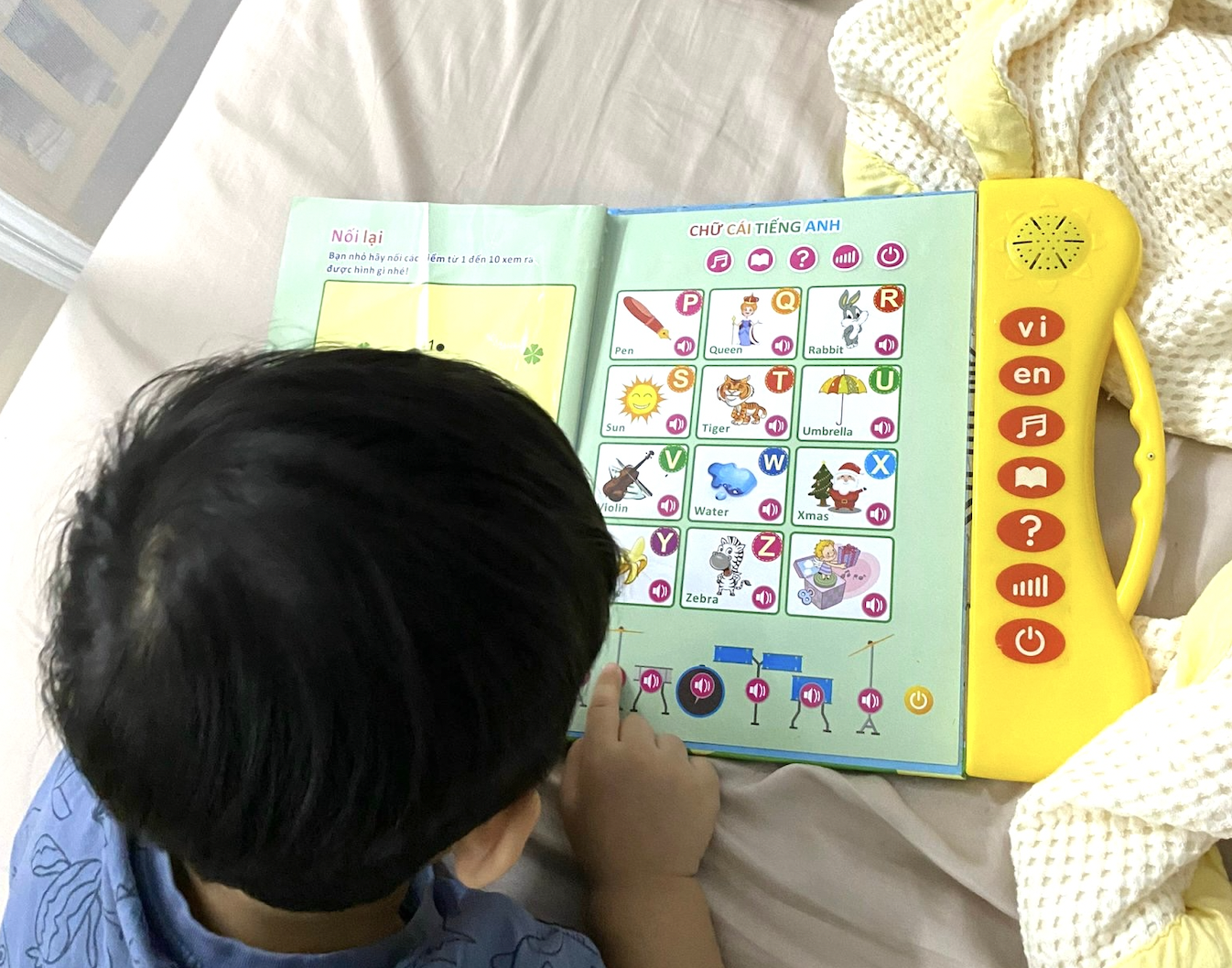 |
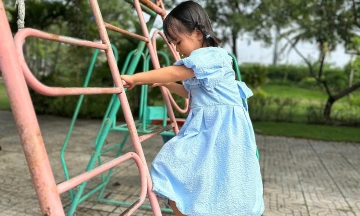
Children learning to read, an activity requiring coordination and clear vision from both eyes. *Photo: Thanh Hoa* |
True strabismus can affect vision development if not detected and treated properly. When the two eyes are not aligned, the brain may gradually suppress the image from the misaligned eye to avoid double vision. According to the American Academy of Ophthalmology, this can lead to amblyopia (lazy eye), causing the vision in one eye to develop less effectively than the other. The risk depends on the type of strabismus, the degree of misalignment, and its duration. Therefore, strabismus in young children should not be assumed to be merely a cosmetic issue. Early detection and treatment can help protect vision development.
The misconception that strabismus will resolve on its own often arises because pseudostrabismus can diminish as a child grows. However, this does not mean that all cases of true strabismus will resolve spontaneously. Parents should take their child for an eye exam if one eye is consistently misaligned, both eyes are frequently not aligned, strabismus becomes apparent after about four months of age, or the child shows unusual signs regarding their vision. Children also need to be evaluated if they do not track moving objects appropriately for their age or have difficulty maintaining eye contact.
An early eye exam helps doctors determine the cause and check vision and visual development. For children with strabismus, treatment methods depend on the cause, severity, and visual status, and may include wearing glasses, patching the eye for amblyopia, medication, or surgery in some cases.
Bao Bao (Compiled)
| Readers can submit questions about ophthalmic diseases here for doctors to answer. |