Schedule daily exercise
According to Health Shots, families can choose a fixed time for children to exercise, such as 30-60 minutes after school or before dinner. Children can run, cycle, play ball, jump rope, or engage in other age-appropriate physical games.
Parents do not need to require children to exercise continuously in one session. Short bursts of activity throughout the day are also beneficial. For young children, active play like running, climbing, and chasing also counts as physical activity.
Short distances offer children opportunities to walk instead of being driven. At home, children can put away their toys, get books, clear the table, or perform other tasks suitable for their abilities.
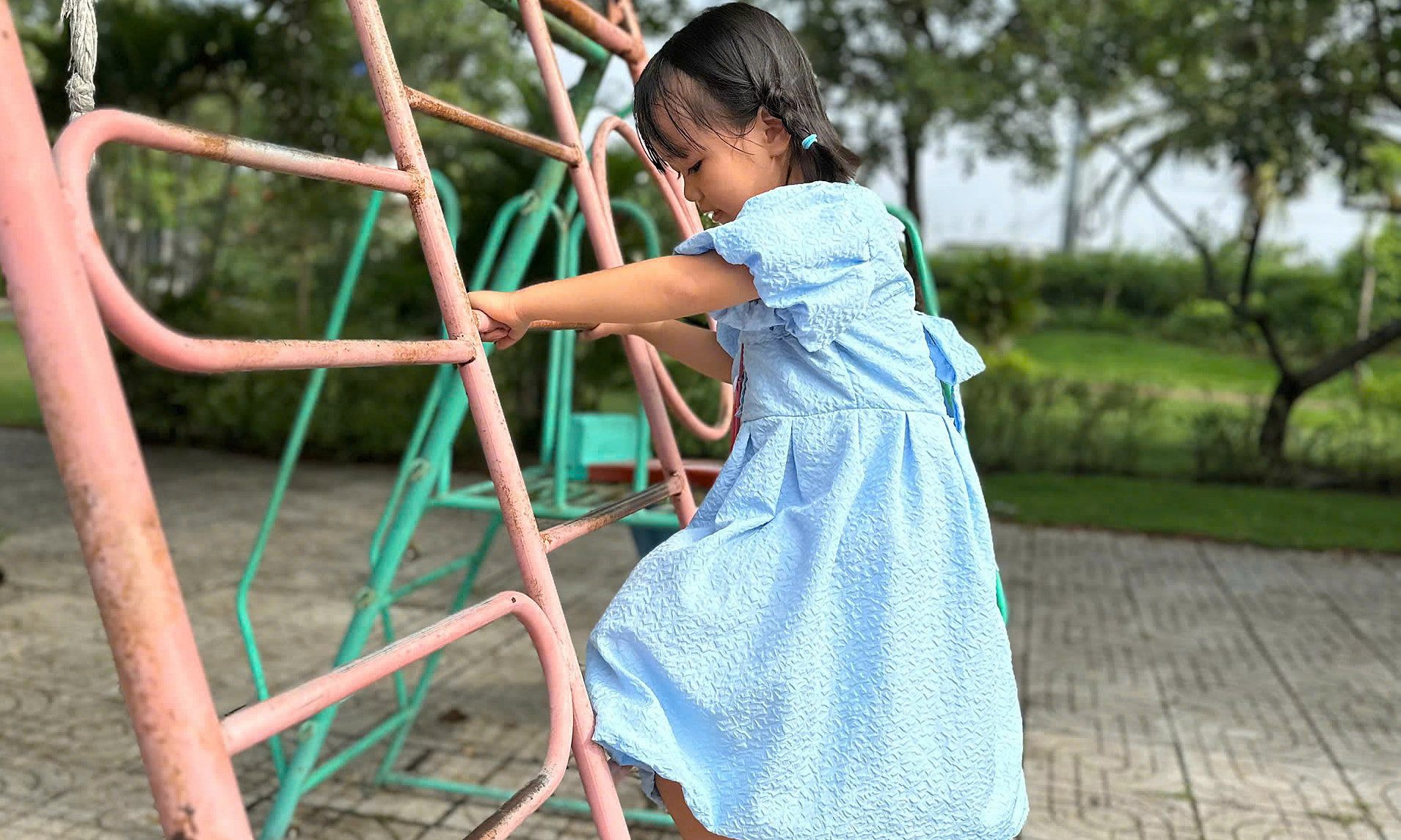 |
Daily exercise helps children develop physically and mentally. Photo: Kim Uyen |
Choose sports based on interests
Parents should not assume children must play soccer, swim, or participate in a specific sport. Children who enjoy water can learn to swim, while those who like running and jumping might enjoy soccer or badminton.
If a child is unsure of their preferences, families can let them try various activities for short periods. Afterward, observe if the child shows interest, can perform the techniques correctly, and wishes to continue.
Turn exercise into family activities
Instead of simply asking children to exercise alone, adults can participate. On weekends, families can walk in the park, cycle, play badminton, or throw a ball together.
During weekdays, parents can also spend 15-30 minutes engaging in active play with their children. For young children, games like chasing, kicking a ball, dancing to music, or simple obstacle courses in safe spaces can generate enthusiasm.
Limit screen time
If children spend most of their free time on phones, computers, or televisions, asking them to exercise more can be challenging. Families should set clear rules for the timing and duration of electronic device use, and prepare alternative activities.
For instance, after using devices, children can play outdoors, cycle, or participate in a game with family members. Phones should not become the default choice whenever children are free, according to Parents.
Regular exercise helps children strengthen muscles, bones, and motor skills. Activities such as running, swimming, cycling, or playing ball also develop coordination, balance, and reflexes. Exercise helps children expend energy, maintain a healthy weight, and improve physical fitness. When playing with friends, children have opportunities to learn coordination, follow rules, communicate, and respond to situations during play.
Le Nguyen (Compiled)
| Readers can send questions about childhood illnesses here to be answered by doctors. |