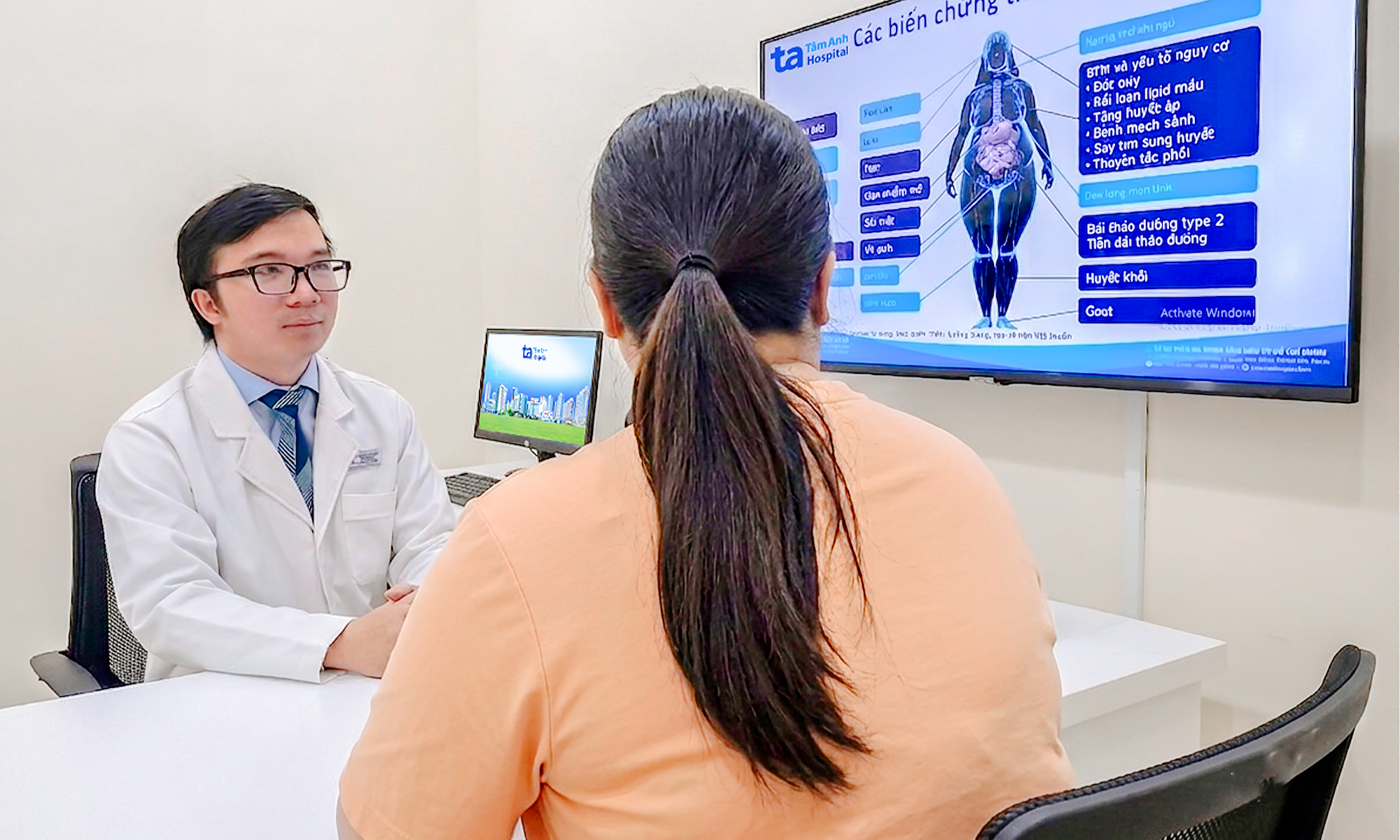
Endoscopy results at Tam Anh General Hospital in Ho Chi Minh City revealed Mr. Duc's gastric mucosa had diffuse congested inflammation, mucosal atrophy, and suspicious malignant lesions in the antrum. A biopsy performed during the endoscopy confirmed moderately differentiated gastric adenocarcinoma, a type of gastric cancer, with signs of invasion. CT images showed irregular thickening of the antral wall, a 13 mm ulcer with irregular borders, and numerous nearby lymph nodes.
Doctor Do Minh Hung, Director of the Center for Endoscopy and Gastrointestinal Endoscopic Surgery, prescribed resection of the stomach portion containing the tumor, combined with lymph node dissection. Gastric cancer tends to metastasize to lymph nodes early, so lymph node dissection helps accurately assess the disease stage and reduces the risk of recurrence.
In addition to gastric cancer, Mr. Duc also suffered from chronic obstructive pulmonary disease (COPD) and hypertension. After multidisciplinary consultation and optimizing the patient's health before surgery, doctors prescribed Da Vinci Xi robotic-assisted laparoscopic surgery.
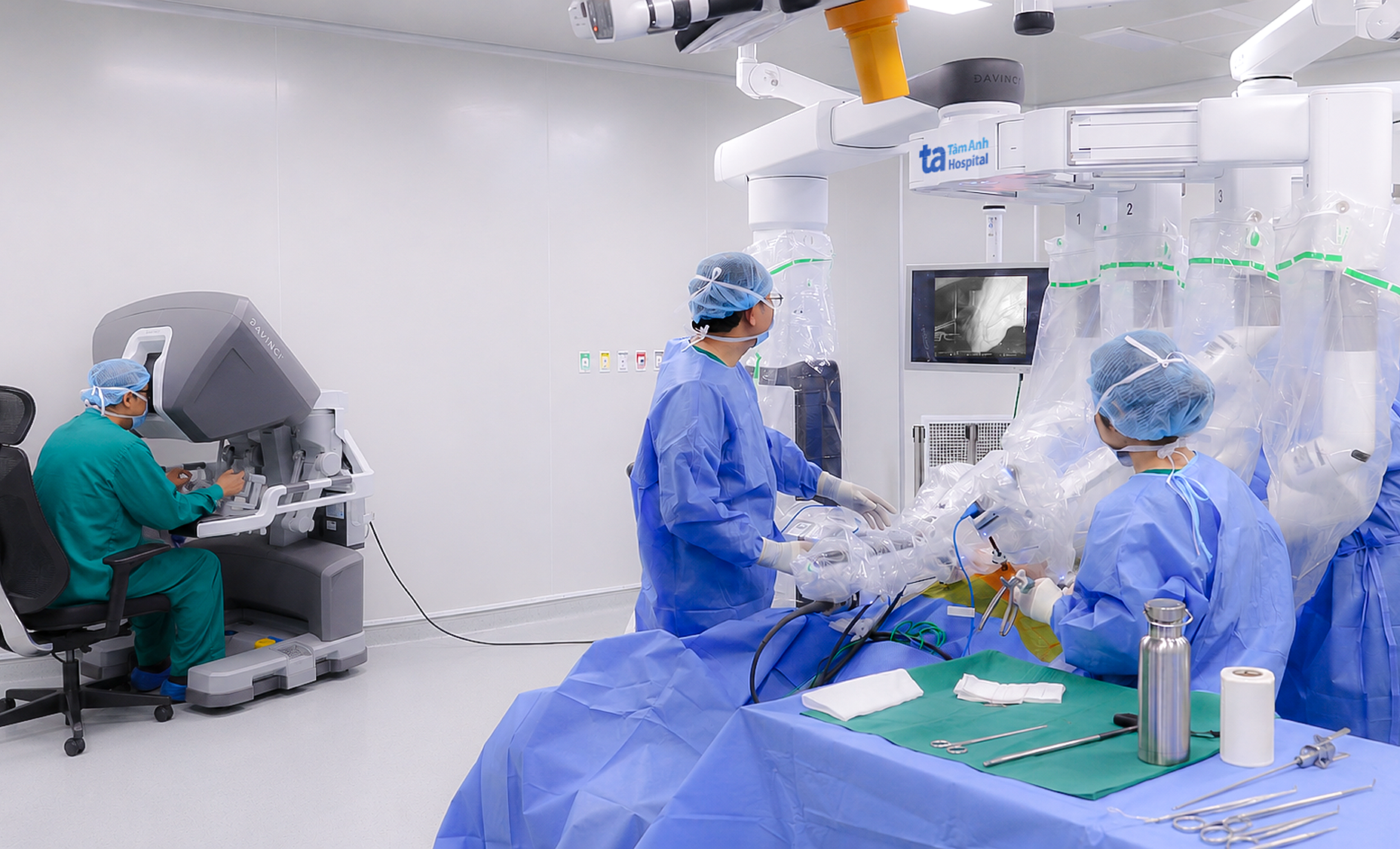 |
Doctor Hung controlling the robot to remove Mr. Duc's tumor. *Photo: Tam Anh General Hospital* |
Doctors controlled connected robot arms to perform dissection of the greater omentum, manage gastric blood vessels, and conduct lymph node dissection. The team removed all lymph node groups, then resected the tumor-bearing stomach section with a 5 cm margin from the tumor's edge, re-establishing digestive continuity through gastro-duodenal anastomosis.
According to Doctor Hung, the robotic system offers precise surgical assistance in confined spaces, thanks to high-resolution 3D images and flexible robot arms. This enabled the team to dissect deep lymph nodes around major blood vessels, enhancing precision, minimizing damage to healthy tissue, and reducing postoperative complications.
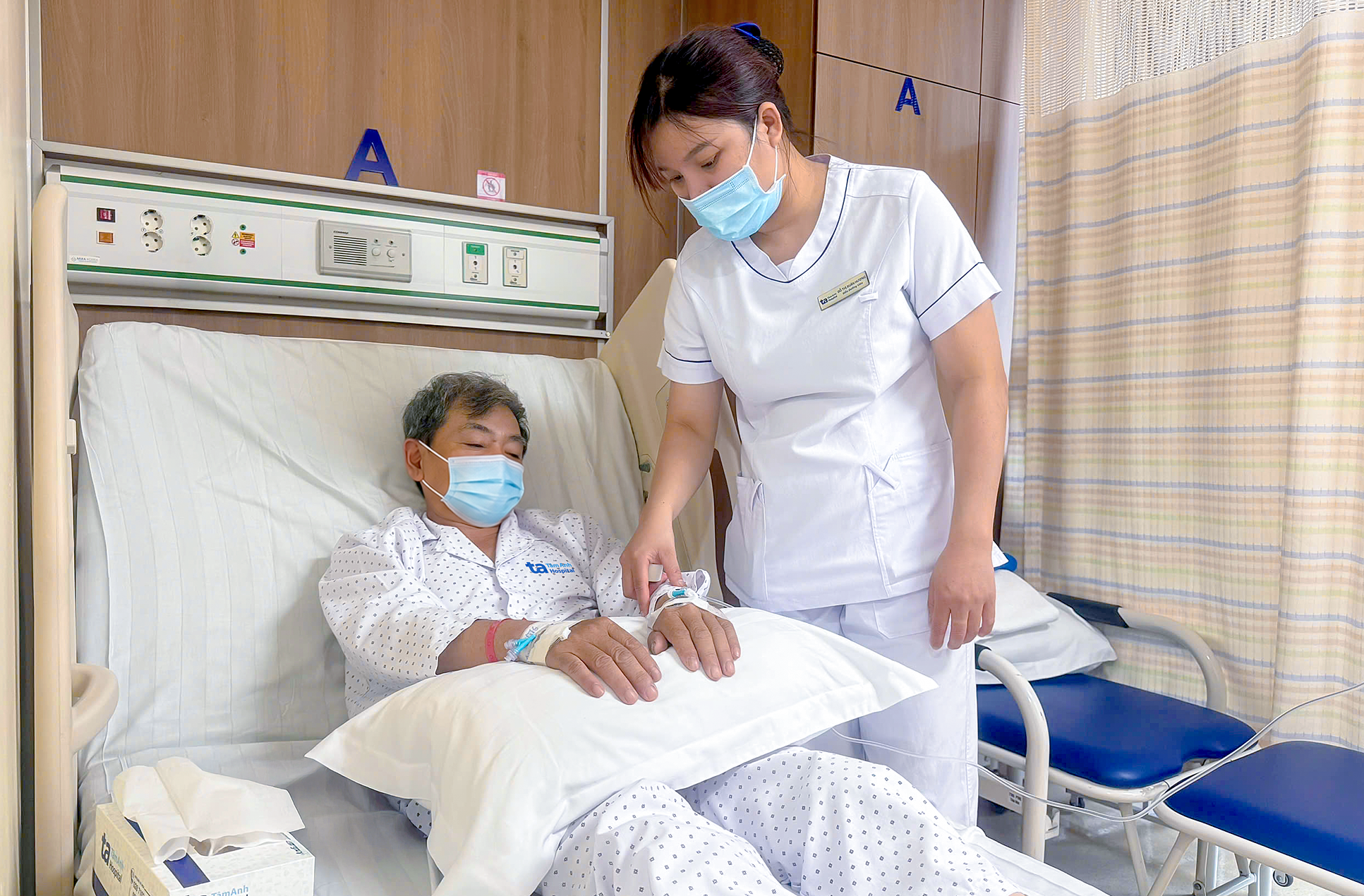 |
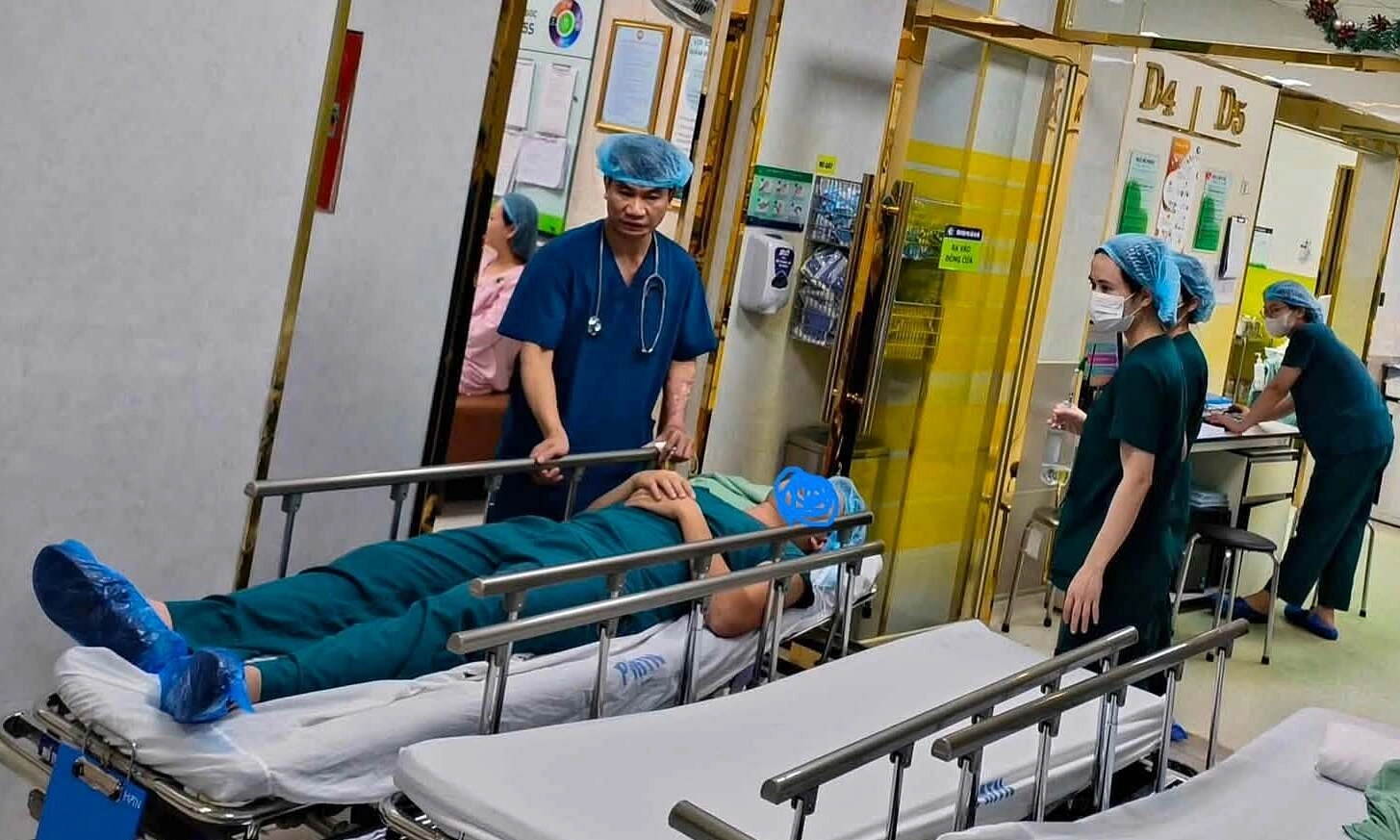
Mr. Duc receiving care from a nurse after surgery. *Photo: Tam Anh General Hospital* |
After surgery, Mr. Duc recovered well, walked after one day, started liquid food from day three, and was discharged after 5 days.
Postoperative pathology results confirmed stage 2B gastric adenocarcinoma. The tumor had invaded the subserosal layer but had not invaded blood vessels. All 27 removed lymph nodes were negative for cancer cells, and both resection margins were clear of malignant cells. The overall assessment indicated the patient underwent curative surgery, requiring no additional treatment.
Chronic gastritis rarely progresses to cancer, with a rate of approximately 1-2%, typically after a prolonged series of changes. Individuals with chronic gastritis, Helicobacter pylori (HP) infection, mucosal atrophy, or intestinal metaplasia have a higher risk of gastric cancer.
Early symptoms of gastritis and gastric cancer are quite similar, including epigastric pain, bloating, burping, and loss of appetite. Therefore, when endoscopy reveals ulcers or suspicious lesions, doctors often prescribe biopsy to avoid missing early cancer.
The earlier gastric cancer is detected, the better the prognosis. If diagnosed at stage one, the 5-year survival rate can reach 70-90%; at stage two, three, it drops to about 35-37%, according to Doctor Hung.
Individuals with a history of chronic gastritis, HP infection, mucosal atrophy, or intestinal metaplasia should undergo endoscopy as advised by their doctor. Persistent epigastric pain, bloating, weight loss, vomiting, or black stools require early examination to ensure effective treatment.
Quyen Phan
| Readers can submit questions about digestive diseases here for doctors to answer. |