Answer:
Patchy and deep-seated melasma are challenging pigmentary conditions to treat due to their high recurrence rate and influence from factors such as hormones, sun exposure, individual skin type, and aging. Treatment goes beyond just laser therapy; it requires a personalized plan for each patient. Depending on the type of melasma, the extent of damage, and the patient's skin condition, doctors combine topical medications, oral medications when necessary, strict sun protection, and appropriate technologies to achieve optimal results.
Your skin's sensitivity and tendency to redden after procedures are crucial factors doctors must consider when selecting treatment technologies. The goal is to improve pigmentation while controlling inflammatory responses and minimizing the risk of post-inflammatory hyperpigmentation. Laser remains important in melasma treatment. However, for lasting effectiveness and to reduce recurrence, it is often combined with topical and oral medications when needed, strict sun protection, and skin barrier restoration measures.
For pigmentation treatment, short-pulse 1.064 nm wavelength lasers, such as q-switched Nd:YAG or picosecond lasers, are effective options. These lasers break down melanin particles into tiny fragments that the body naturally eliminates via the macrophage system, thereby reducing pigmentation without damaging the skin's surface.
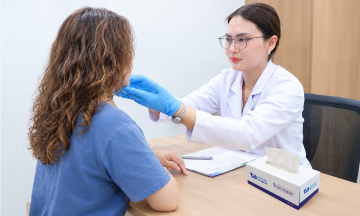
For individuals with sensitive skin or those prone to post-treatment redness, like yourself, doctors might incorporate laser 6D. This technology uses a long-pulsed 1.064 nm wavelength (long-pulsed Nd:YAG laser) with modes like Piano and Versa mode. It targets proliferating blood vessels, helping to reduce redness and inflammation, support basement membrane recovery, and improve overall skin condition.
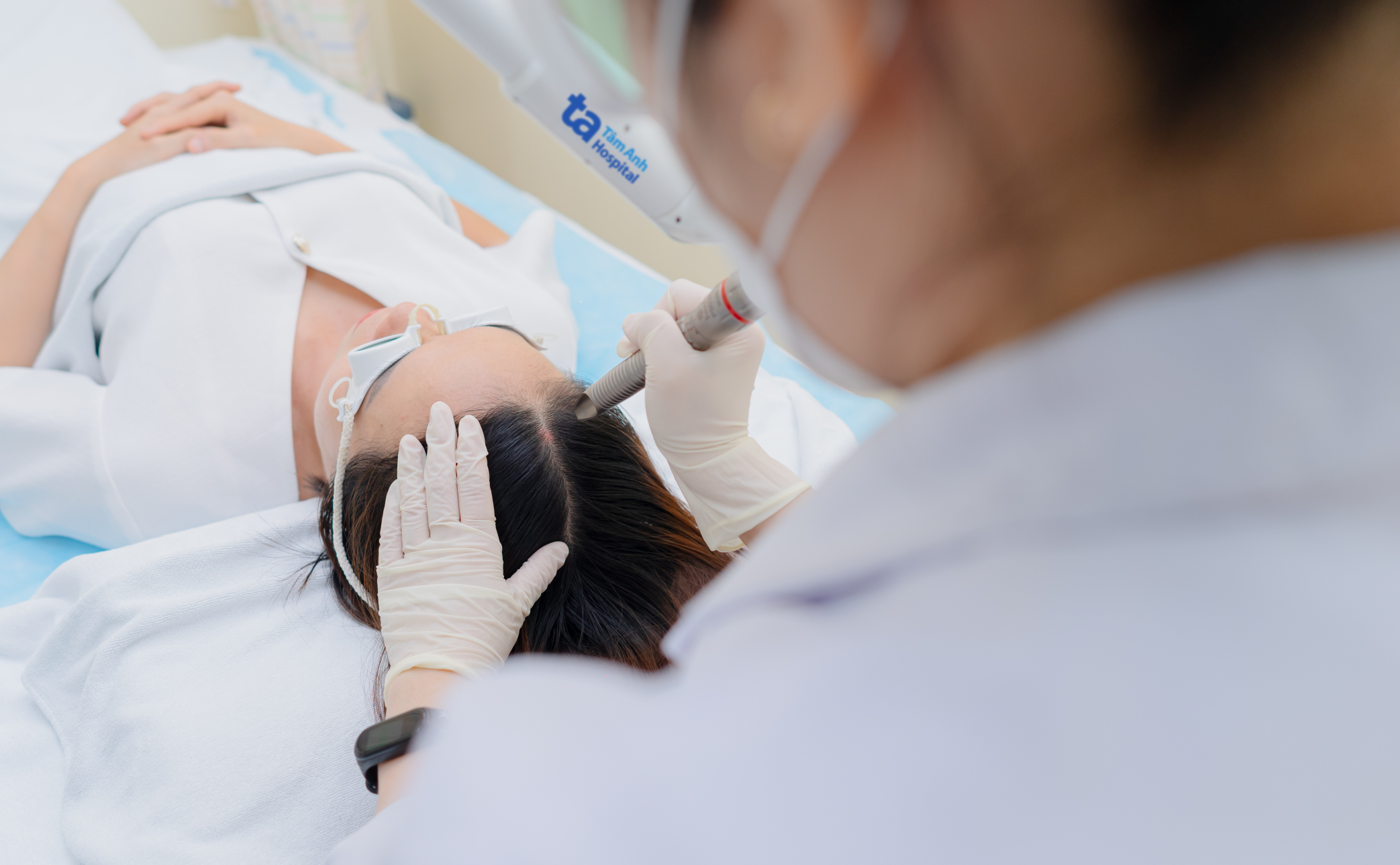 |
A doctor uses laser 6D to treat skin redness for a woman. *Tam Anh General Hospital*. |
Effective control of inflammatory responses facilitates pigmentation treatment, reducing the risk of post-inflammatory hyperpigmentation. When administered with correct indications and appropriate energy levels, lasers do not darken melasma; instead, they optimize treatment efficacy for individuals with sensitive skin.
In some cases, patients may also receive mesotherapy injections with skin-lightening agents, iontophoresis of restorative essences, or biophotonic LED light therapy to enhance treatment outcomes.
Treatment sessions are typically spaced 2-4 weeks apart. Many cases require 10 or more sessions for noticeable improvement. Once melasma stabilizes, patients must continue prescribed topical medications, practice strict sun protection, maintain proper skincare, and adopt a healthy lifestyle to minimize the risk of recurrence.
You should consult directly with a dermatology and aesthetic skin specialist to accurately determine the type of melasma and your skin condition, allowing for the development of an optimal treatment plan.
Doctor Tran Nguyen Anh Thu
Specialist in Dermatology and Aesthetic Skin
Tam Anh General Hospital, Ho Chi Minh City
| Readers can submit questions about dermatology and aesthetic skin conditions here for a doctor's response. |