The incident involving traders in Hebei, Trung Quoc, soaking napa cabbage stalks in formaldehyde solution to preserve produce has sparked significant food safety concerns. Formaldehyde, classified as a Group 1 substance by the International Agency for Research on Cancer (IARC) of the World Health Organization (WHO), is deemed a "known human carcinogen" by the U.S. National Toxicology Program (NTP). The U.S. Environmental Protection Agency (EPA) also categorizes it as a respiratory carcinogen, highlighting its severe health implications.
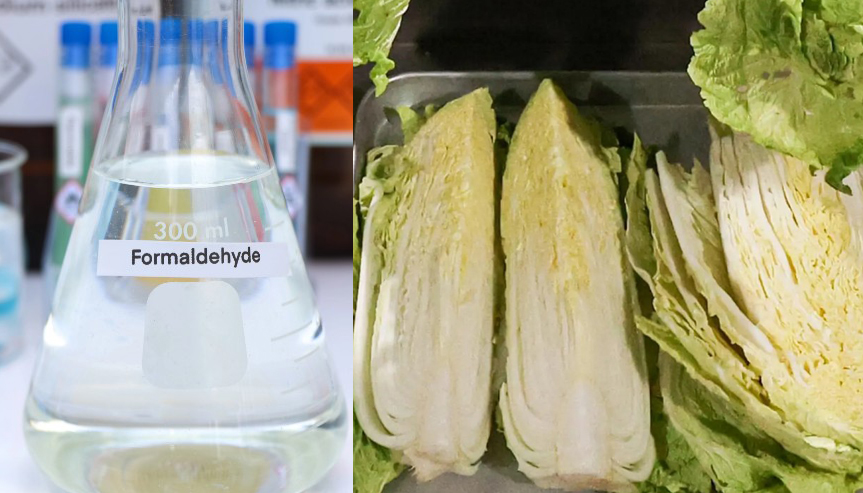 |
Formaldehyde. *Illustration: News1/Laballey*
Formaldehyde is a volatile organic compound that, when dissolved in water, forms formalin solution. This chemical is widely used in industry and medicine for disinfection, material production, and specimen preservation due to its potent bactericidal properties.
Traders misuse formaldehyde to treat vegetables, as its chemical layer prevents bacterial decomposition of stalks. This practice helps produce like cabbage and napa cabbage maintain a fresh appearance during long transportation routes.
When ingested, formaldehyde directly impacts the gastrointestinal lining. Acute exposure causes burning sensations in the mouth and esophagus, severe epigastric pain, vomiting, and bloody diarrhea. Upon absorption into the bloodstream, the body metabolizes formaldehyde into formic acid. The accumulation of this acid leads to metabolic acidosis, liver damage, acute kidney failure, and central nervous system depression.
Long-term accumulation of formaldehyde from unsafe food sources significantly increases the risk of cell mutation. The International Agency for Research on Cancer (IARC) confirms that formaldehyde can create cross-links between DNA and proteins, disrupting natural genetic structures. Chronic exposure through ingestion elevates the incidence of chronic ulcers and stomach cancer. Furthermore, toxic fumes released from contaminated food in enclosed spaces irritate the respiratory lining, increasing the risk of myeloid leukemia and respiratory epithelial tumors.
Despite formaldehyde being highly soluble in water and evaporating when heated, the chemical absorbed deep into plant tissues leaves harmful residues that are difficult to remove completely. Experts advise consumers to exercise caution when purchasing vegetables, insisting on discarding any cabbage with unusual whitish cuts and a pungent odor to safeguard family health.
To mitigate formaldehyde exposure beyond food, newly renovated spaces or those with new furniture should be ventilated regularly to limit the accumulation of toxic gases. Consumers should wash new clothes before wearing them and avoid food from unknown sources. In risky work environments, employees must be equipped with standard respiratory protective equipment, industrial ventilation systems, and undergo regular health checks for safety.
Binh Minh (According to American Cancer Society, CommonWealth Magazine, ILOHS)