Mrs. Thuy, who has suffered from dyslipidemia and diabetes for many years, recently experienced shortness of breath and fatigue while walking. Despite no prior cardiovascular conditions, these symptoms, present for a month, prompted her to seek examination at Tam Anh General Hospital, Ho Chi Minh City. A cardiac ultrasound revealed severe aortic valve stenosis due to degeneration, leading to grade 3 heart failure.
Aortic valve stenosis occurs when the valve does not open completely, reducing or blocking blood flow from the heart to the body. This condition is categorized into mild, moderate, and severe (also known as critical stenosis). The greater the degree of stenosis, the higher the risk of heart failure and sudden death.
Doctor Nguyen Van Duong, a second degree specialist at the Interventional Cardiology Center, stated that Mrs. Thuy's heart function was severely impaired, necessitating a valve replacement. Delaying treatment would worsen her condition, causing angina due to myocardial ischemia, increasing the risk of endocarditis, arrhythmias, thrombus formation, stroke, and sudden death.
Professor Doctor Vo Thanh Nhan, Director of the Interventional Cardiology Center at Tam Anh General Hospital, Ho Chi Minh City, noted Mrs. Thuy's multiple underlying health conditions presented high risks of blood loss and infection during traditional surgery. Approximately one-third of patients with severe aortic valve stenosis cannot undergo open surgery due to co-existing medical conditions. However, transcatheter aortic valve implantation (TAVI) offers a viable alternative. This minimally invasive procedure involves a small incision (about 6-8 mm) in the femoral artery, reducing risks of blood loss, infection, anesthesia complications, and the need for cardiopulmonary bypass. Patients also experience faster recovery.
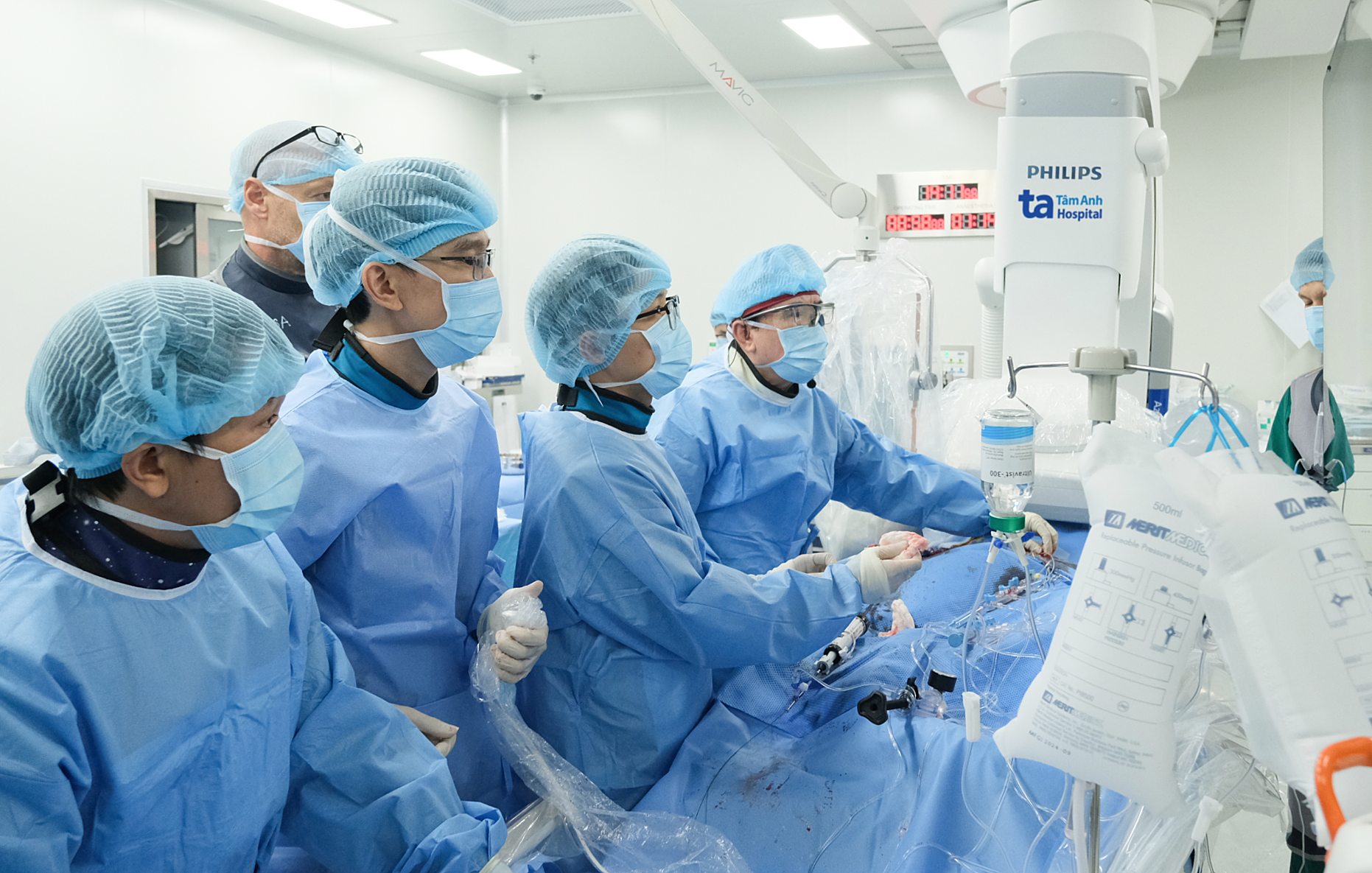 |
Doctors perform transcatheter aortic valve implantation for a patient. Photo: Trung Vu
The medical team utilized the SAPIEN 3 valve, an advanced balloon-expandable valve. According to Professor Nhan, compared to other TAVI valves, SAPIEN 3 offers high precision, stable hemodynamics, and a compact size, facilitating future coronary interventions. The procedure duration is also shortened to less than one hour.
Doctors applied local anesthesia, then threaded a catheter from the femoral artery, guiding the artificial valve to the exact position of the narrowed heart valve. The valve was then expanded under the guidance of a digital angiography system. The new valve leaflets settled correctly, remained stable, and effectively took over the role of pumping blood throughout the body.
Following the intervention, Mrs. Thuy could eat and move gently, and was discharged three days later.
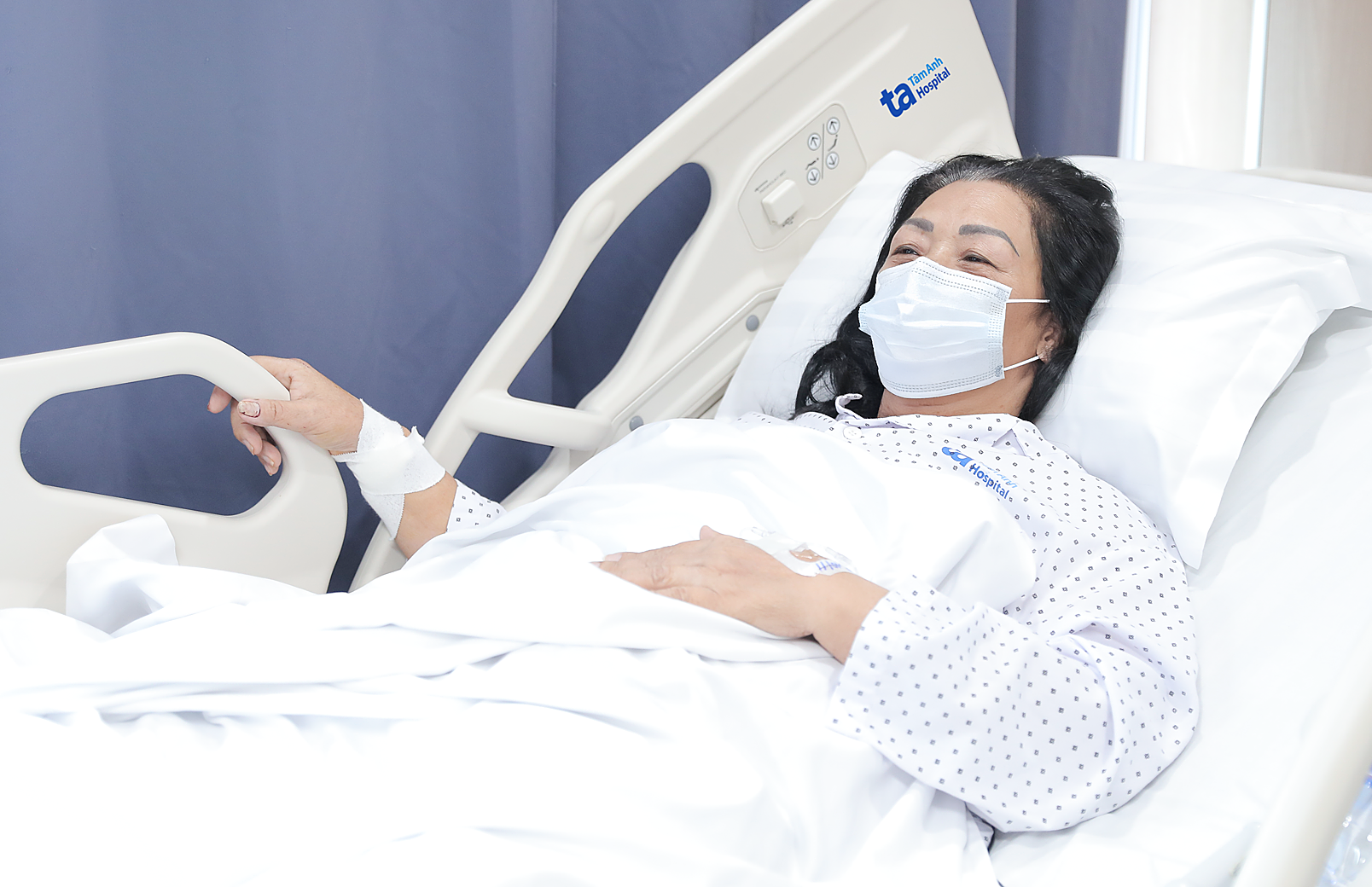 |
Mrs. Thuy is alert and able to converse a few hours after the intervention. Photo: Trung Vu
According to Doctor Duong, several risk factors contribute to degenerative aortic valve stenosis, including dyslipidemia and diabetes. These conditions accelerate the process of atherosclerosis and valve degeneration, eventually leading to severe aortic valve narrowing. Other risk factors include overweight and obesity, smoking, hypertension, and age.
After a TAVI procedure, patients typically recover and can perform light activities within about 2-4 weeks. It is important to engage in moderate exercise and avoid strenuous activities or heavy work. Maintaining a heart-healthy diet, managing stress, and getting adequate sleep are crucial to prevent complications.
Thu Ha
| At 8 PM on 30/12, Tam Anh General Hospital, Ho Chi Minh City, will host an online consultation program titled "TAVI - Transcatheter Aortic Valve Implantation: A Modern Technique for Heart Valve Replacement Without Open Surgery, a Breakthrough in Treating Severe Aortic Valve Stenosis." The program will be broadcast on the hospital's fanpage and VnExpress. Professor Doctor Vo Thanh Nhan, Director of the Interventional Cardiology Center, and Doctor Nguyen Van Duong, a second degree specialist at the Interventional Cardiology Center, will participate as consultants. Readers can submit questions here to be answered during the program. |