According to instructions from the Hanoi Department of Health, the elderly, people with disabilities, poor households, near-poor households, people with meritorious service, individuals with chronic illnesses, and residents in disadvantaged areas will have their examinations organized by local commune and ward People's Committees.
Preschool children and general education students will receive health check-ups through coordination between local authorities, educational institutions, and health stations, with implementation expected from September.
For contract employees, businesses are responsible for organizing regular health check-ups. Forces under the Ministry of National Defense and the Ministry of Public Security will have their examinations conducted by their respective managing agencies.
The remaining group, comprising residents not falling into the above categories, will receive free health check-ups organized by the commune and ward People's Committees according to local plans.
The content of regular health check-ups is tailored to each age group. Specifically, children under 6 years old will undergo a comprehensive assessment of physical health, nutrition, and mental-motor development. They will also have their vaccination status checked and be screened for autism risk where appropriate.
Individuals aged 6 and above will receive physical examinations, along with consultations in internal medicine, surgery, ophthalmology, otolaryngology, dentistry, and other specialized areas as regulated by the Ministry of Health.
For those aged 18 and older, basic tests will include: complete blood count, blood sugar, liver and kidney function tests, urinalysis, and chest X-rays. If any abnormalities are detected or a disease is suspected, doctors will prescribe additional specialized tests or refer them for appropriate treatment.
In parallel with regular health check-ups, Hanoi will offer free screening for 12 common disease groups and risk factors, including: hypertension, type 2 diabetes, bronchial asthma, chronic obstructive pulmonary disease (COPD), breast cancer, cervical cancer, colorectal cancer, prostate cancer, anxiety disorders, depression, and other mental health issues.
Screening will be conducted based on age and risk factors. Women aged 30 to 49 will be screened for cervical cancer; women aged 40 to 70 will be screened for breast cancer. Individuals aged 50 and above will be checked for colorectal cancer; those aged 45 and above will be screened for diabetes risk; and adults will be assessed for mental health risks.
Leaders from the Department of Health stated that the goal of universal health check-ups is to detect diseases early, reduce the burden of treatment, and improve the quality of community healthcare at the grassroots level.
To prepare for large-scale implementation, communes and wards are reviewing and compiling lists of residents eligible for free regular health check-ups and screenings in 2026, including those with permanent or temporary residency of 12 months or more in the city. This is a crucial preparatory step for developing a synchronized, scientific health examination plan and ensuring efficient resource utilization.
According to a representative from the Hanoi Department of Health, early review and list compilation enable local authorities to proactively develop health check-up plans for residents, ensuring no eligible individuals are overlooked and laying the groundwork for the goal of universal health management.
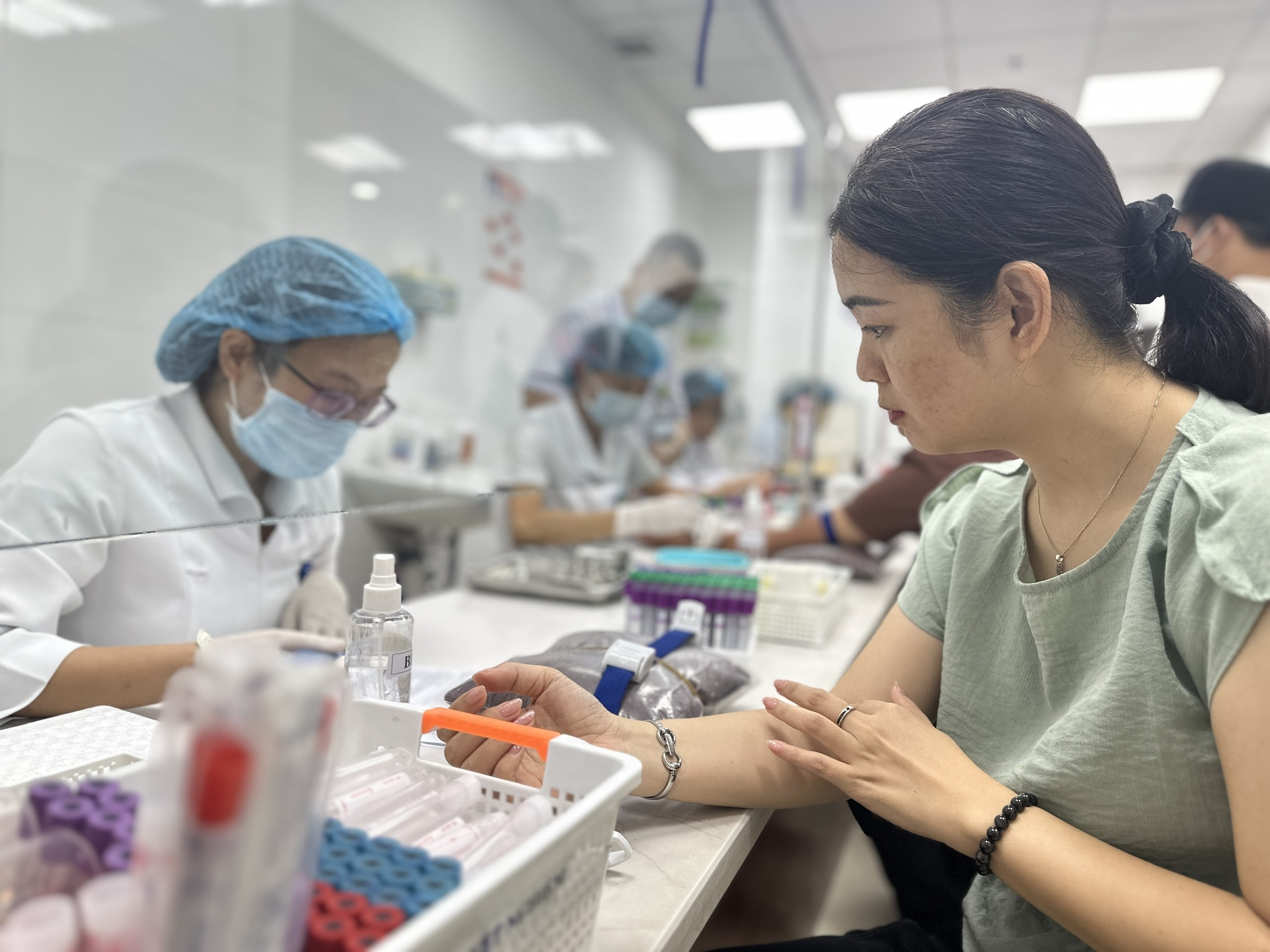 |
Residents getting samples taken for testing at Bach Mai Hospital. *Photo: Le Nga*
Recently, the Hanoi People's Council also approved a policy to support the cost of refractive error treatment for young people aged 18 to 35 with myopia of 3 diopters or more. It is expected that from early July, eligible residents will receive financial support for treatment based on service fees set by public healthcare facilities.
With the implementation of free health check-ups, disease screening, and myopia treatment support, Hanoi has become the second locality nationwide to implement large-scale healthcare policies for its residents. Previously, from mid-April, Ho Chi Minh City launched a free screening program and established electronic health records for residents aged 18 and above. The program is being implemented by region and is expected to last until the end of this year.
Nationally, the Ministry of Health proposes organizing regular health check-ups or free screenings starting in 2026, prioritizing vulnerable groups before expanding to the entire population. This proposal has been included in the draft Decree detailing and guiding the implementation of certain articles of the Law on Disease Prevention, which is currently open for public comment. This initiative concretizes Resolution 72 of the Politburo, aiming for universal free regular health check-ups and basic hospital fee exemptions by 2030.
Le Nga