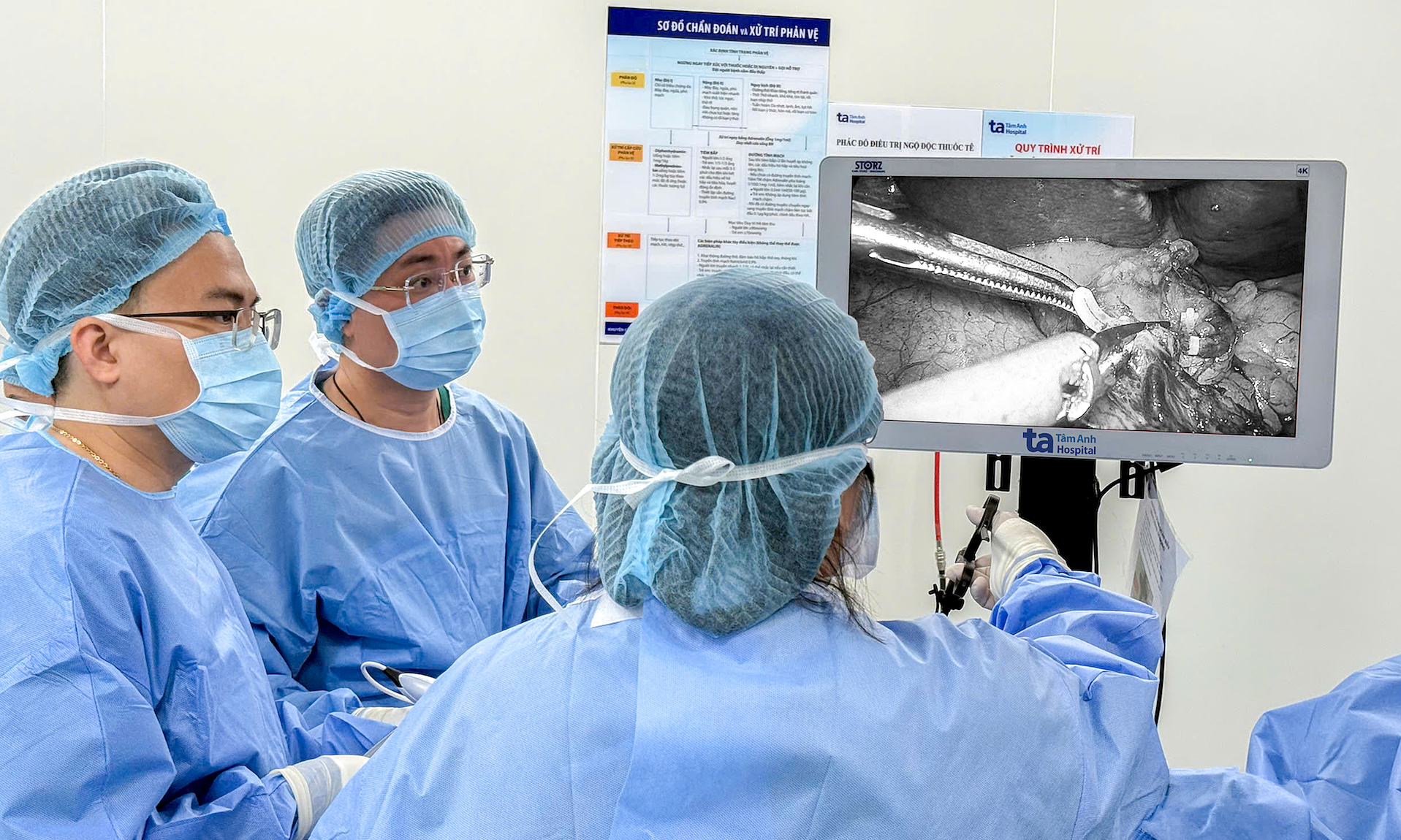
Dr. Nguyen Thi Ngoc Yen, head of the dermatology department at Tam Anh General Hospital Hanoi, observed a dark brown hyperpigmented band on the patient's tongue. Dermoscopy confirmed the characteristic signs of hairy tongue, a benign but uncommon condition.
Dr. Yen explained that hairy tongue is not actual hair. It affects 0.6-11% of the population. The condition arises from a disruption in the natural shedding and regeneration of cells on the tongue's surface, causing the filiform papillae to grow unusually long, creating a hair-like appearance. These elongated papillae readily trap bacteria, fungi, food particles, tobacco, or food dyes, which can cause the tongue to appear yellow, brown, blue, or black.
Beyond discoloration, some individuals might experience bad breath, a foreign body sensation in the mouth, altered taste, or nausea if the papillae become excessively long.
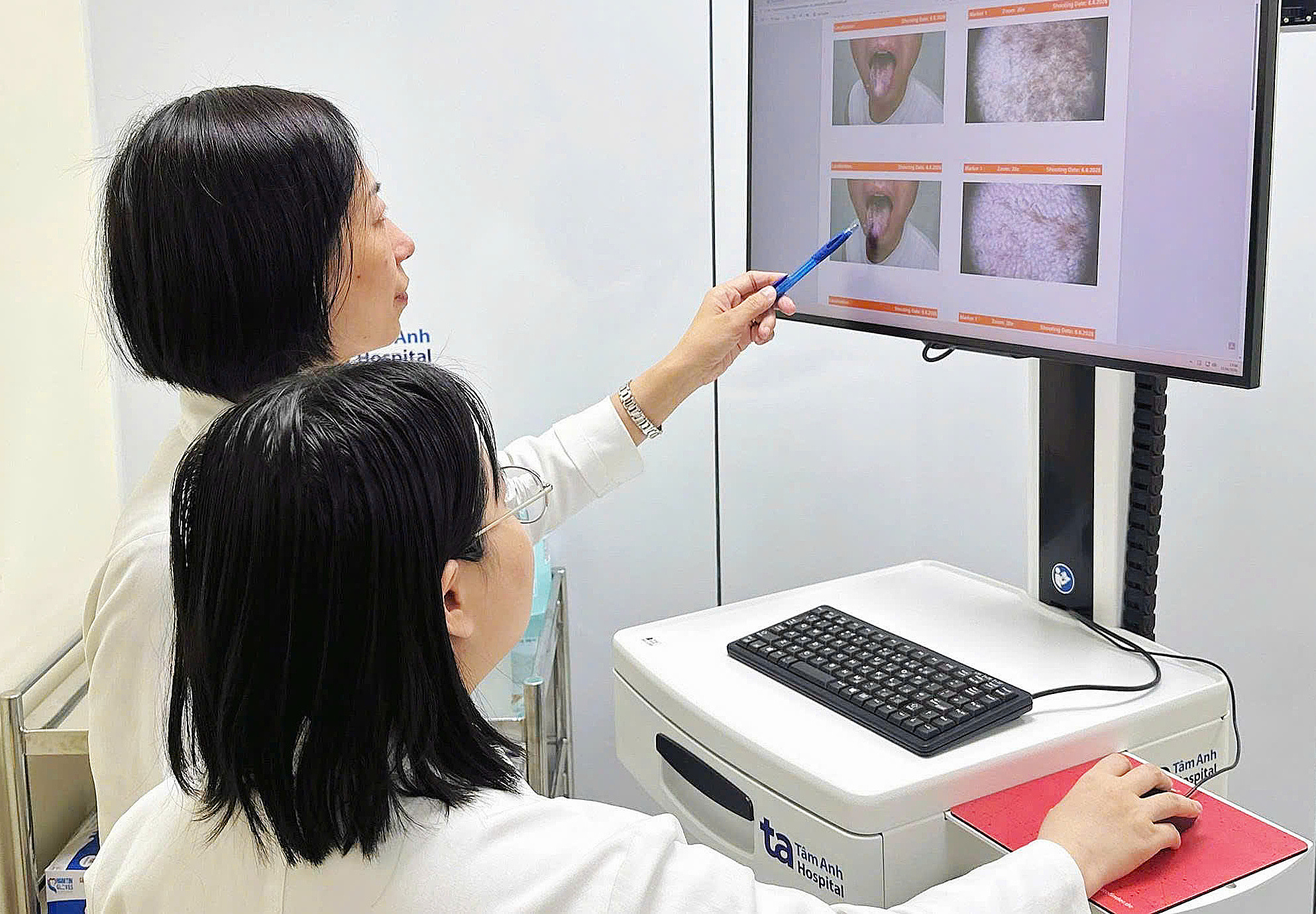 |
Dr. Yen (left) analyzes the characteristic condition of hairy tongue using a dermoscopy image. Photo: Tam Anh General Hospital.
The color of hairy tongue does not indicate its severity. Some individuals have yellow or light brown discoloration, while others exhibit a distinct black appearance. This condition commonly affects adults and is linked to several risk factors: smoking, frequent alcohol consumption, poor oral hygiene, prolonged antibiotic use, heavy coffee or strong tea intake, chronic dry mouth, and immunocompromising medical conditions.
Mr. Ryan's frequent alcohol consumption was a contributing factor to his tongue discoloration. Doctors did not prescribe specific medication but instead focused on lifestyle modifications and oral hygiene. The patient received instructions to gently brush or scrape his tongue daily to remove accumulated keratin, rinse with physiological saline solution, drink enough water, and maintain good oral hygiene. Additionally, he was advised to limit or cease using stimulants such as alcohol, tobacco, and coffee, as these factors can prolong the condition or cause recurrence.
Most individuals with hairy tongue show significant improvement within a few weeks if the underlying causes are addressed and proper tongue hygiene is practiced. Persistent cases may require more specialized interventions.
According to Dr. Yen, while hairy tongue is not dangerous, it often causes patients to worry about oral cancer or severe infections. However, hairy tongue is distinctly different from tongue cancer. Cancer typically presents with persistent ulcers, pain, bleeding, lumps, or prolonged difficulty swallowing. Hairy tongue, in contrast, is primarily a benign change on the tongue's surface and does not cause severe symptoms.
The doctor recommends seeking an accurate diagnosis if prolonged discolored patches, ulcers that do not heal after two weeks, persistent pain, or swollen lymph nodes in the neck appear. Patients should avoid self-medicating or using folk remedies. When brushing teeth, it is essential to clean the tongue's surface, as it accumulates bacteria, food debris, and dead cells. Drinking enough water is also crucial, as chronic dry mouth can increase bacterial buildup and impede the tongue's natural self-cleaning process.
Thanh Ba