Children's eyes are sensitive, and their protective tear film, which covers the surface of the eyeball, is not as stable as an adult's. Swimming pool water often contains chlorine and other disinfectants.
Doctor Le Thanh Huyen, from the High-Tech Eye Unit at Tam Anh Cau Giay General Clinic, stated that if chemical concentrations are too high or pool water is not properly treated, eyes can become easily irritated and inflamed. Warm, crowded water environments also create conditions for bacteria and viruses to thrive and spread, increasing the risk of eye diseases.
Conjunctivitis
Conjunctivitis, commonly known as pink eye, is the most frequently observed eye condition after swimming. According to doctor Huyen, it can be caused by irritation from chlorine in the water or by viruses and bacteria transmitted through contaminated water, shared towels, or goggles.
Some initial cases may present with only a slight foreign body sensation, but symptoms can quickly progress to severe redness, swelling, tearing, follicular conjunctivitis, itching, or excessive discharge, especially in the morning. This condition is highly contagious in communities, particularly in crowded swimming classes for children, and typically lasts from a few days to two weeks, depending on its severity.
Keratitis
The cornea, the transparent layer at the front of the eyeball, is highly sensitive to bacteria, chemicals, and irritants found in pool water.
Keratitis occurs when this layer is damaged or infected due to exposure to dirty water, high concentrations of chlorine, children rubbing their eyes with dirty hands, or wearing contact lenses while swimming. This condition is more serious than common conjunctivitis, as it can directly affect vision if left untreated.
Children with keratitis often experience severe eye pain, a foreign body sensation, continuous tearing, light sensitivity, and blurred vision. Some cases involve intense eye redness, difficulty opening the eyes, or increased pain when looking at bright lights.
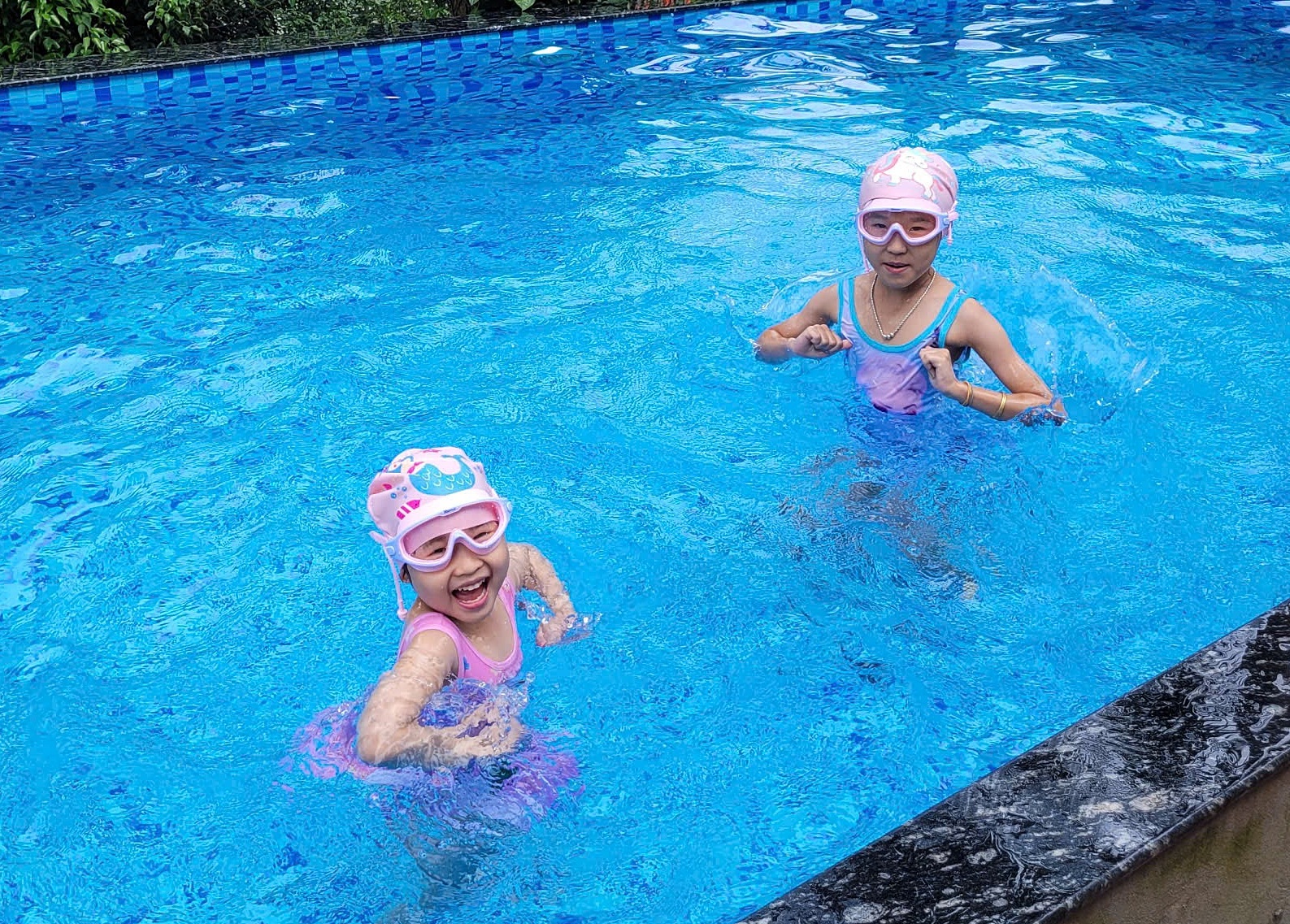 |
Swimming pool water often contains chlorine and disinfectants, which can easily cause eye diseases in children. Illustration: Hai Au |
Dry eyes
Some children experience dryness, stinging, eye fatigue, or temporary blurred vision after swimming. The primary cause is chlorine and other disinfectants in the pool, which disrupt the natural tear film protecting the eye's surface. This condition is common in children who swim for many hours continuously, multiple times a week, or frequently open their eyes underwater.
In addition to constant blinking or eye rubbing, children may experience a gritty sensation or difficulty concentrating when reading or looking at screens. Most cases improve after rest and rinsing the eyes with clean water, but if symptoms persist, a specialist should be consulted to assess the extent of the damage.
Allergies
Some children sensitive to chlorine or pool water treatment chemicals may develop eye allergies after swimming. Children often experience severe itching, redness, eyelid swelling, continuous tearing, or a burning, uncomfortable sensation in their eyes. This condition is more prevalent in children with allergic predispositions, allergic rhinitis, or eczema.
Eye allergies are generally not dangerous if treated promptly but cause significant discomfort, leading children to rub their eyes constantly, which increases the risk of corneal abrasions or secondary infections.
UV eye damage
When swimming outdoors in the summer, children's eyes are exposed not only to pool water but also to ultraviolet (UV) rays from sunlight. UV rays can reflect strongly off the water's surface, increasing the amount of radiation reaching the eyes. Prolonged unprotected exposure can put children at risk of surface irritation, redness, glare sensitivity, burning pain, or temporary blurred vision. In the long term, UV rays can increase the risk of damage to the cornea, lens, and retina.
Doctor Huyen advises parents to choose clean swimming pools, avoid overly crowded ones, and ensure children wear UV-protective goggles when swimming outdoors. Children with refractive errors should not wear contact lenses in the water; prescription swimming goggles can be used if needed. After swimming, eyes should be rinsed with clean water or saline solution, and eye rubbing should be avoided. If a child develops pink eye or experiences persistent symptoms such as prolonged redness, pain, blurred vision, light sensitivity, or excessive discharge, a visit to an eye specialist is necessary for timely treatment.
Trinh Mai
| Readers can submit questions about ophthalmological conditions here for doctor consultation. |