Cervical cancer is a malignant disease originating from the cells of the cervix, the lower part of the uterus that connects to the vagina. It develops when cervical cells grow abnormally, invading surrounding tissues and organs. The primary cause of the disease is human papillomavirus (HPV) infection, particularly HPV 16 and 18. Risk factors include early sexual activity, multiple sexual partners, smoking, weakened immunity, prolonged inflammation, and infrequent regular screenings.
Currently, cervical cancer can be treated using various methods, including medical therapy with medication, radiation therapy, chemotherapy, or surgical procedures. Surgical options include cervical cone biopsy, total hysterectomy, or radical hysterectomy with pelvic lymphadenectomy. The choice of treatment depends on the disease stage, the patient's overall health, their desire to have children, and the prioritization of safety.
If cancer is detected through screening at an early stage, doctors may recommend a cervical cone biopsy. If all damaged cells are completely removed and the surgical margins are clear of abnormal cells, the patient is considered to be fully treated. However, if the surgical margins still contain cancer or precancerous cells, doctors advise patients to consider two options: a second cone biopsy to preserve fertility, or a hysterectomy if they no longer wish to have children or for maximum safety. Patients can choose between open surgery, laparoscopic surgery, or robotic surgery for a hysterectomy.
 |
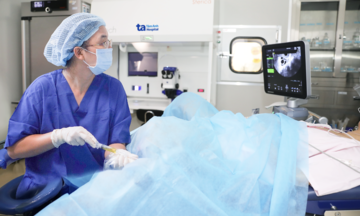
Doctor Nguyen Ba My Nhi, specialist level II, performs a robotic hysterectomy for a woman with precancerous lesions. *Illustration: Tue Diem*
For invasive cervical cancer that remains within surgical limits, doctors may perform a radical hysterectomy with pelvic lymphadenectomy. In cases requiring the complete removal of the uterus, future childbearing may be possible through surrogacy.
If the disease is in stage 2B or 3A, the tumor has spread beyond the cervix into adjacent tissue. According to international guidelines, reputable cancer centers typically treat cervical cancer at these stages with medication, chemotherapy, and radiation therapy to control the tumor. Surgical intervention is rarely indicated and is only considered in a few limited cases.
For women who have not yet given birth or are newly pregnant and are diagnosed with untreated cervical cancer, the disease risks progressing uncontrollably. By the time of childbirth, the disease typically advances to a severe stage, making treatment difficult. Therefore, young women, such as Minh Ha from Dong Nai, who are diagnosed with HPV-related precancerous lesions, should seek early medical examination and intervention at a hospital.
Doctor Nguyen Ba My Nhi, Specialist Level II
Director, Obstetrics and Gynecology Center
Tam Anh General Hospital System, TP HCM
| Readers can submit questions about obstetrics and gynecology here for doctors to answer. |