Precocious puberty in girls is when sexual characteristics appear before 8 years old. These signs include: breast development, pubic or armpit hair growth, rapid height increase, or menstruation. If not identified and treated promptly, children risk early bone maturation, which can reduce their adult height. They also face psychological pressure due to their bodies developing inconsistently with their age.
In recent years, precocious puberty has increased, especially in girls who are overweight or obese. Most cases of precocious puberty in girls are idiopathic central precocious puberty, meaning the cause is unknown. A few cases are related to diseases of the brain, ovaries, adrenal glands, or endocrine disorders, requiring examination to rule out these conditions.
After an examination, doctors assess the development of breast tissue, pubic and armpit hair, the child's growth rate, and their growth chart. The child may undergo a hand X-ray to determine bone age, endocrine tests, and an ultrasound of the uterus and ovaries. If puberty begins before 6 years old, progresses rapidly, or presents with neurological symptoms, doctors may order a brain magnetic resonance imaging (MRI) scan to examine the hypothalamus-pituitary region.
 |
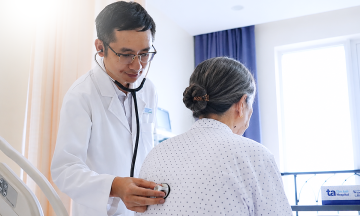
Doctor Nguyen Thi Hanh Trang, a specialist in Pediatrics, conducts a general health check for a young girl at Tam Anh General Hospital. Illustration: Trung Vu. |
Precocious puberty treatment varies for each child. Doctors consider the age of onset, bone age, progression rate, underlying cause, and potential impact on adult height.
For children with progressive central precocious puberty, treatment involves GnRH agonist drugs. These temporarily suppress the activity of the endocrine axis, slowing bone maturation and delaying menstruation when the child is too young. The medication is injected periodically according to a treatment plan, and children require regular follow-up visits to monitor their response to treatment.
In cases where precocious puberty is caused by brain tumors, ovarian tumors, adrenal gland tumors, or other endocrine diseases, doctors treat the root cause with surgery, medication, or other appropriate specialized methods.
During treatment, parents should not give their children hormone medications, functional foods, or products advertised as "puberty inhibitors" without medical guidance. Children need to maintain a healthy weight, eat a balanced diet, increase physical activity, get sufficient sleep, and attend scheduled follow-up appointments.
Beyond medical treatment, parents should discuss body changes with their children and answer their questions. Adults should guide children on proper personal hygiene, including intimate area hygiene, to help them feel less confused by their body's changes.
Many parents only seek medical attention when their child has already started menstruating. However, menstruation is not the beginning but often near the end of the puberty process. By this point, bone age may have advanced rapidly, reducing opportunities for intervention to preserve height.
For your 7-year-old daughter who has started menstruating, you should take her to a pediatric endocrinology specialist soon. This will help determine the cause, assess the extent of puberty progression, and indicate treatment if needed. Timely intervention optimizes height preservation and limits the psychological impact on the child.
At Tam Anh General Hospital, children showing signs of precocious puberty are examined by pediatric endocrinologists and pediatricians. They undergo bone age assessment, endocrine tests, ultrasound, and MRI scans when necessary. Based on the cause and progression, doctors develop a suitable monitoring or treatment plan to help children achieve optimal height and mitigate the effects of precocious puberty.
Doctor Nguyen Thi Hanh Trang
Deputy Head of Pediatrics Department
Tam Anh General Hospital, Ho Chi Minh City
| Readers can send questions about pediatric diseases here for doctors to answer |