Hard-boiled eggs, a simple and convenient source of protein, can be safely stored for up to seven days in the refrigerator if kept at 4°C, according to the U.S. Department of Agriculture (USDA).
Unlike raw eggs, which have a natural protective shell, cooked eggs are more susceptible to bacterial contamination after preparation. The shell acts as a barrier, preventing the egg from absorbing odors and bacteria within the refrigerator, thus prolonging its freshness. However, peeled hard-boiled eggs should be consumed within two to three days. Without their protective shell, they can dry out faster and spoil more easily.
At room temperature, hard-boiled eggs should never be left out for more than two hours. Consume them within one hour, especially in hot weather.
To determine if hard-boiled eggs have spoiled, consider these simple methods:
Smell: Fresh eggs have no strong odor. Discard any egg that emits a rotten, sulfurous, or unpleasant smell.
Texture: Avoid eating eggs with slimy or rubbery whites or yolks. Good eggs maintain a tender texture.
Color: A change in the egg white to pink, green, or gray, or an unusually dark yolk, indicates spoilage.
Float test: For unpeeled hard-boiled eggs, a simple yet effective test is to place them in water. If an egg floats, it is likely spoiled. If it sinks, it remains safe to eat.
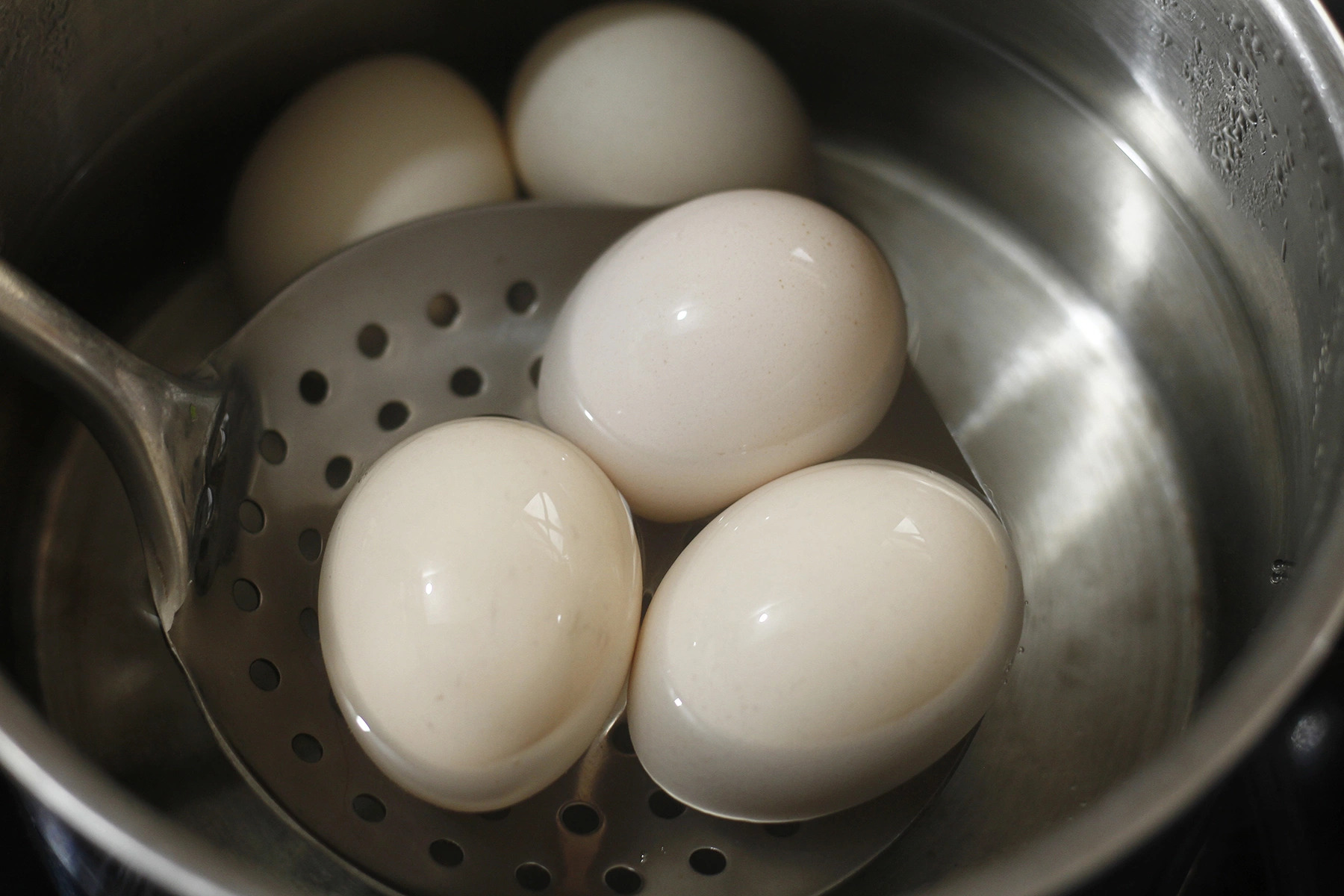 |
Illustration photo: Bui Thuy |
Doctor Nguyen Trong Thuy
Former chief doctor for Vietnam National and U23 Football Teams