Despite their nutritional benefits, lychees must be consumed with caution due to their high sugar content. Nutritionist Cao Man Man recounted a clinical emergency where an elderly woman fell into a coma due to a severe spike in blood sugar after eating an entire bunch of lychees daily. Experts advise that diabetic patients and those with high blood fat should avoid eating lychees on an empty stomach. This precaution prevents excessive insulin secretion, which can lead to hypoglycemia and symptoms like trembling limbs. Furthermore, it is crucial not to eat too many at once; limit intake to 5-6 lychees per serving, a maximum of 1-2 times daily, to prevent blood sugar fluctuations. Experts also warn against consuming unripe lychees, as they contain substances that inhibit the body's glucose metabolism.
Regarding nutritional value, nutritionist Cao Man Man highlights that lychees are rich in vitamin C, with 52,3 mg, which helps protect cells and repair tissues. They also contain 184,7 mg of potassium, known to alleviate stress. This fruit is abundant in organic acids and amino acids, which boost metabolism. However, due to its sugar content of approximately 16 grams, consumers should limit their intake to 5-6 lychees per serving.
Lychee trees primarily thrive in subtropical and tropical regions, according to data from the Food and Agriculture Education Information Integration Platform under Taiwan's Council of Agriculture. China accounts for over 80% of global production, followed by India, Vietnam, Thailand, and Madagascar. In Taiwan, lychees are mainly cultivated in the central and southern regions, with harvests occurring continuously from early April to late July.
A deeper analysis of two popular lychee varieties in Taiwan, based on the weight of each peeled fruit, reveals distinct differences. The Yu Her Bao (Thanh Ha) variety is known for its juicy flesh and lower yield, which contributes to its higher price. Each fruit, weighing about 18 grams, provides 12 kcal, 3,1 grams of carbohydrates, 0,1 gram of fiber, 10,9 mg of vitamin C, and 34 mg of potassium. In contrast, the Hei Ye variety weighs approximately 15 grams per fruit, offering 9 kcal, 2,4 grams of carbohydrates, 0,1 gram of fiber, 6,6 mg of vitamin C, and 27 mg of potassium.
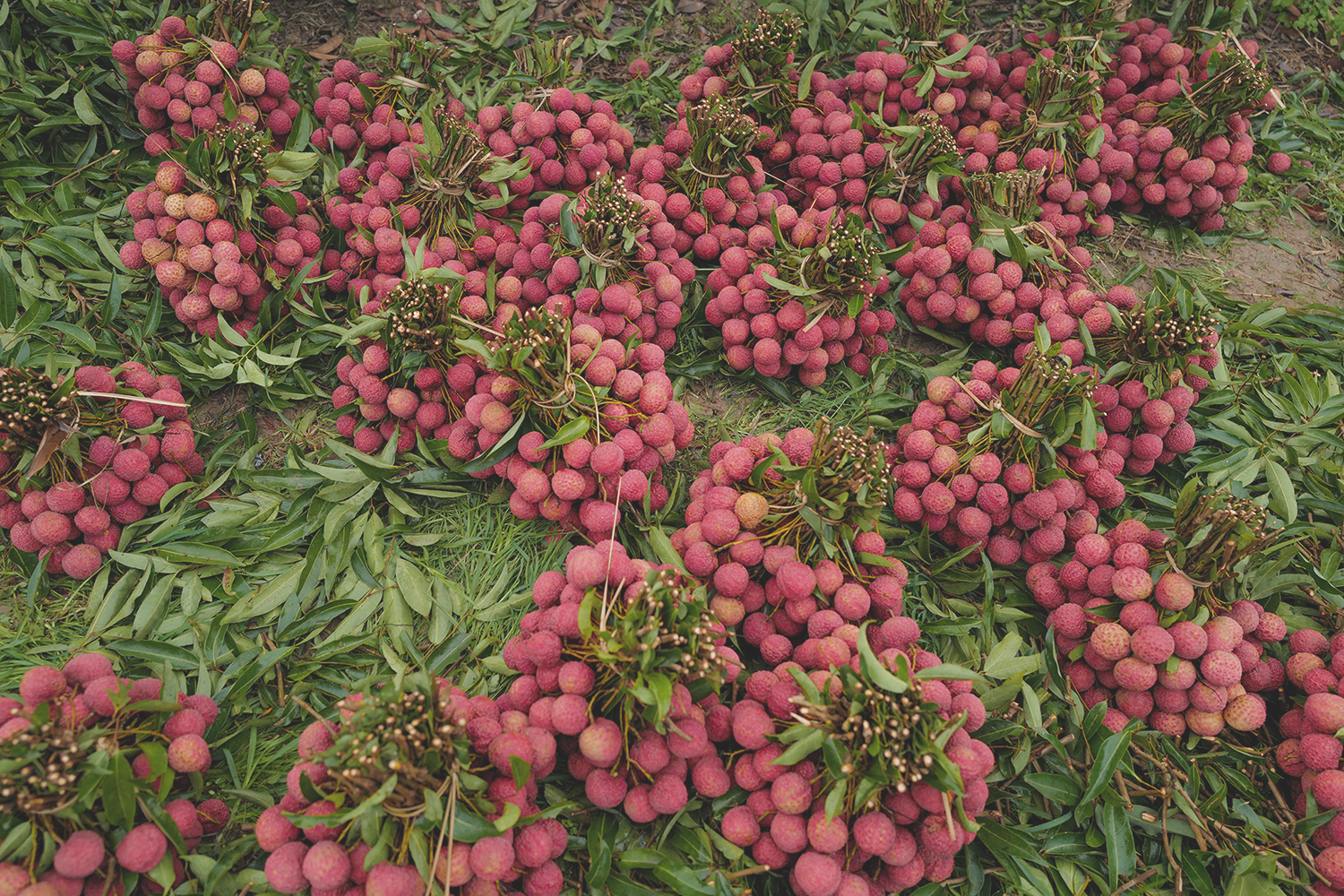 |
Bac Giang Thieu lychees. Photo: Ngoc Thanh
Taiwan boasts over 30 lychee varieties, with Hei Ye having the largest cultivation area. This variety is characterized by its large seeds, crisp flesh, and slightly tart taste. Other varieties include Nhu Mi Tu and Que Vi, which consumers can distinguish by skin color, spikiness, flesh flavor, and seed size. To select quality lychees, Taiwan's Council of Agriculture recommends evaluating them based on three factors: external appearance, firm feel, and aroma. For example, a good Yu Her Bao lychee will have a vibrant pink-red skin with hints of fresh green. When gently squeezed, it should feel plump and firm, indicating quality. A fresh aroma suggests the lychee has been recently harvested.
To extend lychee shelf life, Tran Anh Xuan, a renowned Taiwanese home and cleaning expert, advises using scissors to cut individual lychees instead of forcefully pulling them off. Then, place them in a storage container, cover them with water, and store them in the refrigerator's crisper drawer, changing the water every three days. Practical tests showed that after one week of using this method, the lychee skins retained their vibrant red color without blackening or deforming, while the flesh inside remained juicy and fresh.
By Binh Minh (Source: Super Taste/TVBS)