Melanin, the pigment determining skin color, is produced by melanocyte cells located in the basal layer of the epidermis. Normally, melanin absorbs and disperses ultraviolet (UV) rays, reducing skin damage. When melanin is produced adequately for protection, skin color remains even. However, when melanin is overproduced or unevenly distributed, areas of hyperpigmentation gradually form.
Pharmacist Do Xuan Hoa from the Medical Information Center, Tam Anh General Hospital Ho Chi Minh City, explains that melanin production involves many biological reactions, with the enzyme tyrosinase playing a crucial role. This enzyme converts tyrosine through various stages to form melanin molecules. Exposure to UV radiation or hormonal imbalances stimulate melanocyte activity, intensifying tyrosinase action and boosting melanin production. This results in an increased amount of melanin accumulating in the skin.
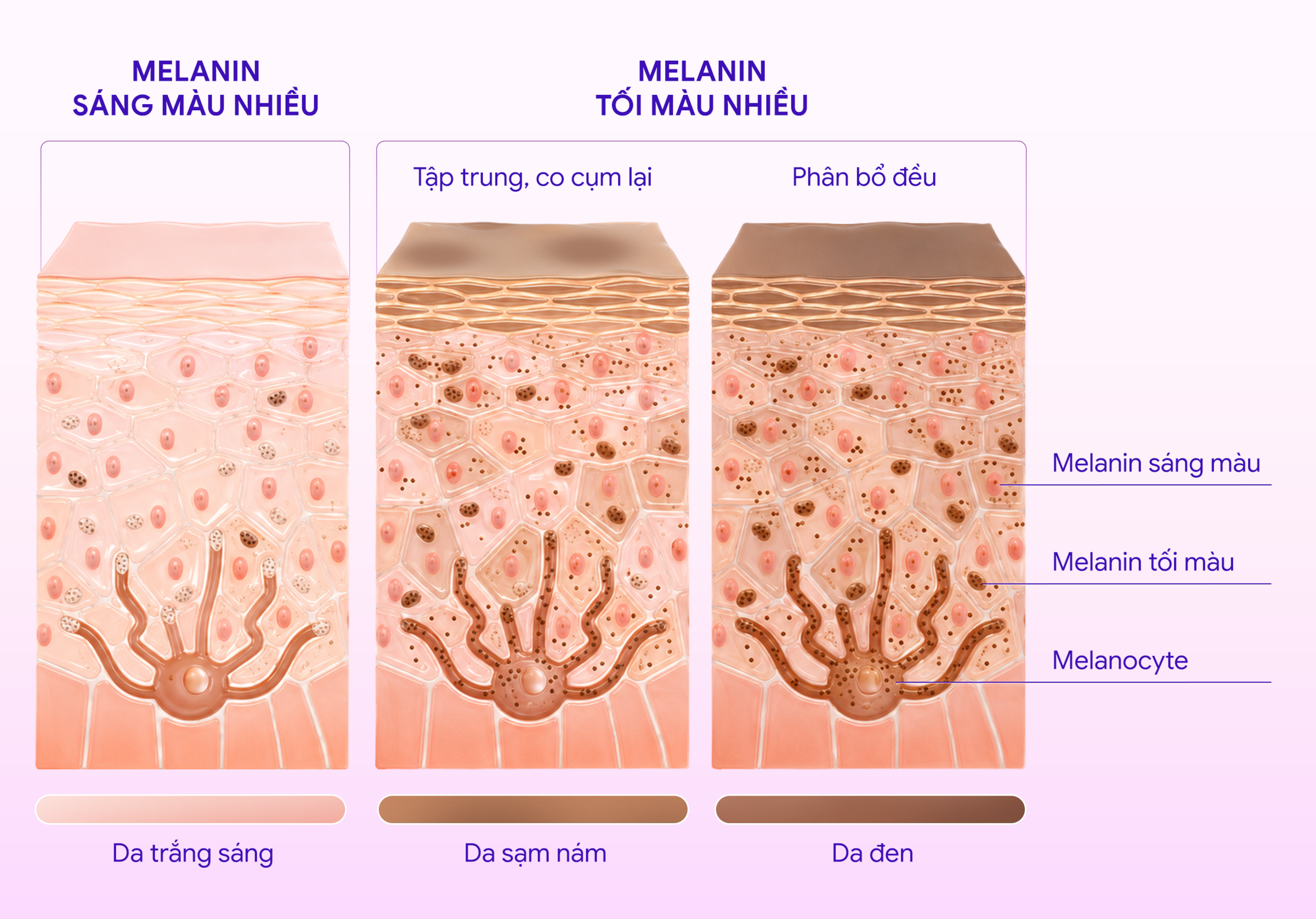 |
The increase of melanin during melasma formation. Photo: Eco Pharmaceutical Joint Stock Company |
The increase of melanin during melasma formation. Photo: Eco Pharmaceutical Joint Stock Company
Sunlight is the most common trigger. Prolonged exposure to UV rays causes the skin to increase melanin production as a self-protective response. If this process continues, melanin is constantly produced, making melasma progressively darker.
Hormones also influence the activity of pigment cells. Periods of hormonal change in the body, such as during pregnancy, postpartum, or pre-menopause, can make melanocytes more sensitive to stimulating signals, thereby increasing the risk of melasma formation.
Inflammatory reactions and damage to the skin's protective barrier are also linked to melasma. When skin is damaged by acne, dermatitis, or wounds, the body may release inflammatory mediators. These factors further stimulate melanocytes to produce pigment. Free radicals generated during inflammation or due to environmental pollution also contribute to melanin formation.
A damaged skin barrier prolongs the inflammatory response, causing hyperpigmentation to continue. This is a reason why melasma often recurs after treatment if stimulating factors persist.
Normally, the skin continuously regenerates and sheds some melanin along with old keratinocytes. When melanin production is prolonged, the rate of skin regeneration cannot keep pace, leading to more melanin accumulating in the skin. Over time, melasma patches become darker, spread, and are more difficult to improve.
To prevent and improve melasma, pharmacist Hoa recommends a combination of sun protection, proper skin care, and internal support to control hyperpigmentation. Natural extracts such as sakura (cherry blossom), pomegranate, l-glutathione, collagen, and p.leucotomos (fern extract) can help support antioxidant activity, protect skin from UV rays, and contribute to reducing melanin pigment, promoting brighter, healthier skin.
Dinh Dieu