Embrace fiber for blood sugar control
Insoluble fiber supports digestive health, increases stool bulk, and promotes bowel regularity. It also slows the absorption of glucose and certain nutrients, contributing to blood sugar control. Due to its complex structure, fiber takes longer to digest, promoting lasting fullness and aiding metabolism.
Diabetic individuals can add about 8 g of fiber to each smoothie to help manage blood sugar. Suitable fiber sources include:
Fruits: Raspberries, blueberries, kiwi, and avocado are excellent fiber sources. For peaches, apples, and pears, keep the skin on to boost fiber content. Prioritize low glycemic index (GI) fruits for smoothies, as they promote slower sugar absorption, preventing sudden blood sugar spikes.
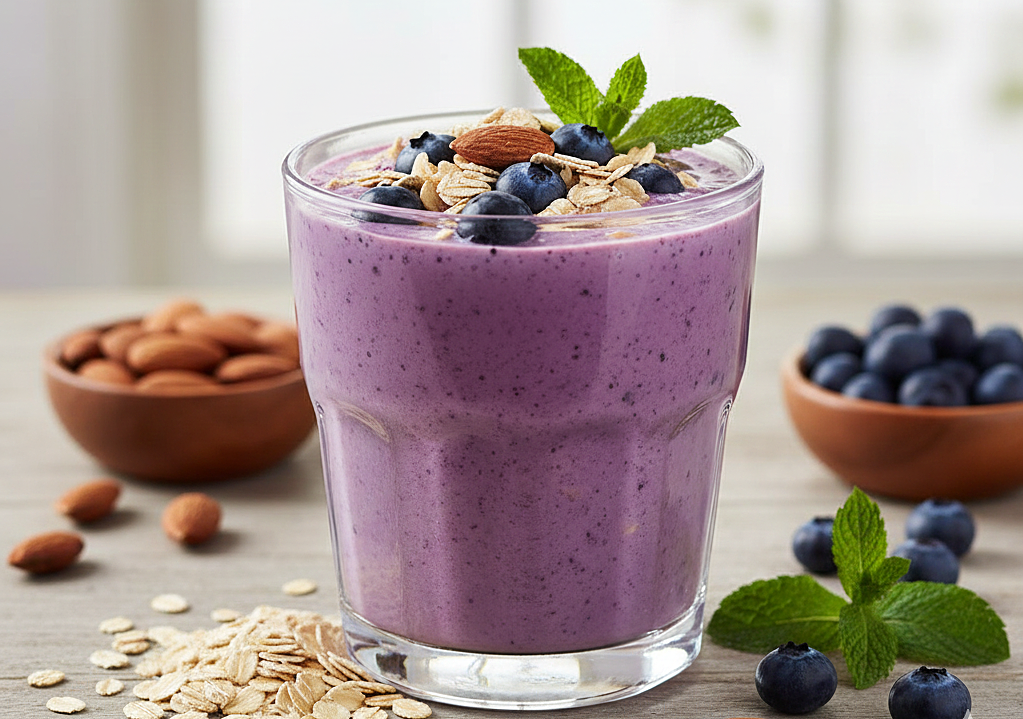 |
Blueberry smoothie, rich in fiber and protein. *Photo: AI*
Green leafy vegetables: Young kale, spinach, and celery are rich in fiber, vitamins, and minerals, increasing satiety and having minimal impact on post-meal blood sugar.
Seeds: Adding a few flaxseeds, a spoonful of chia seeds, or almonds to your smoothie is a quick and tasty way to boost fiber.
Boost protein intake
Protein slows the digestion and absorption of carbohydrates, thereby limiting post-meal blood sugar increases and promoting lasting fullness. When preparing smoothies, diabetic individuals can add protein sources like whey protein, unsweetened Greek yogurt, unsweetened milk, or nuts.
Incorporate healthy fats
Healthy fats help slow glucose absorption, contributing to stable blood sugar and prolonged satiety. They also make smoothies smoother and more flavorful. Suitable fat sources include: nuts, nut butters, avocado, whole milk, or low-fat coconut milk.
Choose natural sweeteners wisely
Diabetic individuals should limit adding sugar or artificial sweeteners to smoothies to avoid blood sugar spikes. Fruits naturally provide sweetness. If making a vegetable-based smoothie, one date can enhance flavor while adding fiber and minerals like potassium, magnesium, calcium, and iron. Mint, cinnamon, lemon juice, unsweetened cocoa powder, or whole peanut butter can also boost flavor without added sugar.
Combining fruits with protein and healthy fats creates a more nutritionally balanced smoothie, slowing sugar absorption and limiting post-meal blood sugar increases. Individuals with diabetes should prepare their own smoothies to control ingredients and calorie intake, consuming about 120-240 ml per serving, two-three times per week. Prioritize eating whole fruits over drinking smoothies to gain more fiber and achieve longer-lasting fullness.
By Anh Chi (compiled)
| Readers can submit questions about diabetes here for a doctor's response. |