Reheating food multiple times is a common practice for many families during Tet. However, if done incorrectly, this habit can inadvertently turn festive meals into a source of food poisoning.
Doctor Chu Thi Dung, from the Hospital of Medicine and Pharmacy, Ho Chi Minh City (HCMC) - Campus 3, states: "Reheating does not guarantee absolute food safety." There are subtle health risks that stove temperatures cannot completely eliminate.
The mistake of the "danger temperature zone"
During Tet, food often sits on dining tables for several hours before refrigeration. This creates a "favorable temperature range" for bacteria to multiply. As the cycle of cooking, cooling, serving, refrigerating, and reheating repeats, bacterial counts increase exponentially.
Some bacteria can produce heat-resistant toxins. This means that even if food is boiled again, the toxins already formed will persist. In such cases, the food may look and taste normal but carries a potential risk of causing digestive disorders or severe poisoning.
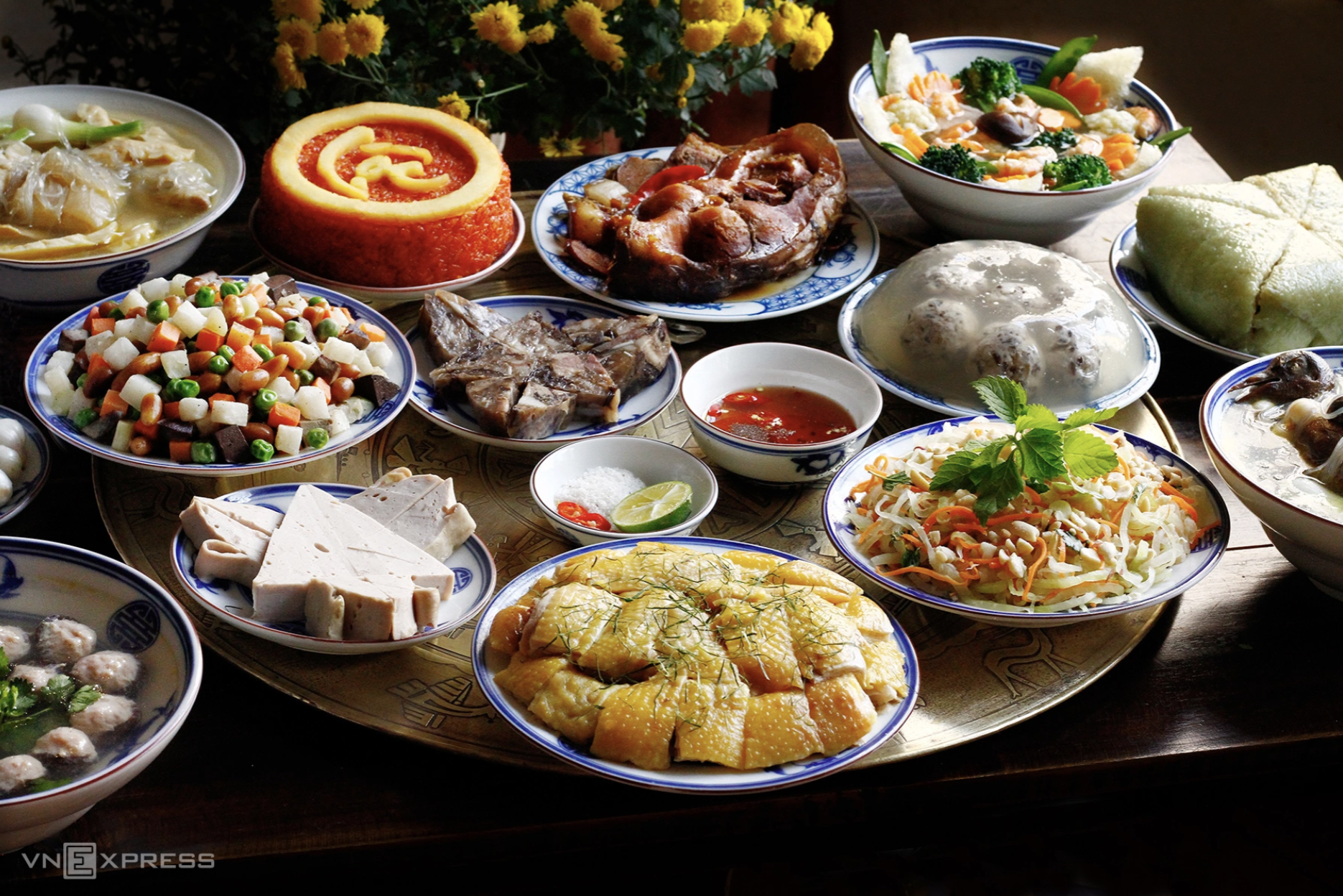 |
Traditional Tet feast of old Hanoi. Photo: Bui Thuy |
Bacterial "hotspots" on the Tet feast table
Doctor Dung identifies the food groups most commonly underestimated for risk:
Starchy foods: Cold rice, sticky rice, banh chung, and banh tet provide an ideal environment for bacterial growth if left exposed to air for extended periods.
Braised dishes and stews: Dishes like braised pork with eggs (thit kho tau) and bamboo shoot soup (canh mang) are often cooked in large quantities. Slow cooling and reheating the entire pot multiple times can lead to food degradation.
Cold dishes and salads: Nom (Vietnamese salads), gio cha (Vietnamese sausage), or dishes commonly served with shared utensils are highly susceptible to cross-contamination from the environment and diners.
Important note: Food does not necessarily need to smell spoiled to be harmful. Assessing safety based solely on sensory perception (sight and smell) is entirely insufficient.
Golden rules for handling leftover food
To ensure a safe and enjoyable Tet, families should adhere to the following storage principles:
The two-hour rule: Cooked food should be divided into smaller portions and refrigerated promptly, ideally within two hours of cooking. Avoid leaving large pots at room temperature for too long.
Reheat only what you need: When consuming leftovers, take out and reheat only the amount required for a single meal. Never reheat an entire pot and then return the unused portion to the refrigerator.
The "one-time" principle: Each dish should be reheated only once, ensuring the food is thoroughly and evenly heated.
Discard without hesitation: For rice, sticky rice, or banh chung left out for too long, or any food showing signs of sliminess or altered smell, discard it immediately. Do not risk your family's health for the sake of saving a small amount.
Doctor Dung advises that Tet is a time for togetherness. She recommends cooking appropriate portions, storing food properly, and prioritizing fresh ingredients to protect digestive health during the start of the new year.
My Y