Minutes after the new year moment, outpatient ambulances continuously brought two patients to E Hospital. One 51-year-old male patient was transferred from Lai Chau in septic shock stemming from acute pancreatitis in a patient with type II diabetes and acute kidney failure. The day before, this individual experienced gradually increasing abdominal pain accompanied by fever, and initial treatment did not improve his condition. Doctors immediately began intensive resuscitation, closely monitoring his vital signs.
Immediately afterward, a young man from Ha Noi was admitted for emergency care due to a traffic accident, sustaining multiple injuries to his face and hands. Simultaneously, doctors treated a 14-year-old child suffering from severe abdominal pain three days after a laparoscopic appendectomy, with suspected intestinal obstruction and a residual abscess following peritonitis.
At the Cardiovascular Center, a 19-year-old male patient also fell into a critical condition after a traffic accident, experiencing a drop in blood pressure and suspected closed chest and abdominal injuries. Doctor Nguyen Cong Huu, Director of the hospital, along with other doctors, consulted to devise the best emergency plan. The patient underwent a full abdominal scan to assess the extent of the damage and was closely monitored 24 hours a day, placed on a ventilator.
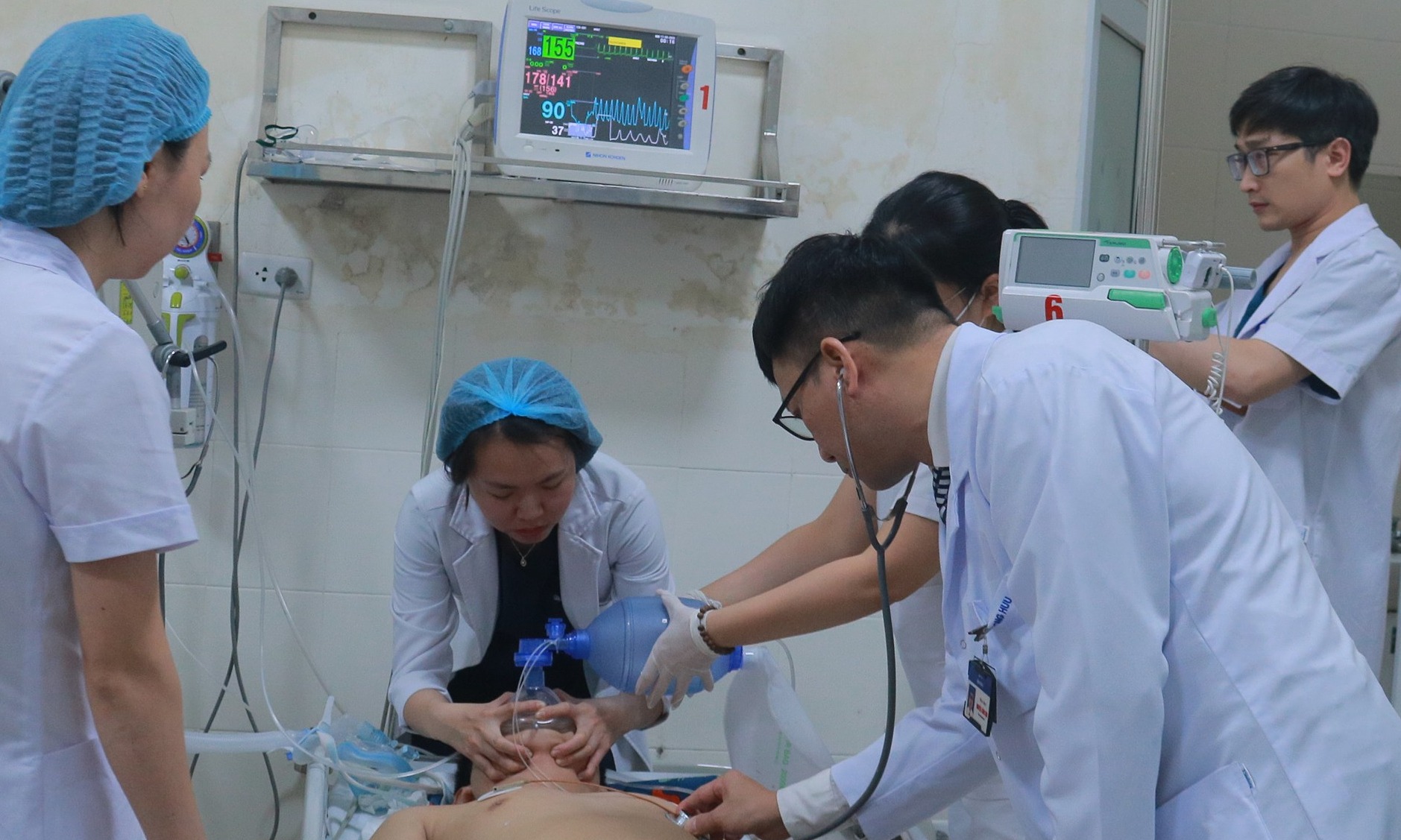 |
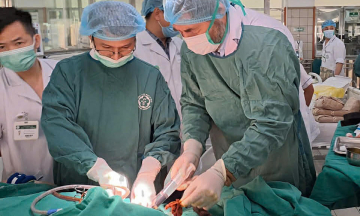
Doctors at E Hospital provide emergency care to a patient. Photo: Thanh Xuan
Also during the night, another patient was hospitalized in a semi-conscious state, with suspected myocardial infarction on a background of hypertension and diabetes. According to a representative from the Emergency Department, during New Year's Eve, doctors simultaneously managed multiple complex cases such as cerebrovascular accidents, myocardial infarctions, intestinal obstructions, and domestic injuries. The hospital arranged 24-hour on-call shifts with full internal medicine, surgery, resuscitation specialists, and an outpatient emergency team to ensure timely handling of all situations.
In the Internal Medicine Intensive Care and Anti-Poisoning Department, doctors treated 21 patients, including 15 severe cases requiring dialysis and continuous monitoring. Doctor Huu stated that the hospital also cared for over 300 inpatients during Tet. The hospital, alongside benefactors, provided funding to organize thousands of free meals for patients, their families, and staff on Tet duty during the three peak days, from the 29th day of the twelfth lunar month to the second day of the first lunar month.
Not only E Hospital, but the operating rooms of many major central hospitals like Viet Duc and Bach Mai also remained lit throughout the night. Viet Duc Hospital continuously admitted severe emergency cases. On the last day of the year alone, the on-call shift received over 100 emergency cases, primarily due to traffic accidents.
Associate Professor, Doctor Duong Duc Hung, Director of Viet Duc Friendship Hospital, reported that during Tet, the hospital opened an additional operating room A to promptly provide emergency care for trauma cases such as limb fractures, spinal injuries, and maxillofacial injuries. Bach Mai Hospital maintained inter-departmental red alerts with the principles of not refusing emergency care, not shifting patients, and not allowing systemic errors due to negligence.
Visiting Bach Mai and Viet Duc Hospitals on the 29th day of the twelfth lunar month, Prime Minister Pham Minh Chinh expressed his emotion. He noted that on the last day of the year, while many people wished to reunite with their families, medical staff were still on duty, seizing every "golden hour" to save patients. Amidst the new year celebration atmosphere, many doctors and nurses quietly worked in brightly lit emergency rooms. For them, New Year's Eve is not just a moment of temporal transition, but a race against time to reclaim the lives of critically ill patients.
Le Nga