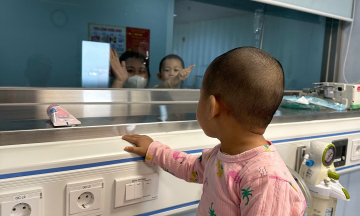
Doctor Nguyen Thi Viet Ha, a dermatologist at Tam Anh Cau Giay General Clinic, stated that Mai's hair loss was not due to natural causes like scalp disease or hormonal issues, but rather mechanical damage from pulling. The sparse patches of hair were uneven, with strands of varying lengths, some even broken short. Her scalp showed no inflammation or flaking.
Mai frequently twisted and pulled her hair while watching television or doing homework. This behavior repeated throughout the day, intensifying during stress, high concentration, or occurring unconsciously.
Doctor Ha diagnosed Mai with trichotillomania, a behavioral disorder within the obsessive-compulsive disorder (OCD) spectrum, affecting 0.5-2% of the global population. This syndrome is often mistaken for scalp fungal infections, alopecia areata, or hormonal disorders. However, it presents as non-pathological hair loss, concentrated in areas children can easily reach, accompanied by unevenly broken hair, and no signs of scalp inflammation.
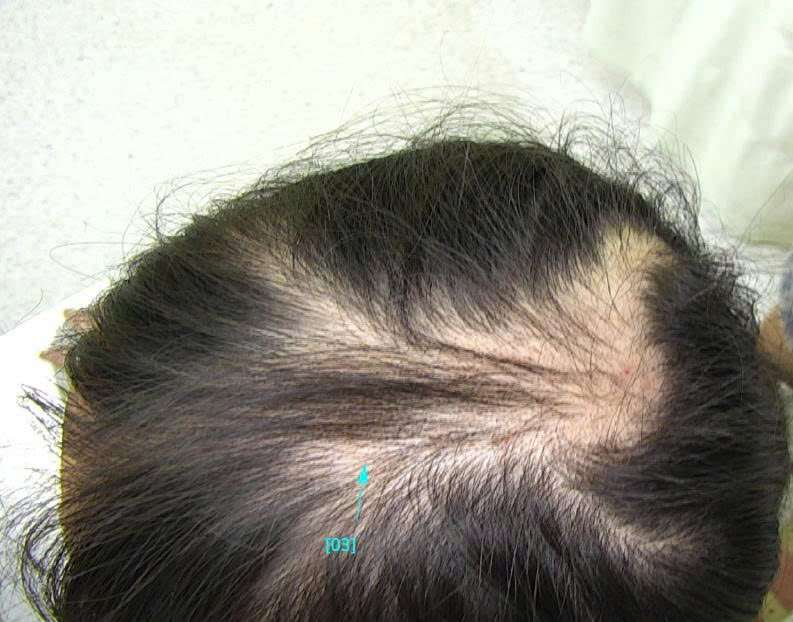 |
Image of Mai's sparse hair patch on her scalp. *Photo: Tam Anh Cau Giay General Clinic* |
According to Doctor Ha, hair-pulling syndrome in children is more than a bad habit; it relates to psychological and emotional factors. Children often pull hair when stressed, anxious, bored, or highly focused, such as watching television or studying. This repetitive behavior gradually becomes a reflex, making it hard for children to control, even when aware of the hair loss.
In Mai's case, doctors focused not only on hair treatment but also on behavior control. Master, Doctor Pham Van Duong, a psychology and psychiatry specialist, guided the patient to identify when the hair-pulling habit occurred, especially during stress or prolonged concentration. Additionally, behavioral therapy helped the child replace hair pulling with other activities, such as: holding a small object, squeezing a stress ball, or redirecting attention to other tasks. After 3 months of treatment, the patient's hair regrew.
If the patient does not respond to behavioral therapy, doctors may prescribe specific medications (SSRI antidepressants, tricyclic antidepressants, etc.) to modify the behavior. Families received advice on gentle monitoring instead of scolding, which could increase the child's stress. A stable living environment, reduced academic pressure, and increased physical activity also help improve the condition.
When the behavior is well-controlled, hair follicles can recover, and hair can regrow normally according to its natural cycle. However, without early intervention, widespread hair loss can occur, affecting the child's appearance and psychological well-being in the long term.
Thanh Ba