Doctor Tran Tan Phat, from the Endocrinology-Diabetes Department at Tam Anh General Hospital, Ho Chi Minh City, explained that pancreatic neuroendocrine tumors are neuroendocrine tumors that primarily arise from pancreatic islet cells—clusters of endocrine cells scattered throughout the pancreas. These tumors can secrete excessive insulin, increasing endogenous hyperinsulinemia and leading to hypoglycemia. Medical literature notes that pancreatic neuroendocrine tumors have an incidence of one to four in one million people annually.
Over two months, Ms. Kim fainted three times. Her symptoms were similar each time: sudden fatigue, dizziness, shaky limbs, and headache, followed by loss of consciousness. She was diagnosed with hypoglycemia. The 4th time, she fainted with convulsions and was admitted to Tam Anh General Hospital, Ho Chi Minh City.
Blood glucose test results were very low, around 33 mg/dL (the average range is 80-120 mg/dL). Doctors diagnosed Ms. Kim with severe hypoglycemia, high blood pressure, and convulsions, monitoring for epileptic seizures. They administered an intravenous glucose solution to stabilize her blood sugar and monitored her in the hospital.
According to Doctor Phat, the patient exhibited characteristics of Whipple's triad—three diagnostic signs of hypoglycemia—including symptoms like sweating, hand tremors, dizziness, and fainting; low blood glucose levels; and symptom resolution when blood glucose rises, all suggesting an endocrine tumor.
Doctors ordered a fasting test (a blood glucose test after 8-12 hours of fasting), which was positive. Endoscopic ultrasound and CT scan results revealed a 23x23 mm tumor with increased vascularity in the tail of the pancreas, leading to a diagnosis of an insulin-secreting pancreatic neuroendocrine tumor, or insulinoma.
"Excessive insulin secretion from the tumor causes sudden and frequent hypoglycemia, which can lead to accidents in daily life," Doctor Phat stated.
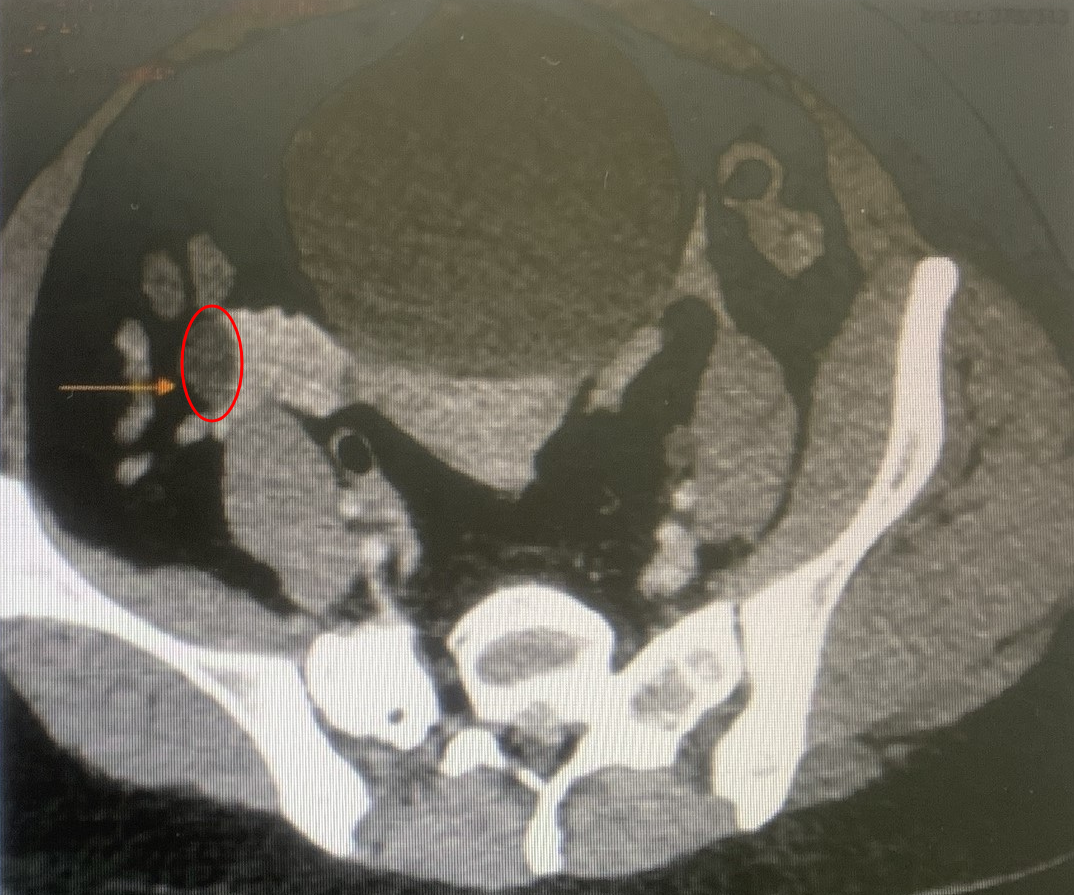 |
CT scan showing the pancreatic neuroendocrine tumor. Photo: Tam Anh General Hospital |
CT scan showing the pancreatic neuroendocrine tumor. Photo: Tam Anh General Hospital
After a consultation, doctors decided to perform laparoscopic surgery to remove Ms. Kim's tumor. Post-surgery, the patient's blood glucose returned to normal levels.
Most pancreatic neuroendocrine tumors are benign. Initial symptoms are often subtle, with patients experiencing episodes of hypoglycemia accompanied by dizziness, sweating, confusion, weakness, rapid heartbeat, and headache. If insulin levels are excessively high, patients may experience prolonged fatigue, blurred vision, and convulsions.
 |
Doctor Phat during Ms. Kim's follow-up examination. Photo: Tam Anh General Hospital |
Doctor Phat during Ms. Kim's follow-up examination. Photo: Tam Anh General Hospital
Pancreatic neuroendocrine tumors can become malignant, but this progression is usually slow and hard to detect. The tumor can also metastasize to other parts of the body, most commonly the lymph nodes and liver. Clinical symptoms vary, potentially causing sudden dizziness and loss of consciousness due to hypoglycemia, which is easily mistaken for neurological conditions. When abnormal signs appear, patients should seek medical attention for examination and diagnosis to prevent the disease from progressing and causing complications.
Bach Duong
*Patient's name has been changed
| Readers can submit questions about endocrine diseases here for doctors to answer. |