Recently, the frequency of Thao's headaches increased, occurring more than 14 days a month, and painkillers offered no relief. Dr. Ly Thi Kim Ngan, a First Degree Specialist in the Department of Neurology at the Center for Neurosciences, Tam Anh General Hospital, Ho Chi Minh City, ruled out secondary causes of headache such as brain tumors, cerebral hemorrhage, neurological infections, or cerebrovascular disease.
An assessment using the 9-question Patient Health Questionnaire (PHQ-9) for depression symptoms showed Thao scored 12 points, indicating a moderate level. A 7-question Generalized Anxiety Disorder (GAD-7) scale for anxiety symptoms recorded 11 points, also a moderate level. Doctors determined the patient had migraine headaches accompanied by anxiety, depression, and sleep disorders.
Migraine is a common neurological condition causing moderate to severe pain, often accompanied by nausea and sensitivity to light and sound. According to Dr. Ngan, migraines and mental disorders may be linked to nervous system activity, neurotransmitters that control emotions and pain sensations, and the body's response to stress.
The two groups of conditions can interact. Recurrent headaches lead to insomnia, reduced work capacity, social avoidance, and fear of the next pain episode. Conversely, stress and lack of sleep can trigger migraines, making attacks more frequent and creating a difficult-to-control cycle.
 |
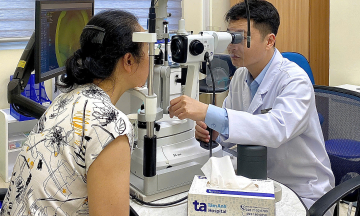
Dr. Ngan examining Thao's neurological function. *Photo: Tam Anh General Hospital*
Doctors developed a multimodal protocol, simultaneously treating Thao's headaches, sleep disorders, and emotional stability. The patient received adjusted medication for migraine control and prevention, while a psychologist provided counseling on stress management, reducing anxiety about pain, and regulating sleep.
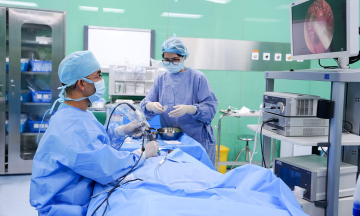
The doctors also administered repetitive transcranial magnetic stimulation (rTMS) to the patient. This non-invasive method uses magnetic pulses to target brain regions involved in regulating pain sensation and emotions, which can help reduce the frequency and severity of migraine attacks while improving mood and sleep.
 |
Thao undergoing repetitive transcranial magnetic stimulation to support treatment for migraine headaches and symptoms of anxiety and depression. *Photo: Tam Anh General Hospital*
After approximately 6 weeks of treatment, the frequency of Thao's headaches decreased from over 10 days to two to three days per month. Her pain was milder, and she needed less medication. She slept better, experienced reduced nervousness and anxiety, and returned to normal activities.
According to Dr. Ngan, when sleep and mood improve, migraine triggers are also better controlled. Conversely, a reduction in pain frequency helps patients worry less about recurrent migraine headaches.
Patients should maintain a consistent sleep schedule, avoid staying up late, eat regular meals, engage in appropriate physical activity, and manage stress. They should not self-increase painkiller dosages or use sedatives or antidepressants without medical guidance, as drug abuse can lead to more frequent and harder-to-treat headaches.
Individuals experiencing increasingly frequent migraine headaches that affect their work, sleep, or mood should consult a neurologist. Early detection and treatment of co-occurring issues help achieve comprehensive disease control, limiting the cycle of headaches, insomnia, and emotional disorders.
Trong Nghia
| Readers can submit questions about neurological conditions here for doctors to answer. |