Kallmann syndrome is a congenital form of hypogonadism caused by a gene abnormality. Normally, the hypothalamic-pituitary axis in the brain secretes gonadotropic hormones, which activate puberty and reproductive function. In men with Kallmann syndrome, puberty is delayed or does not occur, leading to hypogonadism and an absence of sperm in semen, resulting in infertility.
Six years ago, Nguyen Tien underwent hormone therapy that helped restore his ability to produce sperm, allowing him to conceive naturally. He also had one sperm sample cryopreserved at the hospital. In early 2025, this cryopreserved sperm sample was thawed for in vitro fertilization (IVF), but the attempt was unsuccessful. He then sought treatment at the Center for Reproductive Assistance, Tam Anh General Hospital TP HCM (IVF Tam Anh TP HCM). Doctor Duong Quang Huy, head of the Andrology unit, explained that after his initial successful treatment, Nguyen Tien stopped medication and did not return for follow-up appointments. This led to a severe decline in his sperm production, with a semen analysis revealing no sperm.
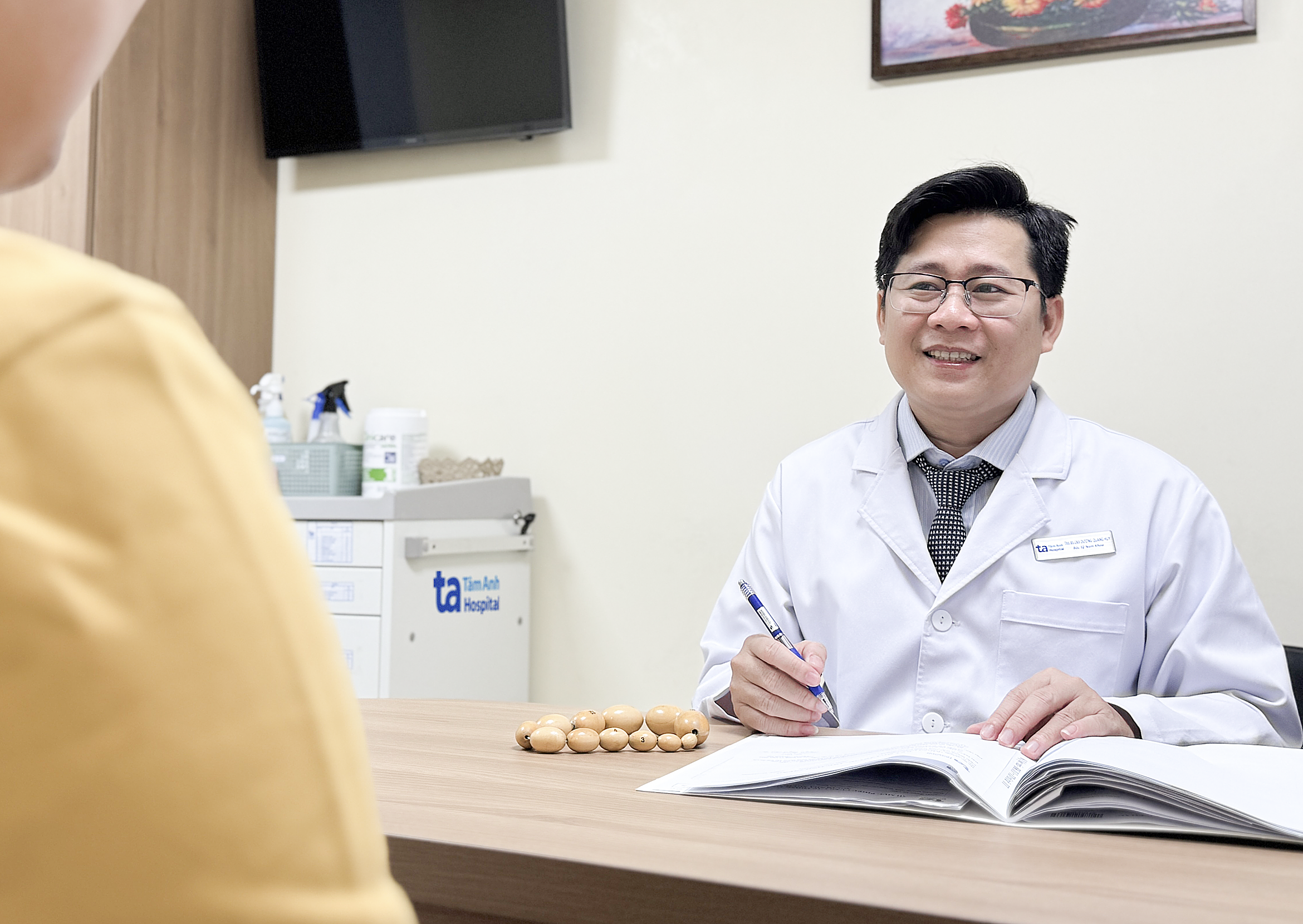 |
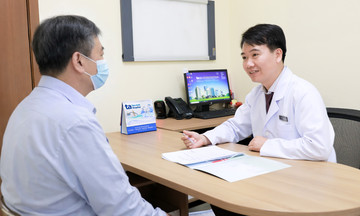
Doctor Duong Quang Huy shares joy with a patient after treatment. *Photo: Hoai Thuong*
Doctor Huy treated Nguyen Tien with medication and regular monitoring, including monthly supplementary injections of gonadotropic hormones to reactivate spermatogenesis. Recent tests show the patient now has about 1 million sperm. This is compared to the average male, who produces over 16 million sperm per milliliter of semen during ejaculation.
Doctor Huy believes that despite this low sperm count, Nguyen Tien still has the potential for natural conception. However, he must continue medication to maintain and improve his male hormone production. If the couple does not conceive within six months to one year, a comprehensive reproductive health check for the wife is recommended to rule out uterine abnormalities. Nguyen Tien also has the option of cryopreserving sperm and undergoing IVF to have more children sooner.
World medical literature indicates that inherited Kallmann syndrome is more common in boys, affecting 1 in 30,000, and in girls, affecting 1 in 125,000. Characteristic signs include small testicles, absence of pubic hair, lack of beard growth, low or absent sexual desire, and reduced or lost sense of smell. Doctor Huy advises men who exhibit these signs after puberty to seek medical consultation and undergo genetic testing.
Treatment involves supplementing gonadotropic hormones to restore sperm production. If necessary, micro-TESE microsurgery can be combined to retrieve sperm directly from the testicles for in vitro fertilization. Kallmann syndrome can be inherited by future generations. Therefore, patients should undergo genetic testing and embryo screening to select embryos free of genetic abnormalities for uterine transfer.
Hoai Thuong
*Patient's name has been changed