At the 2026 scientific conference, themed "Research and Application in Medicine" and organized by the Vietnam Medical Association, experts updated on various issues in disease prevention and treatment, from life-course vaccination to new treatment methods for non-communicable diseases.
One of the diseases highlighted was meningococcal disease. Caused by the bacterium Neisseria meningitidis, it typically manifests as purulent meningitis and/or sepsis. This bacterium is divided into 12 different serogroups, with serogroups A, B, C, X, Y, and W being the most common and dangerous. The disease can progress rapidly, causing death within 24 hours with a mortality rate potentially reaching 50% if not treated promptly.
According to data from the infectious disease surveillance software (Ministry of Health), as of 30/7, the country recorded 53 meningococcal infection cases. Ho Chi Minh City (TP HCM) recorded 20 cases, accounting for 37,7%. Results from patient samples at Pasteur Institute TP HCM showed that meningococcal cases in the southern region in 2025 belonged to serogroup B.
The disease is common in children under 5 years old and in adolescents and young adults aged 15 to 24. Approximately 25-32% of adolescents and young adults can carry N. meningitidis bacteria in their nasopharynx. This makes this age group both potential carriers and transmitters of the pathogen, as well as being at risk for invasive meningococcal disease. Meanwhile, upon entering adolescence, many individuals tend to pay less attention to vaccination, no longer following vaccination schedules as closely as during childhood, thereby creating an immunity gap.
Life-course vaccination is also considered in the context of Vietnam's rapidly aging population. Associate Professor Doctor Vu Thi Thanh Huyen, Head of the Department of Endocrinology - Musculoskeletal, National Geriatric Hospital, stated that nearly two-thirds of people over 60 years old have at least one chronic underlying condition, and about half of them suffer from multiple underlying conditions simultaneously.
Chronic diseases can increase the risk of contracting and experiencing severe progression of certain infections such as RSV, shingles, influenza, and pneumococcal disease. Therefore, in addition to treating and managing underlying conditions, preventive measures are also considered a part of elderly healthcare.
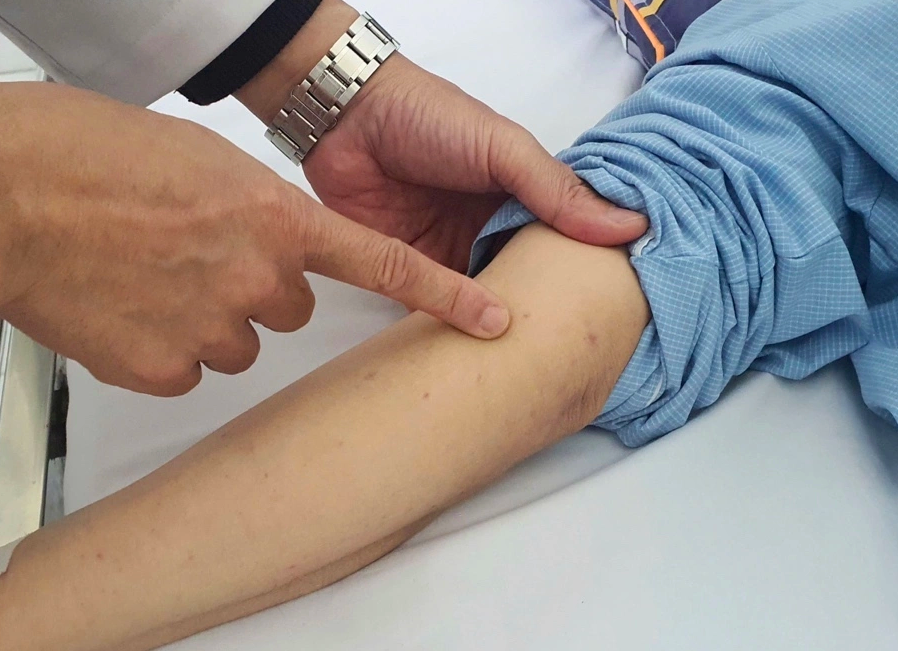 |
Necrotizing hemorrhagic rash on the skin of a patient with meningococcal disease. Photo: Nguyen Ha. |
Alongside the prevention of infectious diseases, experts also updated on new treatment methods for non-communicable diseases, including severe asthma. Associate Professor Doctor Phan Thu Phuong, Vice Head of the Department of General Internal Medicine, Hanoi Medical University, and Director of the Respiratory Center, Bach Mai Hospital, stated that inhalation therapy remains the cornerstone in treating asthma and chronic obstructive pulmonary disease (COPD).
For patients with severe asthma who have not responded to standard treatment, the trend is towards personalization using biological therapy. This is a targeted treatment method, addressing specific biological characteristics of the disease. This therapy can help reduce the risk of acute asthma attacks, decrease the need for oral corticosteroids, and improve patients' physical and social activities.
According to experts, each life stage presents different health risks. Community healthcare needs to be viewed more comprehensively, combining proactive disease prevention, life-course protection, and optimized treatment for each patient group.
Le Nga