The increasing use of phones, tablets, and computers, driven by technological advancements, combined with the demands of office work involving continuous keyboard use, often at improper heights, makes individuals susceptible to wrist and hand conditions. This is according to Associate Professor, Doctor Phan Dinh Mung, Deputy Director of Military Hospital 175.
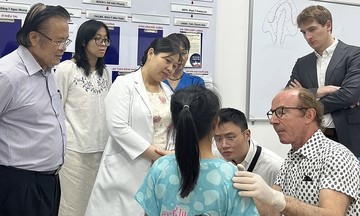
Speaking on the sidelines of a professional exchange workshop with a delegation of experts from Stanford University (US) on 19/3, Doctor Mung identified carpal tunnel syndrome as a common condition among office workers. In its early stage, patients experience hand numbness and fatigue, particularly on the palmar surface of fingers one, two, three, and four. Hand joints become easily tired when gripping objects, leading to a sensation of an unstable grip, frequently dropping items, and discomfort when flexing the wrist.
As the condition progresses to a late stage, the transverse carpal ligament in the wrist compresses the median nerve, causing damage. This leads to muscle atrophy in the thenar eminence and the palmar interosseous spaces. At this advanced stage, the prognosis for recovery is poor; even after median nerve decompression surgery, hand function recovers minimally.
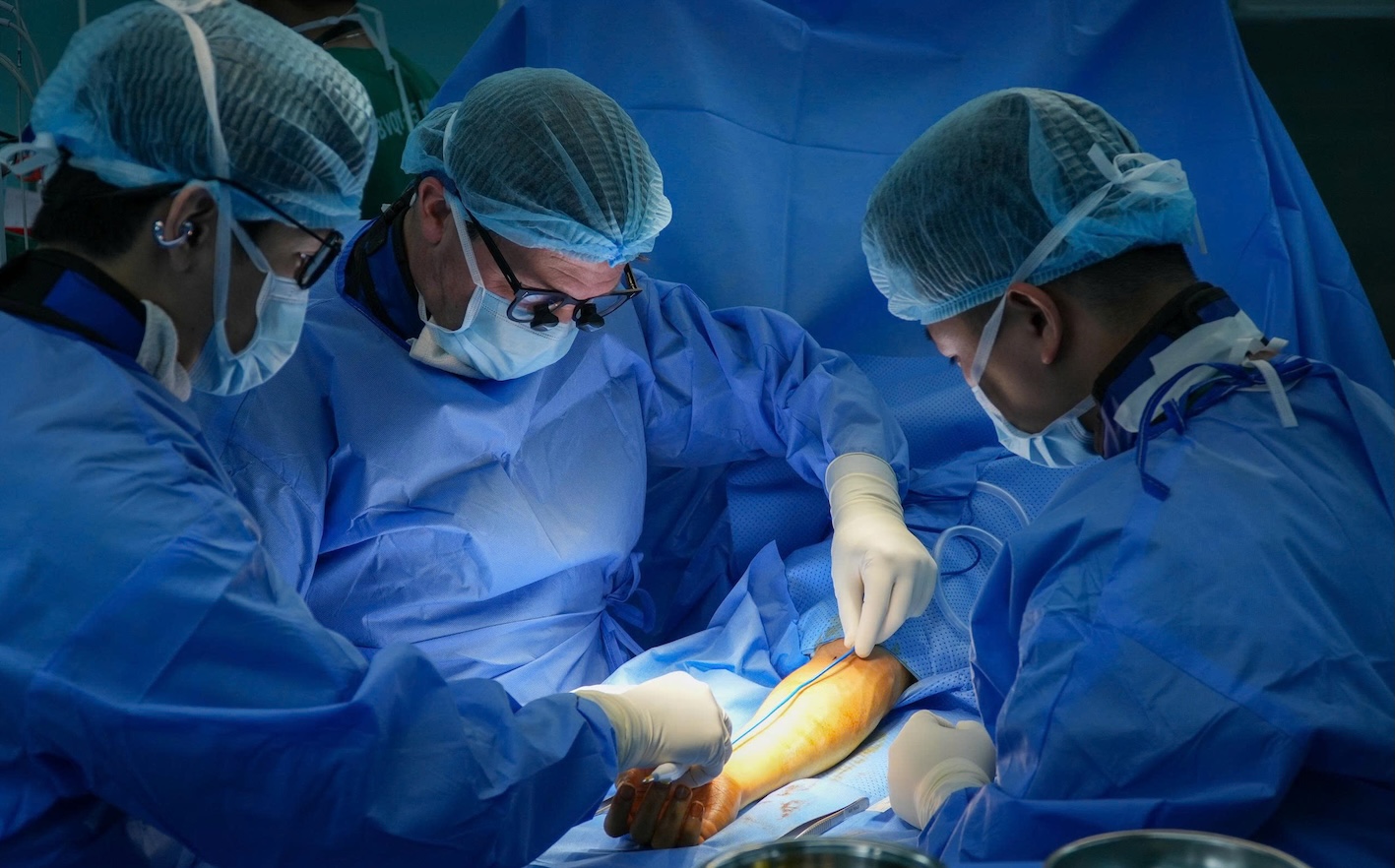 |
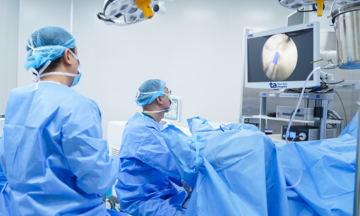
Doctors from Military Hospital 175 and US experts perform hand surgery on a patient, 19/3. Photo: Hospital provided.
To prevent wrist joint conditions, Doctor Mung advises adjusting daily habits and work posture. When using a computer, ensure proper wrist positioning and arrange the workstation and sitting posture for maximum wrist comfort, avoiding strain.
Electronic device usage should be moderate. If wrist pain or fatigue occurs, stop immediately to allow the joint to rest and relax.
Furthermore, minimize phone and tablet use while traveling in cars or buses to avoid vibrations that can stress joints and tendons. If you notice unusual numbness or fatigue, seek examination at orthopedic trauma facilities for early diagnosis and exclusion of carpal tunnel syndrome.
Le Phuong