Vitamin A is a fat-soluble vitamin crucial for maintaining vision, body development, immune function, and reproductive health. Adequate daily intake of vitamin A through diet is the best way to prevent deficiency. The recommended daily allowance (RDA) is 900 mcg for men and 700 mcg for women. Here are foods rich in vitamin A.
Animal-based foods
Vitamin A from animal sources exists as retinol, a form directly absorbed by the body. However, some foods like liver contain very high amounts, requiring moderate consumption to avoid excess. Excess vitamin A accumulates in the liver, leading to inflammation, damage, and potentially fibrosis or cirrhosis. Symptoms include headaches, joint pain, dry skin, and hair loss.
| No. | Food | Serving Size | Retinol Content (mcg) | % Daily Value (DV) |
| 1 | Beef liver (cooked) | 100g | 7.740 | 860% |
| 2 | Liver sausage | 100g | 8.310 | 923% |
| 3 | Cod liver oil | One tablespoon (14g) | 4.080 | 453% |
| 4 | Bluefin tuna (cooked) | 100g | 757 | 84% |
| 5 | King mackerel (cooked) | 100g | 252 | 28% |
| 6 | Goose pate (canned) | 1 tablespoon (13g) | 130 | 14% |
| 7 | Clams (canned) | 100g | 101 | 11% |
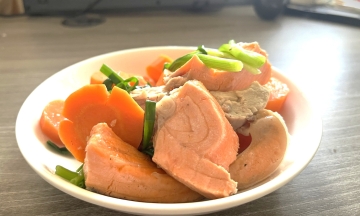
| 8 | Salmon (cooked) | 100g | 100 | 11% |
| 9 | Oysters (canned) | 100g | 98 | 11% |
| 10 | Butter | 1 tablespoon (14g) | 97 | 11% |
| 11 | Cream cheese | 28g | 87 | 10% |
| 12 | Whole milk | one cup (237 ml) | 78 | 9% |
| 13 | Boiled egg | one large (50g) | 75 | 8% |
| 14 | Salmon (cooked - other form) | 100g | 69 | 8% |
Plant-based foods
In plants, vitamin A exists as carotenoid precursors, especially beta-carotene, which the body converts into vitamin A as needed. This process primarily occurs in the intestines and liver, protecting cells, boosting the immune system, and supporting vision. These foods are safer for long-term consumption and particularly suitable for vegetarians or those following a healthy diet.
| No. | Vegetable Type | Serving Size | RAE* Content (mcg) | % Daily Value (DV) |
| 1 | Sweet potato (baked) | one cup (200g) | 1.920 | 213% |
| 2 | Carrots (cooked) | one cup (155g) | 1.280 | 142% |
| 3 | Pumpkin (baked) | one cup (205g) | 1.140 | 127% |
| 4 | Spinach (cooked) | one cup (180g) | 943 | 105% |
| 5 | Mustard greens (cooked) | one cup (190g) | 722 | 80% |
| 6 | Swiss chard (cooked) | one cup (175g) | 536 | 60% |
| 7 | Red bell pepper (raw) | one large fruit (164g) | 257 | 29% |
| 8 | Romaine lettuce (raw) | one cup (47g) | 205 | 23% |
| 9 | Kale (cooked) | one cup (118g) | 172 | 19% |
*RAE is the amount of vitamin A the body absorbs and utilizes.
Fruits
Many fruits also provide a significant amount of vitamin A, especially those with yellow, orange, or red hues. While their content may not be as high as dark leafy greens, fruits are easy to eat, convenient, and suitable for daily supplementation.
| No. | Fruit Type | Serving Size | RAE Content (mcg) | % Daily Value (DV) |
| 1 | Cantaloupe | one cup (160g) | 270 | 30% |
| 2 | Mango | one cup (165g) | 89 | 10% |
| 3 | Grapefruit | Half a fruit (154g) | 89 | 10% |
| 4 | Papaya | one cup (165g) | 78 | 9% |
| 5 | Apricots | two fruits (70g) | 67 | 7% |
| 6 | Watermelon | one cup (155g) | 43 | 5% |
| 7 | Tangerine | one fruit (109g) | 37 | 4% |
| 8 | Guava | two fruits (110g) | 34 | 4% |
| 9 | Passion fruit | two fruits (36g) | 23 | 3% |
Animal-derived vitamin A (retinol) is directly absorbed and highly effective, but excessive consumption can easily lead to surplus. Conversely, plant-derived vitamin A (carotenoids) is safer, with a lower risk of overdose, but requires conversion within the body. Combining both sources ensures balanced and effective vitamin A supplementation.
Bao Bao (Source: Healthline)