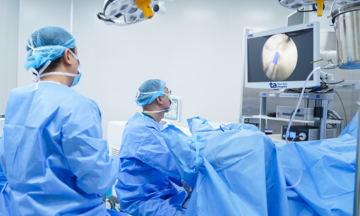
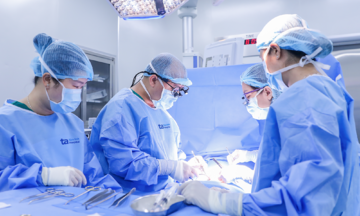
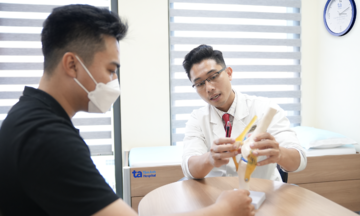
Vy, the mother, expressed her relief at the announcement of Benh vien Nhi dong 1's first kidney transplant on 20/3. "As parents, we only wish to give our children the best," she said, reflecting on her son's healthy recovery and feeling that her efforts had been rewarded.
The family's ordeal began a year ago when their previously healthy eldest son developed pale skin and facial swelling. His mother initially suspected malnutrition, only to be shocked by a diagnosis of end-stage renal failure from an unknown cause. Subsequently, the boy's life revolved around home peritoneal dialysis. His daily urine output plummeted to just 300 ml, necessitating extensive medication to manage blood pressure and stimulate blood formation.
A kidney transplant was identified as the best solution for the boy. His father was the first to volunteer, but tests showed he had an incompatible blood type and other unsuitable indicators. With no other options, all hope then rested on Vy. Fortunately, subsequent tests confirmed her complete compatibility as a donor.
However, during pre-transplant screening, Vy unexpectedly discovered she had another medical condition, necessitating three months of treatment. Her paramount fear during this time was not her own illness, but the agonizing thought that it "would take away her chance to save her son."
Through her sheer maternal will and timely medical intervention, all obstacles were overcome, allowing both mother and son to proceed with the major surgery on 5/3.
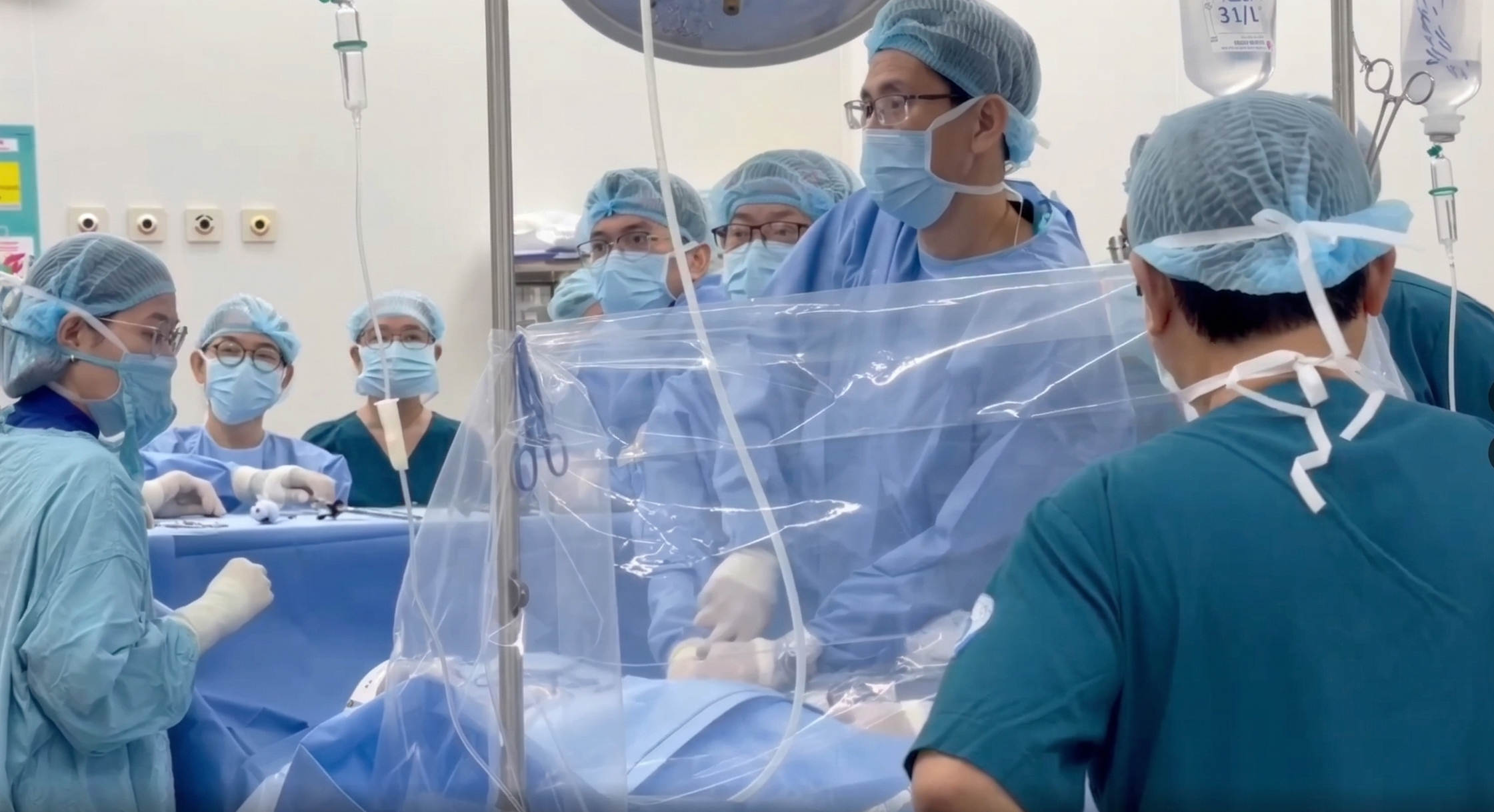 |
Medical staff during the first kidney transplant at Benh vien Nhi dong 1, 5/3. Photo: Hospital provided
This groundbreaking procedure was Benh vien Nhi dong 1's first kidney transplant, a significant achievement for one of the three tertiary pediatric facilities in Southern Vietnam. It received crucial support from Associate Professor Dr. Thai Minh Sam, former Head of Urology at Benh vien Cho Ray. The surgical team encountered a complex anatomical challenge: the mother's kidney presented with two arteries and two veins (typically there is one), and the veins were unusually short and low-lying. Concurrently, the child recipient's small stature added another layer of difficulty. The entire surgical team erupted in relief when, immediately after transplantation, the donated kidney regained its healthy color and the patient began producing urine on the operating table, confirming the new kidney's successful function.
Dr. Nguyen Duc Quang, Head of Nephrology and Endocrinology, attributed the child's excellent recovery to the early transplantation, which occurred just one year after diagnosis, preventing severe physical deterioration. On the first postoperative day, the patient's urine output surged to over 4,600 ml. By the morning of 16/3, the boy was discharged in perfect health. His mother also recovered well, being discharged four days after her surgery.
Dr. Ngo Ngoc Quang Minh, Deputy Director of Benh vien Nhi dong 1, emphasized that organ transplantation represents the "final piece" in completing the specialized medical services offered by this tertiary hospital. Looking ahead, the hospital plans to aggressively develop five specialized areas, with ambitions to progress towards heart and liver transplants.
Benh vien Nhi dong 1 currently manages approximately 31 pediatric patients suffering from end-stage chronic renal failure. Although organ transplantation offers the optimal solution, the supply of donated organs remains critically scarce. Doctors express hope for increased organ donations from brain-dead individuals to save more children.
Le Phuong