The Ministry of Health has included this roadmap in a draft decree, currently open for public comment, that details and guides the implementation of several articles of the Law on Disease Prevention. This initiative aims to realize Politburo Resolution 72, which seeks to provide free periodic health check-ups for all citizens and move towards basic medical fee exemptions by 2030.
Starting in 2026, free annual periodic health check-ups or screenings will prioritize vulnerable groups. These include the elderly, people with disabilities, individuals in poor or near-poor households, those with meritorious service, people with chronic diseases, and residents of ethnic minority and mountainous regions, areas facing socio-economic challenges, island communes, and special economic zones.
By 2028, free annual periodic health check-ups or screenings will extend to all remaining population groups.
The Ministry of Health will issue the scope of examinations and screening lists. Citizens will receive general check-ups and screenings for common diseases, guided by professional standards. Services will be provided at qualified medical facilities or through mobile units, ensuring regulatory compliance.
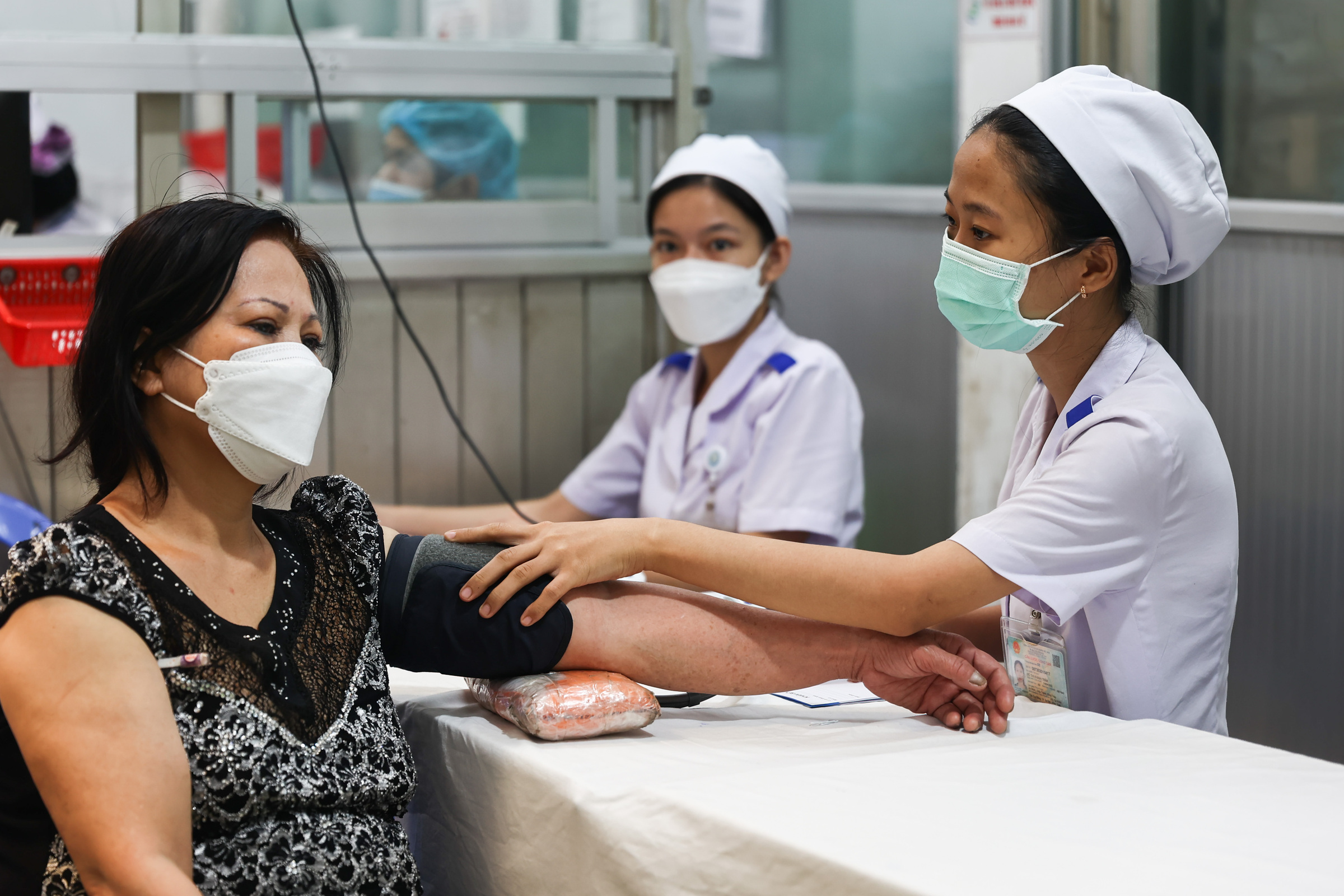 |
A doctor examines a patient at TP HCM Hospital for Tropical Diseases. Photo: Quynh Tran
Hoang Minh Duc, Director of the Department of Disease Prevention under the Ministry of Health, estimates that approximately 24 million workers and 20 million individuals from priority groups will receive periodic health check-ups. By 2026, the program aims to cover about 50% of the population with health check-ups and disease screenings. The initiative will expand further in 2027, targeting full population coverage by 2028.
Elaborating on the types of diseases to be screened, Duc stated that local authorities would tailor examination plans based on regional disease patterns. "For middle-aged or elderly groups, for instance, screening might concentrate on common conditions like high blood pressure, diabetes, dyslipidemia, gout, or prostate issues," Duc explained, "to enhance effectiveness and avoid resource wastage."
The draft decree outlines funding from the state budget, the Health Insurance Fund, and other legal sources. Payment principles, service lists, and methods will align with regulations on medical service pricing and the scope of health insurance benefits, ensuring transparency and feasible implementation. People's Committees at all levels and relevant agencies are tasked with planning, deployment, resource allocation, inspection, supervision, and reporting on the program's outcomes.
Previously, Minister of Health Dao Hong Lan clarified that the policy of free periodic health check-ups, leading to basic medical fee exemptions, does not imply "absolute free care." Instead, the goal is to minimize patient co-payments, expand health insurance (BHYT) coverage, and ultimately reduce mortality rates by facilitating earlier disease detection. The policy aims to foster an equitable, effective, and sustainable healthcare system where no one is left behind.
Under this directive, the State and the Health Insurance Fund will cover basic, essential medical services, initially for policy beneficiaries and vulnerable populations. For elective medical services beyond the basic scope, patients will still contribute a portion of the cost, promoting judicious use and cost-efficiency. Additionally, certain preventive services, chronic disease management, periodic check-ups, and demand-based screenings at the primary care level will also be funded by the state budget and the Health Insurance Fund.
Le Nga