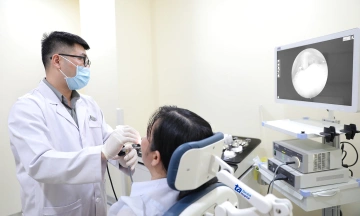
Ong An initially received antibiotic treatment for seven days at a local hospital. His fever subsided, and inflammation indicators decreased. However, one day after discharge, he developed shaking chills and fever in the afternoon and evening, prompting him to seek further examination at Tam Anh General Hospital Hanoi.
Master, Doctor Doan Thi Hai Yen, from the Department of General Internal Medicine, re-evaluated Ong An's inflammation markers, performed blood and urine cultures, screened for acute fever-causing viruses, and ruled out other conditions like pneumonia or pleural effusion. Subsequently, she ordered a transesophageal echocardiogram (TEE) to provide a clearer view of the heart chambers, valves, and any small lesions that a standard transthoracic echocardiogram might miss.
The patient underwent intravenous anesthesia to ensure a safe echocardiogram procedure. The results revealed a highly mobile echogenic mass, measuring approximately 1.7x5.9 mm, located on the atrial surface of the posterior mitral leaflet. Doctors diagnosed this as a heart valve vegetation caused by infective endocarditis.
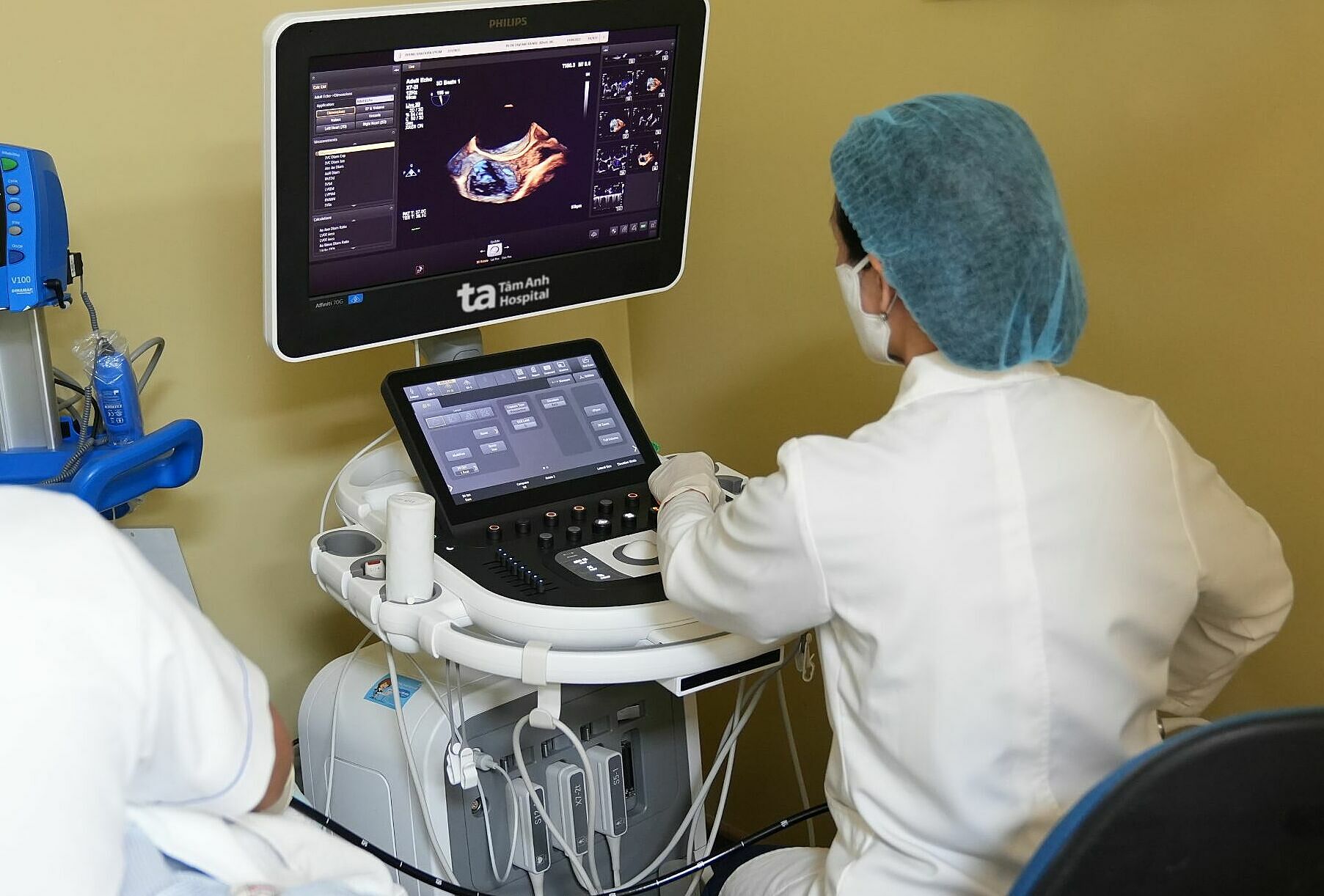 |
A doctor performs a transesophageal echocardiogram on the patient to assess the lesion. Photo: Tam Anh General Hospital |
Infective endocarditis is a condition that develops when bacteria or other pathogens enter the bloodstream and attach to the heart's inner lining (endocardium) or heart valves, forming an infective vegetation. While uncommon, this disease can lead to severe complications such as stroke, heart failure, and a high risk of mortality if not detected early.
Ong An received treatment following a protocol involving two specific antibiotics tailored for infective endocarditis. Doctors closely monitored the antibiotic concentrations in his blood, adjusting the dosage based on his kidney function.
After one week of treatment, the patient's fever resolved, and inflammation indicators significantly decreased. The vegetation on his mitral valve also shrunk to approximately 2x3 mm.
Doctors advise individuals experiencing a fever for more than five to seven days, particularly if the fever recurs after initial treatment, to seek medical examination for early detection of potentially dangerous underlying conditions.
Thanh Ba
| Readers can submit questions about cardiovascular diseases here for doctors to answer. |