When Mr. Kha suddenly experienced weakness on one side of his body and difficulty speaking, his family called Tam Anh General Hospital, TP HCM, requesting emergency care. Based on the described symptoms, the on-duty doctor determined that the patient likely had an acute ischemic stroke. Consequently, a remote stroke alert protocol was activated, preparing the emergency team, a dedicated pathway, the CT scan room, and necessary medication.
Doctor Nguyen Van Nhan, from the Department of Neurology at the Neuroscience Center, stated that Mr. Kha lived approximately 20 minutes from the hospital. Activating the protocol in advance significantly reduced the response time upon the patient's arrival.
The patient arrived at the hospital with one-sided weakness, speech disorder, and jaw stiffness. A cranial CT scan was performed immediately, and within 5 minutes, the results ruled out brain hemorrhage. Doctors promptly administered intravenous thrombolysis in the CT scan room to restore blood flow, maximizing the "golden hour" for brain rescue.
"Mr. Kha received timely treatment thanks to the coordination between his family and the hospital," Doctor Nhan said, adding that the thrombolytic drug was administered approximately 10 minutes after admission. Typically, the door-to-needle time (from hospital admission to drug administration) is usually under 60 minutes.
In cases of ischemic stroke, every minute without treatment can lead to millions of nerve cells suffering irreversible damage. Early revascularization maximizes the "golden hour", increasing the chance of saving recoverable brain tissue and limiting sequelae, especially in elderly patients like Mr. Kha, who often have poorer neurological recovery potential.
About 30 minutes after the drug infusion, Mr. Kha showed significant improvement in his neurological symptoms, able to move, communicate, and perform daily activities almost normally. After one day of treatment, his NIHSS score—a scale used to assess stroke severity—decreased from a symptomatic level to 0 points, with no clinical neurological deficits observed.
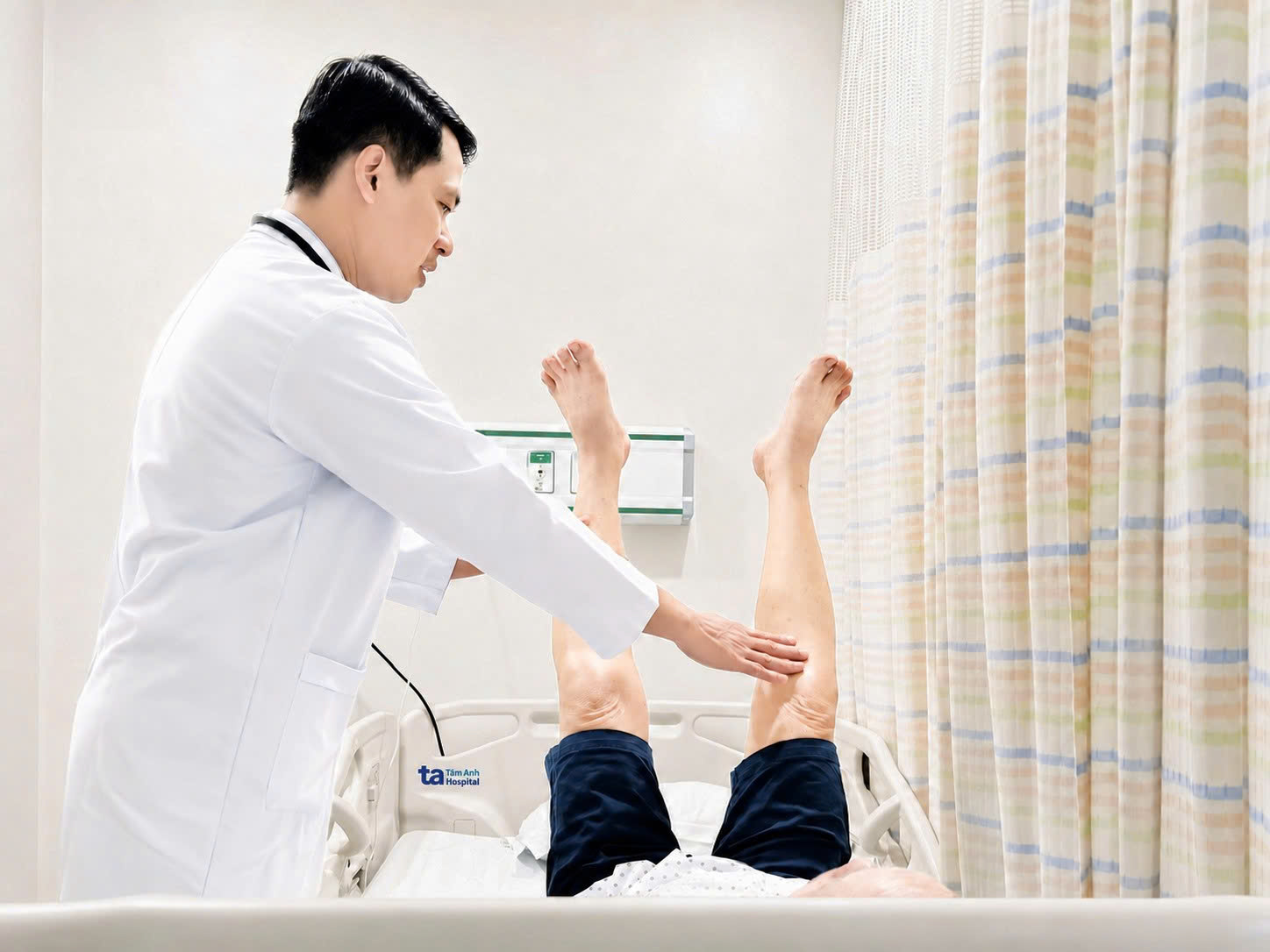 |
Doctor Nhan checks Mr. Kha's muscle strength after one day of treatment. Photo: Tam Anh General Hospital |
Stroke in elderly individuals often has a worse prognosis due to atherosclerotic blood vessels, multiple underlying medical conditions, and reduced neurological recovery capacity. Many survivors still face the risk of paralysis, loss of communication ability, or complete dependence on caregivers.
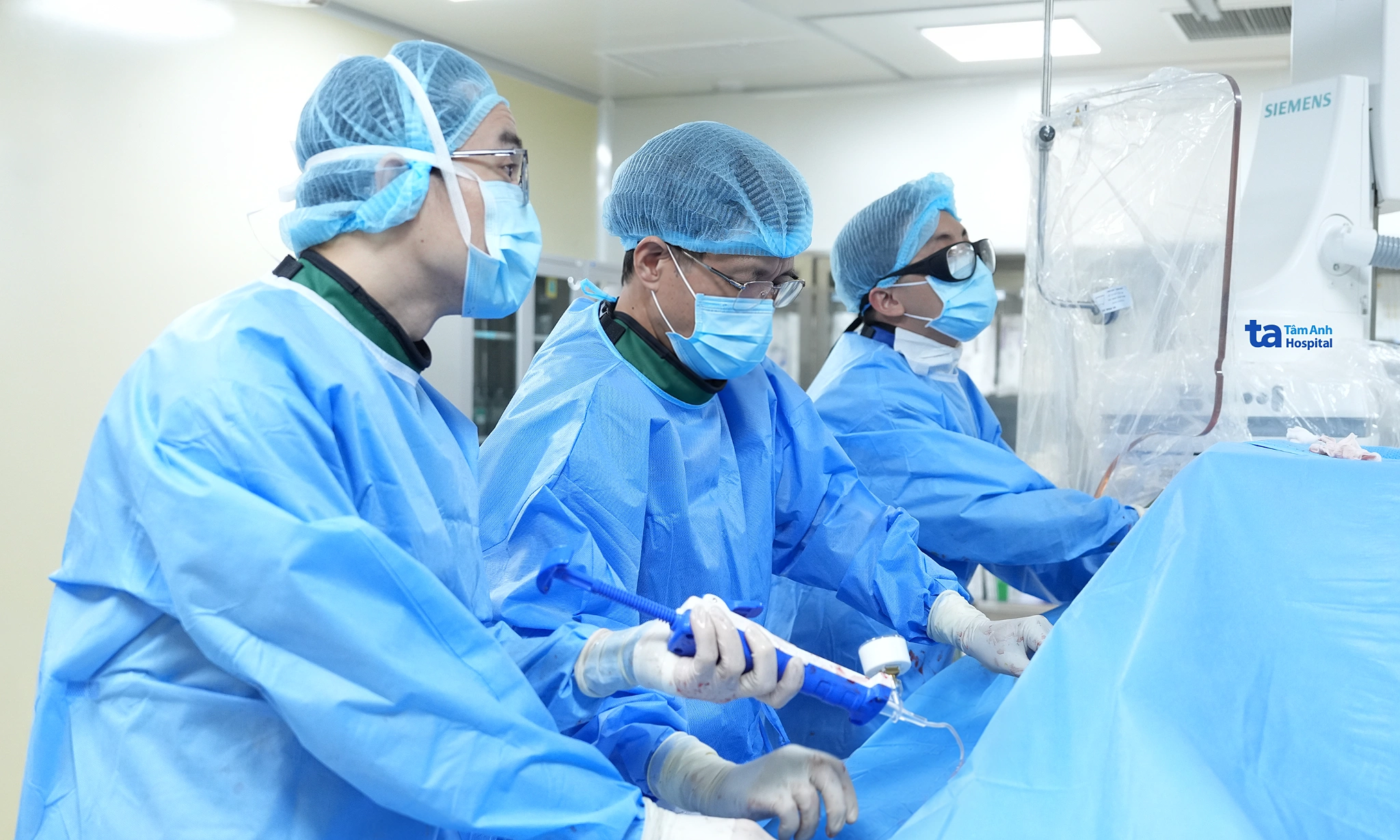
The doctor explained that in addition to thrombolysis, depending on the individual case, stroke patients may be prescribed endovascular thrombectomy, surgical hematoma removal, embolization of ruptured blood vessels, or a combination of these treatments. The choice of treatment depends on the type of stroke, the location of the lesion, the time of symptom onset, and the patient's clinical condition.
Doctors recommend that elderly individuals, especially those with hypertension, diabetes, dyslipidemia, or atrial fibrillation, undergo regular check-ups, adhere to treatment for underlying conditions, and undergo stroke screening as advised by their doctor. If family members suddenly notice facial drooping, difficulty speaking, limb weakness or paralysis, blurred vision, or other abnormal neurological signs, they should promptly take the individual to the nearest stroke-ready medical facility or call emergency services 115.
Trong Nghia
*Patient's name has been changed
| Readers can ask questions about neurological diseases here for doctors to answer |