Adenovirus is a group of viruses that can attack various body organs, commonly causing respiratory, digestive, and eye-related illnesses. Dr. Duong Minh Phuc, from the High-Tech Eye Center at Tam Anh General Hospital TP HCM, stated that Adenovirus is a common cause of infectious conjunctivitis, typically manifesting as pink eye, itching, a gritty sensation, and watery eyes. The condition occurs when the transparent membrane covering the white of the eye and lining the inside of the eyelids is attacked by the virus, leading to inflammation. Patients may also experience swollen eyelids and light sensitivity, potentially accompanied by fever, a sore throat, and rhinitis.
Adenovirus conjunctivitis usually begins in one eye before spreading to the other. The condition is often benign, with symptoms gradually subsiding after one to three weeks. However, some cases can lead to corneal complications, such as superficial punctate keratitis. Prolonged damage or corneal scarring can impact vision.
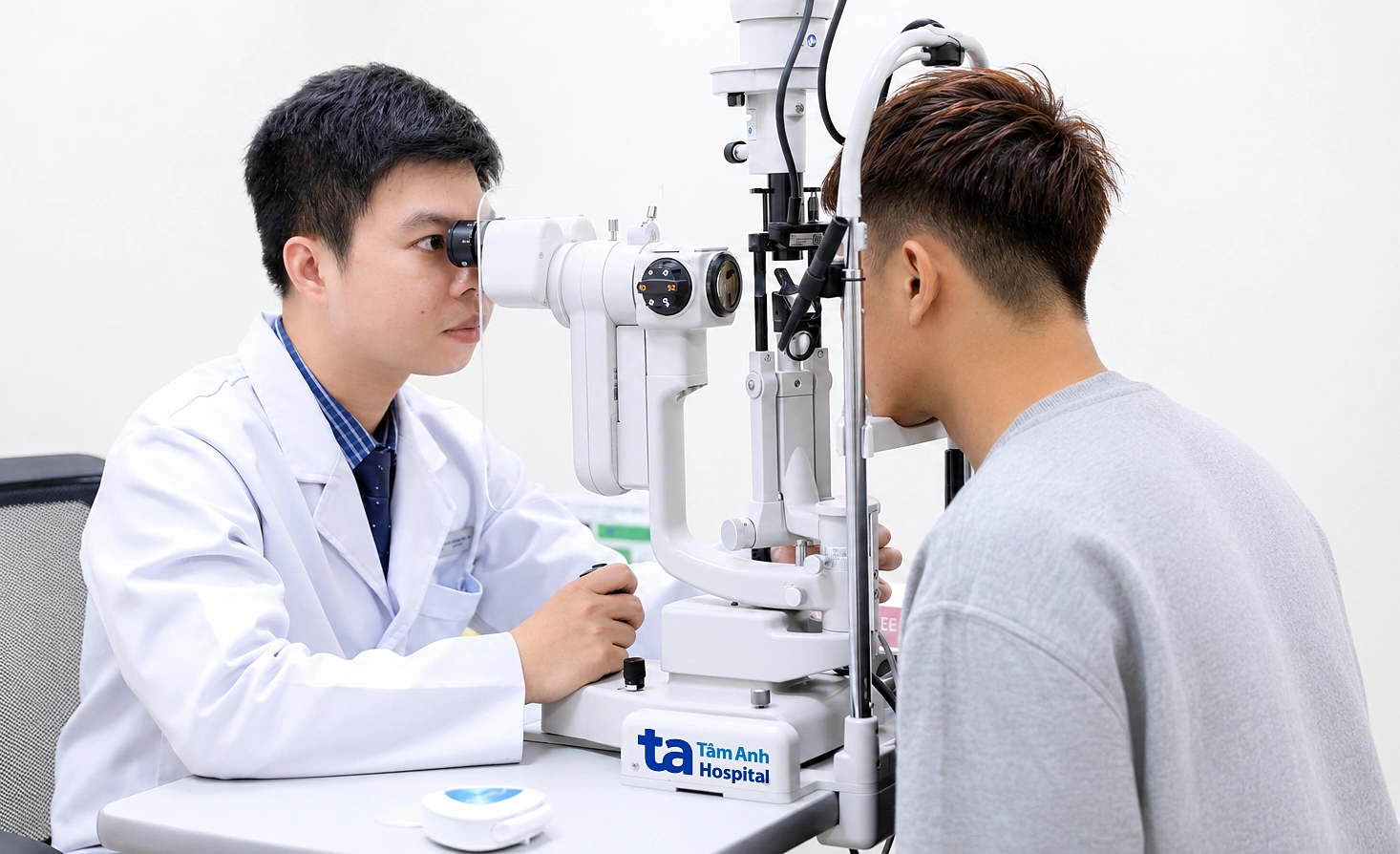 |
Dr. Phuc examines the fundus of a young man's eye. Photo: Tam Anh General Hospital |
According to Dr. Phuc, if symptoms like red, itchy, gritty eyes, or swollen eyelids occur, especially if accompanied by blurred vision or prolonged discomfort, patients should seek timely examination and treatment at an ophthalmology clinic. Self-medicating is not advised, as it can worsen the condition.
Depending on the severity, condition, and manifestations, doctors can prescribe appropriate treatment methods. Additionally, patients should combine vitamin supplements and exercise to boost their immune system, accelerating recovery.
Adenovirus conjunctivitis can affect all age groups, though it is common in children. The disease spreads through secretions from the eyes, nose, or mouth, or via hands, surfaces, and objects contaminated with the virus. Infected individuals can transmit it to others through direct contact, sharing face towels or personal items, or touching their eyes after contact with contaminated surfaces. Direct contact with someone currently infected also poses a risk of transmission.
To prevent infection, Dr. Phuc recommends that everyone rinse their eyes with physiological saline twice a day after going outdoors, wash their hands frequently, avoid rubbing their eyes, and refrain from sharing face towels, eye makeup, or eye drops with others. Additionally, limit contact with individuals experiencing pink eye to reduce the risk of transmission.
Ngoc Kim Tham
| Readers can submit ophthalmology questions here for doctors to answer |