Mr. Khoa, 58, presented with rare bilateral subclavian artery aneurysms. This complex condition involved atherosclerosis and thrombi, with one aneurysm growing significantly. Doctors at Tam Anh General Hospital Hanoi performed a rare hybrid procedure, combining vascular surgery and endovascular intervention, to successfully treat him. Such bilateral aneurysms are uncommon and pose significant risks, including stroke, limb necrosis, or rupture.
Mr. Khoa's aneurysms were first detected in 2022, measuring 35-40 mm, and were subsequently monitored. Recent follow-up examinations at Tam Anh General Hospital Hanoi revealed that the aneurysm on the right had increased to 51 mm, while the one on the left reached 42 mm. Both arteries showed signs of atherosclerosis, calcification, and mural thrombi, with the left artery experiencing 50-60% narrowing. Mr. Khoa also had a medical history of hypertension, dyslipidemia, and coronary artery disease.
Associate Professor, Doctor, Level II Specialist Nguyen Huu Uoc, Director of the Center for Cardiovascular, Vascular and Thoracic Surgery, highlighted the critical nature of the condition. He explained that the subclavian arteries supply blood to the arms and are the origin of the vertebral arteries, which nourish the brain. Growing aneurysms increase the risk of compression, potentially leading to stroke, limb necrosis, or rupture, which can cause life-threatening bleeding into the pleura. Early treatment was essential to prevent these severe complications.
The medical team opted for a Hybrid method, integrating traditional vascular surgery with advanced endovascular intervention. This approach was necessary given the difficulty of the location, as the blood vessels lie deep within the neck-chest region, close to vital structures like the carotid artery and nerves. The primary challenge was to eliminate the aneurysms while preserving critical blood vessel branches.
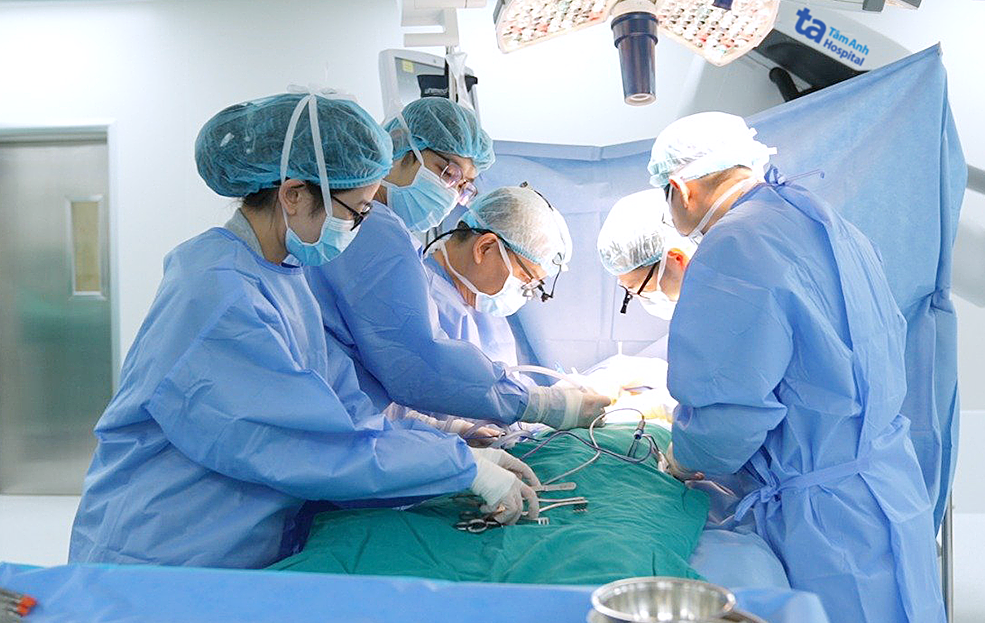 |
Associate Professor Uoc (third from left) and the team performing Hybrid surgery for the patient. Photo: Tam Anh General Hospital
During the procedure, the surgical team created a bypass between the carotid artery and the subclavian artery to maintain essential blood flow. They then ligated the subclavian artery, ensuring the vertebral artery remained preserved. Concurrently, endovascular specialists sealed off blood flow into the left aneurysm and placed two flow-diverting stent-grafts for the right aneurysm. This comprehensive strategy ensured that both aneurysms no longer received blood supply, while the brain and upper limbs maintained adequate perfusion.
Following the surgery, Mr. Khoa experienced a good recovery. He was able to move his limbs, showed no signs of cerebral or limb ischemia, and was discharged after two weeks.
Atherosclerosis is the most common cause of subclavian artery aneurysms. The condition can also be linked to infection, trauma, thoracic outlet syndrome, genetic connective tissue diseases such as Marfan and Ehlers-Danlos syndromes, or certain rare congenital malformations. The disease often progresses silently in its early stages, causing few symptoms and making it easy to overlook. Many cases are discovered incidentally during routine health check-ups. Associate Professor Uoc recommends regular screenings for individuals with risk factors, including hypertension, dyslipidemia, smoking, or existing atherosclerosis, to detect vascular abnormalities early.
Ly Nguyen
*Patient's name has been changed
| Readers can send questions about cardiovascular diseases here for doctors to answer. |