A biopsy in the United States confirmed Ms. Diep had a benign liver hemangioma, initially not requiring surgery. However, concerned about rapid growth and the high cost of surgery abroad, Ms. Diep returned to Tam Anh General Hospital in Ho Chi Minh City for treatment. One year later, a computed tomography (CT) scan using a 1975-slice CT system revealed the tumor had grown to 8 cm.
Doctor Thi Van Gung, head of the Endovascular Intervention Unit at the Center for Diagnostic Imaging and Interventional Radiology, noted the tumor's rapid growth. Without intervention, a large tumor could compress liver parenchyma and surrounding organs, reducing opportunities for minimally invasive treatment. In such cases, patients might need liver resection surgery to remove the tumor.
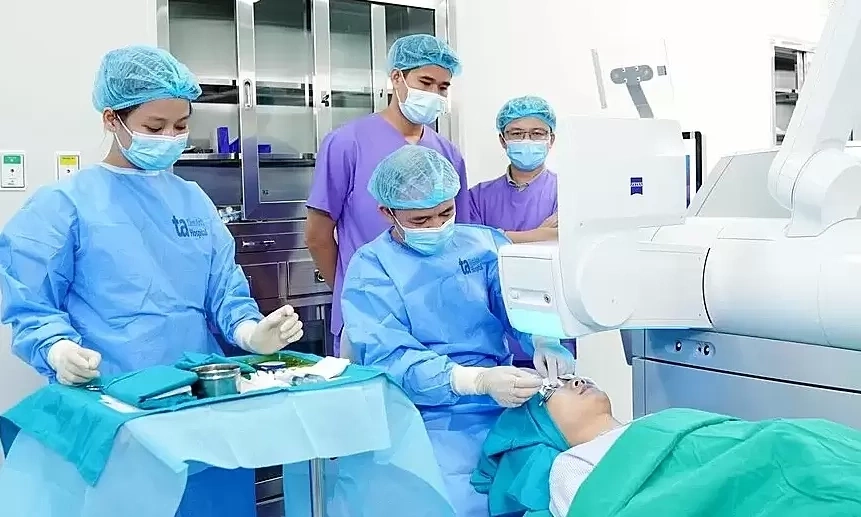
Following a multidisciplinary consultation, the medical team opted for transarterial embolization guided by a digital subtraction angiography (DSA) system instead of surgery.
Through a small puncture in the femoral artery, doctors guided a microcatheter through the vessel to the artery supplying the tumor. The DSA system, combined with artificial intelligence (AI) software, assisted in vascular imaging, enabling doctors to precisely identify the tumor-feeding branch. They then injected embolizing agents and medication directly into the treatment site, cutting off the tumor's blood supply while preserving healthy liver tissue.
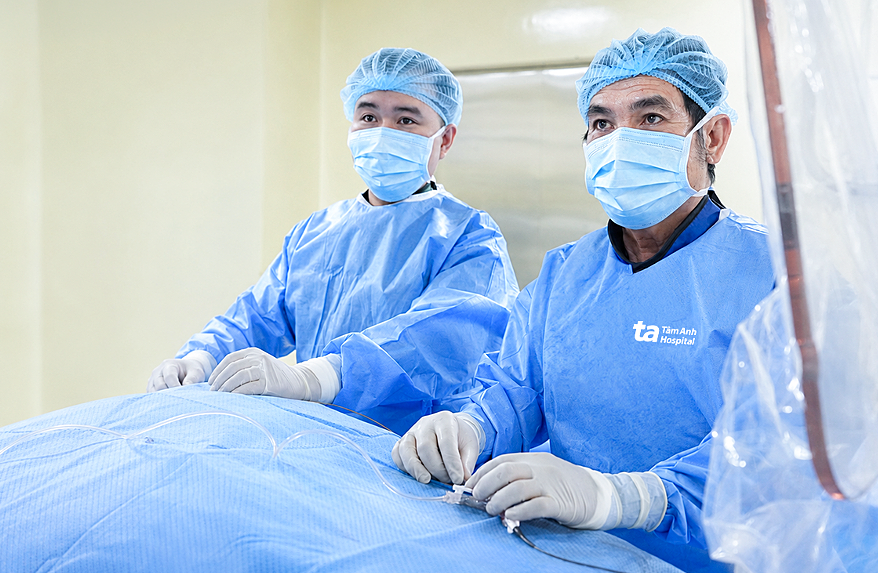 |
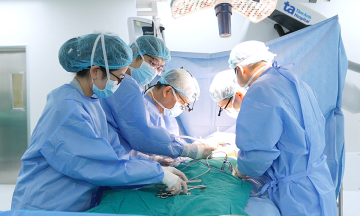
Doctor Gung (right) and his team perform embolization for Ms. Diep. *Photo: Tam Anh General Hospital* |
After the intervention, the patient experienced minimal pain and was monitored for one day. A follow-up check one month later showed the tumor had reduced to approximately 7 cm and was expected to continue shrinking. Ms. Diep subsequently returned to the United States.
According to Doctor Gung, large liver hemangiomas previously required open surgery, involving long incisions and significant blood loss due to the tumor's dense vascular network. Endovascular intervention, however, allows direct access to the tumor's blood vessels from within, minimizing invasiveness, reducing pain and blood loss, and preserving liver parenchyma.
Doctor Gung stated that liver tumor treatment costs in Vietnam are about one-tenth of those in the United States, while the treatment techniques and modern technology are comparable to international standards.
Statistics from the Medical Examination and Treatment Administration, under the Ministry of Health, indicate that an average of over 300,000 Vietnamese expatriates and foreigners visit Vietnam annually for medical examinations and treatment.
Nhu Ngoc
*Patient's name has been changed
| Readers can submit questions about liver disease here for doctors to answer. |