Ms. Van, who had a history of kidney stones, had a JJ stent inserted one month prior to facilitate urine flow and help excrete stone fragments. During a follow-up examination at Tam Anh General Hospital Ho Chi Minh City, an abdominal ultrasound and CT scan revealed a fluid collection measuring 7x3 cm beneath her left kidney capsule, even though she experienced no symptoms.
Doctor Pham The Anh, a urology specialist at the Urology - Nephrology - Andrology Center, explained that the fluid collection was located close to the kidney parenchyma, enclosed by a fibrous capsule. It directly bordered vital retroperitoneal structures such as the renal vascular pedicle, ureter, colon, and spleen. He emphasized that without timely intervention, the expanding fluid could compress blood vessels, obstruct circulation, and diminish kidney function. A rupture could lead to multi-organ inflammation and abscess formation.
The medical team opted for a minimally invasive procedure, draining the kidney fluid collection using a Mono J catheter with ultrasound guidance. Doctor The Anh highlighted that this technique safely and gently removes the fluid without requiring open abdominal surgery, thus minimizing invasiveness, reducing pain, and enabling rapid patient recovery.
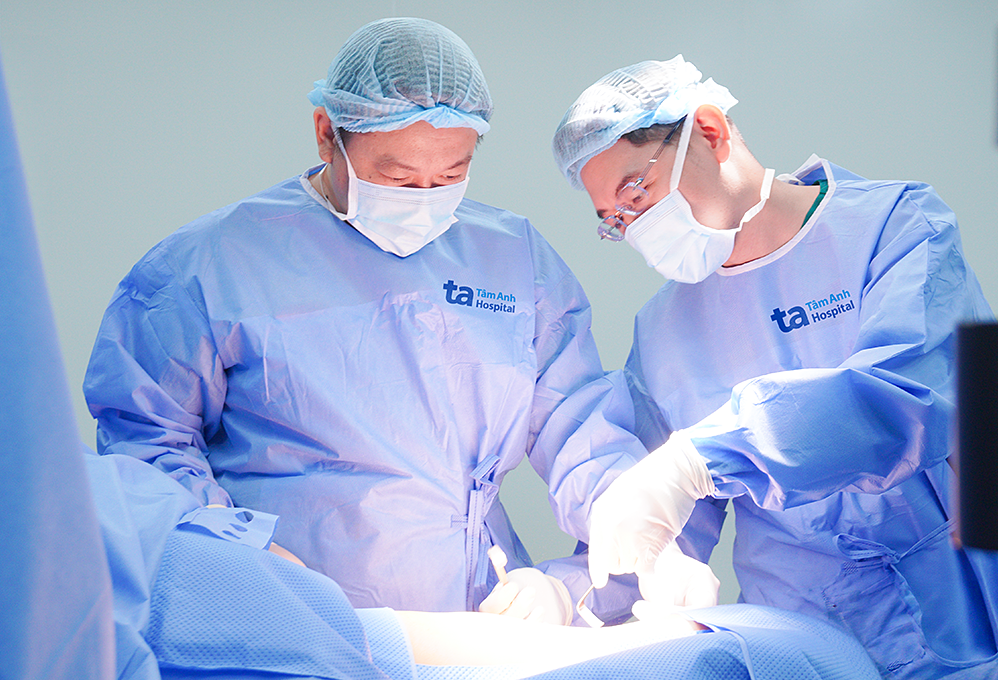 |
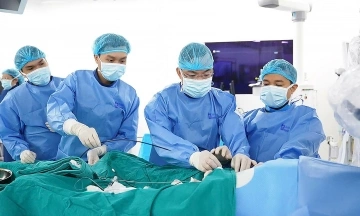
Doctor The Anh (left) and the medical team prepare for the patient's surgery. *Photo: Tam Anh General Hospital* |
The drainage tube was inserted, successfully extracting all the fluid. Analysis of the aspirated fluid revealed numerous blood clots in the process of lysis (clot breakdown) and pseudomembranes (inflammatory membranes). Doctor The Anh noted that if left untreated, this environment would become a breeding ground for anaerobic bacteria, potentially leading to pus formation.
Following the procedure, Ms. Van's condition stabilized, and she was discharged. She kept the drainage tube for an additional one week to ensure complete fluid removal and cleansing. To prevent recurrent infections, she was also prescribed antibiotics.
Perirenal fluid collections can result from kidney trauma, localized inflammatory conditions, complications following surgical procedures such as lithotripsy or endoscopic surgery, or prolonged urinary tract obstruction that causes urine to leak into the retroperitoneal space. Doctor The Anh cautioned that these collections often develop silently, particularly in patients with a history of urological surgery. He stressed that routine health check-ups, like those offered at Tam Anh General Hospital, are crucial for early detection and preventing severe complications.
Bao Anh
*Patient's name has been changed