Dr. Nguyen Truong Hoan, a urologist at the Center for Urology, Nephrology, and Andrology at Tam Anh General Hospital TP HCM, reported that the large tumor, comparable in size to a kidney (normal kidney size is 9-12 cm), carried a high risk of rupture and internal bleeding. This tumor compressed the renal parenchyma, impairing kidney function. It also obstructed the ureter, leading to urinary blockage, hydronephrosis, kidney infection, and potential kidney failure.
Dr. Hoan noted that renal angiomyolipomas exceeding 4 cm typically warrant intervention. Tai's tumor, however, was so large that it required a two-stage treatment.
The initial phase involved an embolization procedure to reduce the tumor's blood supply, thereby shrinking its size and minimizing bleeding. Over one month later, Tai underwent laparoscopic surgery for complete tumor removal, employing both embolization techniques and a high-frequency ultrasonic knife. Surgeons successfully preserved the healthy kidney and major blood vessels, also reconstructing the kidney's shape.
Tai was discharged two days after surgery. He received advice to avoid heavy lifting, engage in light activity, stay hydrated, consume fiber-rich foods, and limit salt and excessive protein. Follow-up appointments were scheduled.
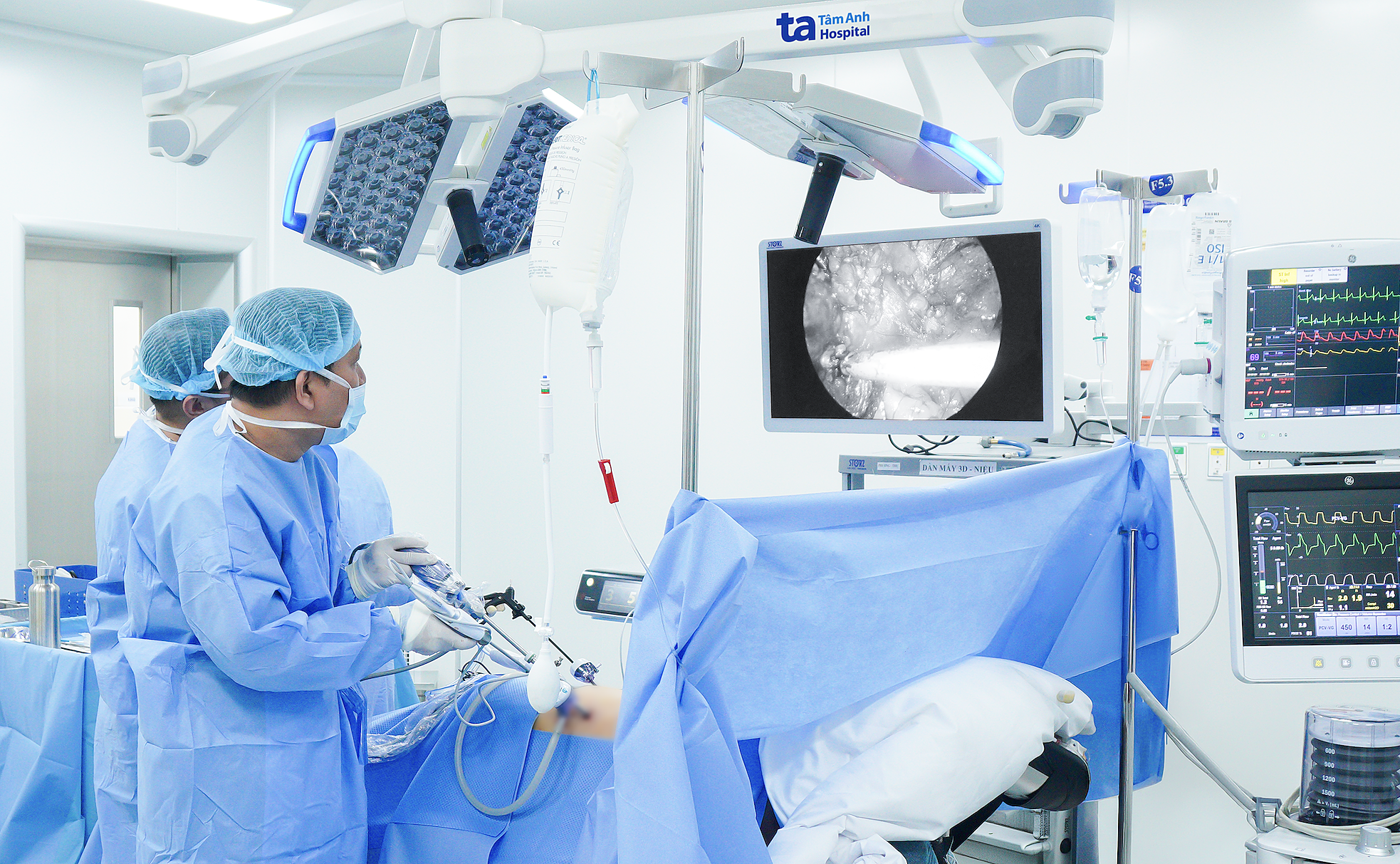 |
Dr. Hoan (right) and the surgical team performed laparoscopic tumor removal for Tai. *Photo: Tam Anh General Hospital*
Renal lipomas are common benign kidney tumors. Tumors under 4 cm are often asymptomatic, discovered incidentally during ultrasound or CT scans. Larger tumors can cause dull flank pain, blood in the urine, or a palpable abdominal mass.
Undetected and untreated, a ruptured tumor can lead to massive perirenal hemorrhage, causing severe abdominal pain, dizziness, sweating, and hypotension, posing a life threat. Small tumors allow for excision and kidney preservation; large ones may require complete kidney removal.
Dr. Hoan advises seeking medical attention for persistent flank pain, abdominal heaviness, bloating, early satiety, or nausea, to ensure timely diagnosis and treatment. He recommends visiting hospitals with specialized interventional radiology and urology departments for effective, coordinated care that minimizes complications.
Dinh Lam
*Patient's name has been changed