For women with low ovarian reserve (anti-Müllerian hormone (AMH) below 1 ng/mL) undergoing in vitro fertilization (IVF), doctors often consider two strategies: egg accumulation or embryo accumulation. The goal is to increase the chances of creating good quality day 5 embryos.
These two methods differ in the timing of embryo creation. Egg accumulation involves stimulating the ovaries over multiple cycles to collect mature oocytes (eggs). All eggs are cryopreserved, then thawed simultaneously for embryo creation. This method is suitable for women who retrieve few eggs per cycle, helping to maximize the use of oocytes and save costs associated with multiple embryo creation procedures.
In contrast, embryo accumulation involves immediate fertilization of eggs after each retrieval cycle to create and cryopreserve embryos. The advantage of this method is that doctors can assess embryo quality early; however, costs are often higher due to multiple embryo creation procedures.
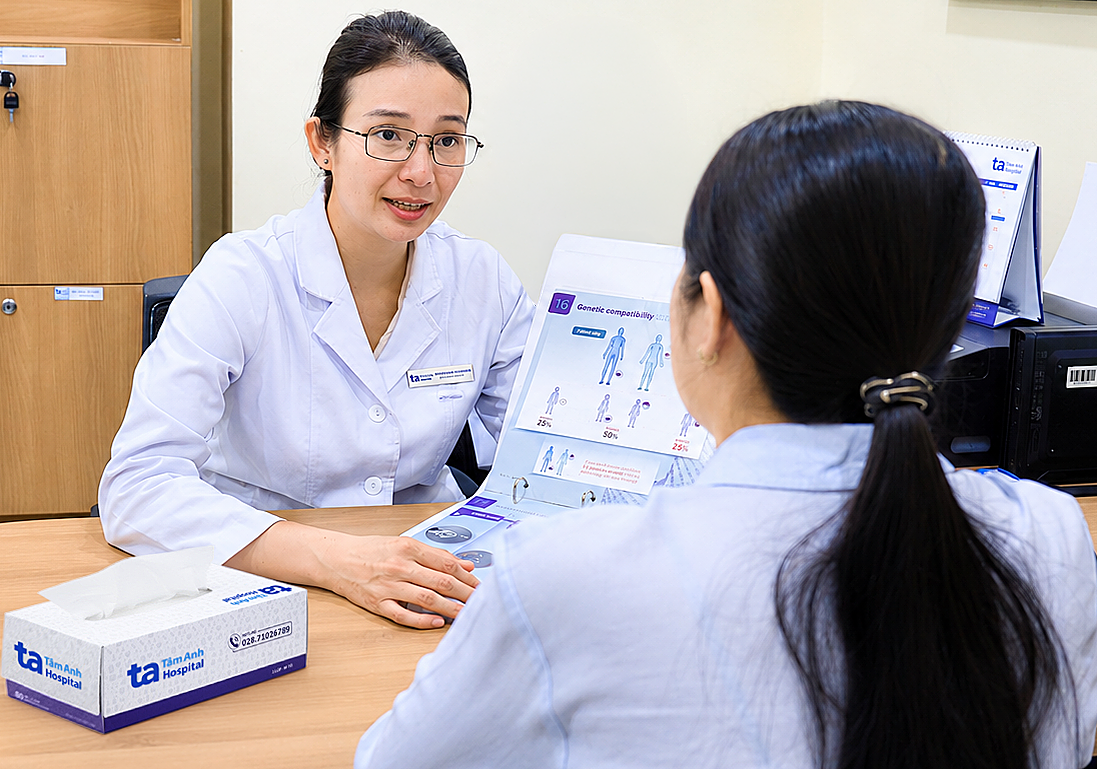 |
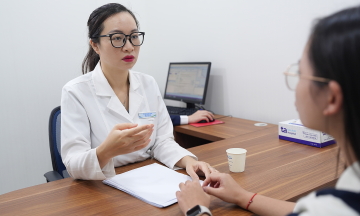
Dr. Hanh advises a woman on IVF treatment. *Photo: IVF Tam Anh*
At the Center for Reproductive Assistance, Tam Anh General Hospital (IVF Tam Anh), doctors apply individualized treatment protocols based on age, ovarian reserve, response to ovarian stimulation drugs, and history of failed embryo transfers. For women under 40, if the first cycle responds well and yields about 6-7 eggs, doctors may proceed with immediate embryo creation. Conversely, if the egg count is low, egg accumulation is often prioritized to increase the chances of obtaining good quality day 5 embryos. According to treatment data from the center, women under 40 with good quality day 5 embryos achieve a pregnancy rate of approximately 60-65%, regardless of whether egg or embryo accumulation is performed.
Currently, IVF Tam Anh applies vitrification technology for cryopreservation of eggs and embryos. After retrieving oocytes or creating day 5 embryos, embryologists process them with a specialized cryoprotective medium, followed by ultra-rapid cooling and storage in liquid nitrogen at approximately -196 degrees Celsius.
At this temperature, cellular metabolic activity almost completely ceases, allowing eggs and embryos to be preserved long-term while maintaining quality after thawing. Compared to previous slow-freezing techniques, vitrification helps limit ice crystal formation within cells, reducing the risk of damage and increasing survival rates after thawing.
Combined with an AI-integrated time-lapse embryo culture system, embryos are continuously monitored in a stable environment without repeated removal, helping doctors select embryos with better implantation potential, especially in women with low AMH or a history of multiple failed embryo transfers.
In your case, with low AMH and a history of failed embryo transfers, the goal is not only to create more embryos but also to optimize their implantation potential within the uterus. Many patients with good quality embryos still experience repeated failures due to uterine abnormalities such as chronic endometritis, polyps, intrauterine adhesions, endometrial fibrosis, and more. Therefore, you should undergo another examination for doctors to assess your condition and develop a personalized treatment plan to optimize your chances of pregnancy.
Dr. Phan Ha Minh Hanh
Center for Reproductive Assistance
Tam Anh General Hospital - District 8