Eng English
China 中国人

Eng English
China 中国人
  • News
  • World
  • Business
  • Entertainment
  • Sports
  • Law
  • Education
  • Health
  • Lifestyle
  • Travel
  • Science
  • Digital
  • Automobiles
  • Trở lại Thể thao
  • Health
Saturday, 23/5/2026 | 12:02 GMT+7

Can transcranial magnetic stimulation treat depression?

My relative has been suffering from depression for three years, and medication has not helped. Can transcranial magnetic stimulation be used to treat this condition? (Gia Han, Hanoi)

Response:

Depression is a common mental disorder characterized by persistent feelings of sadness, despondency, and a loss of interest in work, life, and social relationships. Currently, primary treatment methods for depression include antidepressant medication and psychotherapy.

If your relative has been treated for depression with medication for three years without improvement, they may be experiencing treatment-resistant depression. This condition occurs when a patient does not respond to treatment despite using at least two different antidepressants at appropriate dosages and durations, as prescribed by a specialist. For an accurate diagnosis of their current condition, you should take your relative for a medical examination so a doctor can assess and provide a specific conclusion.

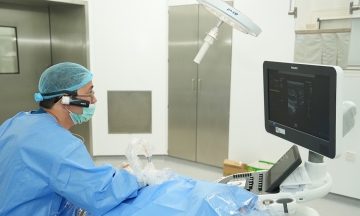
Transcranial magnetic stimulation (TMS) is a non-invasive method that uses high-intensity magnetic pulses to penetrate the skull, stimulating nerve cells in a targeted brain region. This helps regulate electrical neural activity in areas of the brain associated with emotions and behavior. TMS can serve as an adjunctive treatment for patients with treatment-resistant depression.
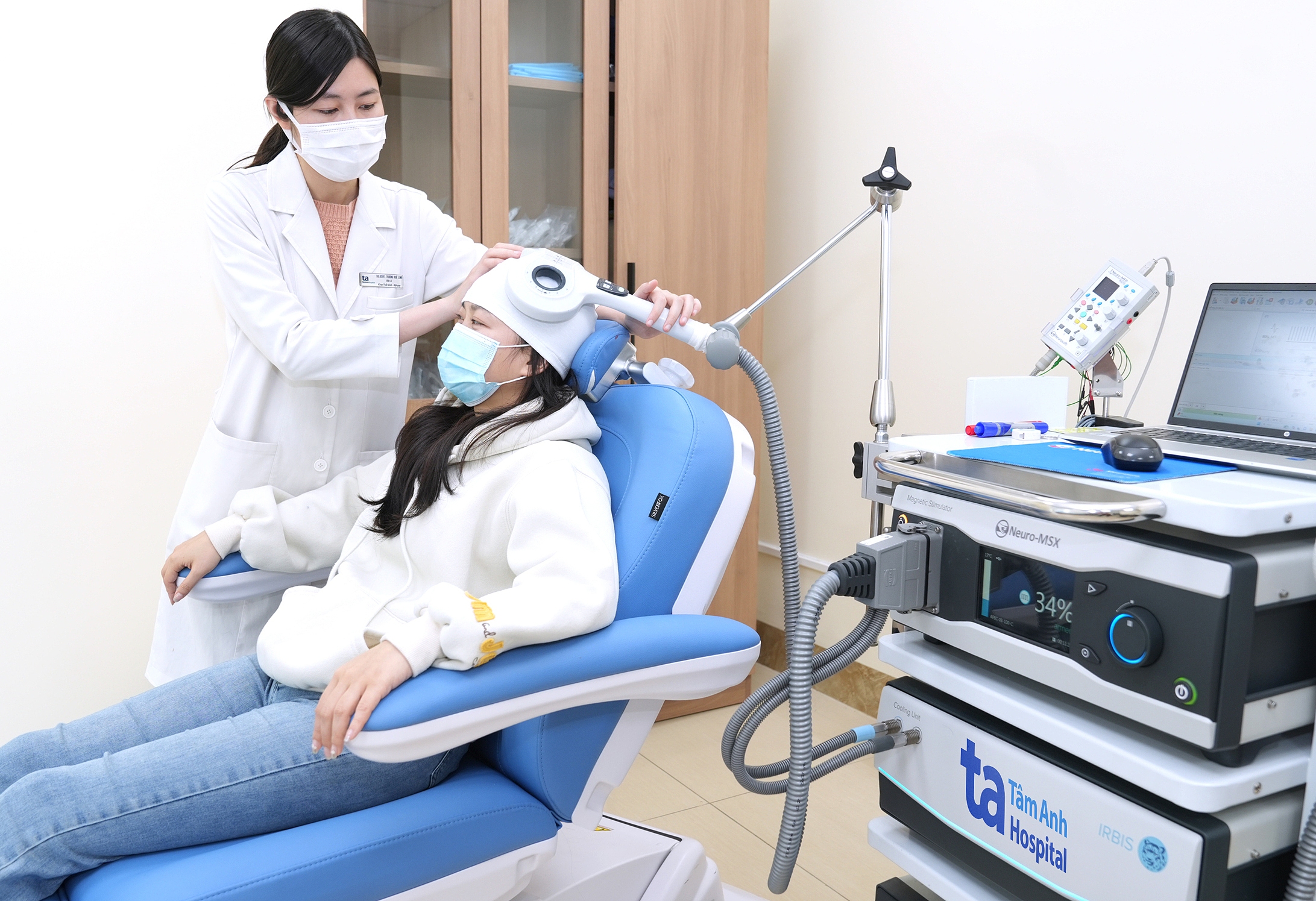
_A doctor uses a transcranial magnetic stimulation system to treat a patient. Illustration: Tam Anh General Hospital_

This method offers several advantages: it stimulates neurons in the brain from outside the skull, is non-invasive, and causes no pain. The treatment process is safe, with minimal impact on the central nervous system. Patients do not require hospitalization; each treatment session lasts approximately 30 minutes, after which they can return home and resume normal activities.

The duration of transcranial magnetic stimulation for treatment-resistant depression varies depending on the individual case and the severity of the illness. Typically, a course of treatment may last 4-6 weeks, performed 4-5 times per week. However, the actual duration also depends on the patient's specific condition.

Before undergoing TMS for depression, patients need a clinical examination by a doctor and may require several related tests as indicated. Concurrently, a mental health assessment is conducted to determine the patient's depression severity and identify any other neurological issues.

Beyond treatment-resistant depression, transcranial magnetic stimulation is applied to support the treatment of various other conditions, including obsessive-compulsive disorder (OCD), headaches, migraines, Parkinson's disease, amyotrophic lateral sclerosis (ALS), multiple sclerosis (MS), impaired consciousness, and Alzheimer's disease. This technique also aids in functional recovery after a stroke or brain injury, and assists in smoking cessation, nicotine, and alcohol addiction treatment.

Master of Science, Doctor Pham Van Duong

Department of General Internal Medicine

Tam Anh Cau Giay General Clinic

Readers can ask questions about neurological diseases here for doctors to answer
By VnExpress: https://vnexpress.net/kich-thich-tu-truong-xuyen-so-co-the-chua-tram-cam-5077282.html
Tags: depression transcranial magnetic stimulation

News in the same category

Tips for eating fruit without raising blood sugar

Tips for eating fruit without raising blood sugar

Choosing fruits with a low glycemic index and less natural sugar, and avoiding eating them on an empty stomach, can help control blood sugar levels.

How do kidney stones differ from gallstones?

How do kidney stones differ from gallstones?

Large kidney stones often cause severe pain in the lower abdomen and flank, along with frequent urination, while gallstones typically trigger sudden pain in the stomach area and can lead to vomiting.

Is end-stage heart failure curable?

Is end-stage heart failure curable?

My 75-year-old mother was diagnosed with heart failure three years ago, and it is now in its end stage. Is it curable? (Bao Hoa, Ho Chi Minh City)

should you mouth tape to reduce snoring?

should you mouth tape to reduce snoring?

I often snore and breathe through my mouth, causing my wife to lose sleep. does mouth taping while sleeping help reduce snoring, and is this method safe? (manh hung, 25 years old)

WHO raises ebola alert to 'very high'

WHO raises ebola alert to 'very high'

The World Health Organization (WHO) has elevated its risk assessment for the Bundibugyo Ebola virus strain in the Democratic Republic of Congo to 'very high' at the national level, expressing concern about the potential for a pandemic.

Doctor Truong Huu Khanh: "Common antibiotics struggle to cure pneumococcal disease"

Doctor Truong Huu Khanh: "Common antibiotics struggle to cure pneumococcal disease"

Pneumococcus, a leading cause of pneumonia and meningitis that can leave patients in a vegetative state, is becoming increasingly difficult to treat due to drug resistance.

Doctor points out early signs of liver cancer

Doctor points out early signs of liver cancer

Early symptoms of liver cancer are often vague, including mild pain in the right upper abdomen, prolonged digestive issues, unexplained weight loss, and fatigue.

Three strokes due to heart valve narrowing

Three strokes due to heart valve narrowing

Quang, 40, experienced multiple strokes stemming from long-standing rheumatic heart disease, which caused severe mitral valve narrowing, atrial fibrillation, and heart failure.

Four ways to prevent hepatitis B

Four ways to prevent hepatitis B

Vaccination, avoiding exposure, and maintaining a healthy lifestyle help reduce the risk of hepatitis B.

Salivary gland cancer metastasizes to liver one year after treatment

Salivary gland cancer metastasizes to liver one year after treatment

Mr. Tung, 62, diagnosed with salivary gland cancer two years ago and treated, now faces a recurrence with liver metastasis, for which doctors are employing targeted therapy and chemotherapy for radical treatment.

Eng English
China 中国人
  • News
  • World
  • Business
  • Entertainment
  • Sports
  • Law
  • Education
  • Health
  • Lifestyle
  • Travel
  • Science
  • Digital
  • Automobiles
FPT Tower, 10 Pham Van Bach Street, Dich Vong Ward,
Cau Giay District, Hanoi, Vietnam
Email: contacts@vnportal.net
Tel: 028 7300 9999 - Ext 8556
Advertise with us: 090 293 9644
Register
© Copyright 2026 vnnow.net. All rights reserved.
Terms of use Privacy policy Cookies