Mouth taping to reduce snoring is a method that has gained attention, but it carries significant risks and lacks sufficient scientific evidence to prove its effectiveness, especially for individuals with underlying respiratory issues.
Individuals who frequently snore, breathe through their mouth during sleep, or suspect sleep apnea should seek specialist medical evaluation to identify the underlying cause. A "gold standard" for diagnosing sleep apnea involves sleep study tools like polysomnography or respiratory polygraphy.
During these studies, electrodes are attached to the patient's body to record and evaluate parameters such as breathing rate, airflow, awakenings, blood pressure, and blood oxygen saturation. This data helps doctors determine if a patient has a sleep disorder or respiratory abnormalities during sleep, enabling them to pinpoint the cause and recommend appropriate treatment.
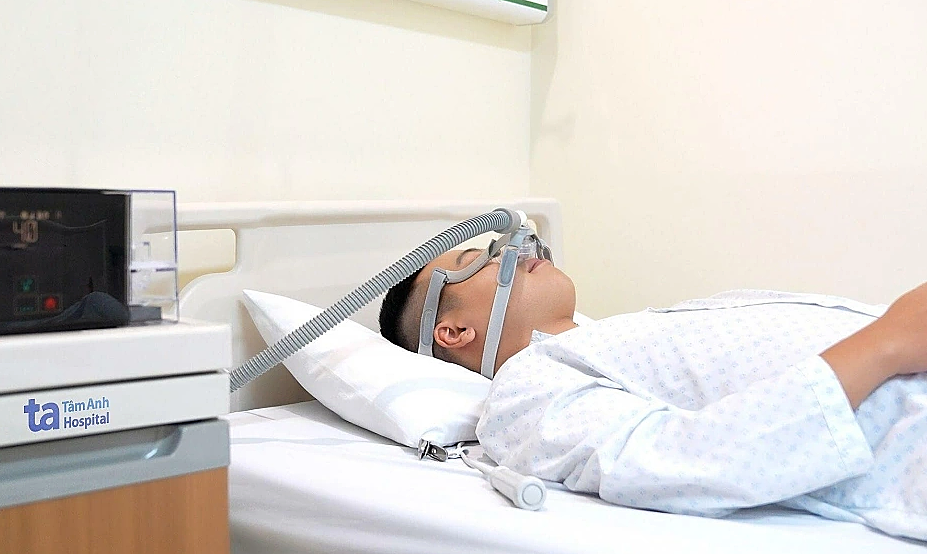 |
Respiratory polygraphy for patients to determine sleep apnea. Photo: Tam Anh General Hospital.
Nasal breathing is physiologically ideal, allowing the body to absorb oxygen more efficiently. The cilia and mucous membranes in the nose also filter out dust, bacteria, and airborne allergens. As air passes through the nasal cavity, it is warmed and humidified, reducing dryness and respiratory irritation. Nasal breathing also helps alleviate dry mouth, bad breath, and snoring, while supporting oral health and the normal development of jaw and teeth structures.
Conversely, mouth breathing can disrupt these physiological processes. Prolonged mouth breathing is linked to enlarged tonsils and adenoids, teeth grinding, malocclusion, temporomandibular joint disorders, tooth decay, periodontal disease, and increased upper airway resistance. It also exacerbates obstructive sleep apnea (OSA).
However, mouth taping during sleep carries several risks. Individuals with upper airway obstructions, such as nasal congestion, rhinitis, sinusitis, a deviated nasal septum, or enlarged tonsils, may experience difficulty breathing. Other potential side effects include skin irritation or damage around the lips, feelings of suffocation, anxiety, and difficulty falling or staying asleep. Crucially, there is currently insufficient scientific evidence to confirm the effectiveness of mouth taping in treating snoring or obstructive sleep apnea.
Master, Doctor Le Thi Hong Tham
Department of Respiratory Medicine
Tam Anh General Hospital Hanoi
| Readers can submit respiratory questions here for a doctor's response. |