A 71-year-old man, with a 30-year history of pipe smoking, had quit the habit three years ago. When he developed a persistent cough, he sought examination at K Hospital. Doctors discovered a developing tumor in his left lung, measuring approximately 15x16 cm.
Bronchoscopy revealed the tumor had obstructed the upper lobe bronchus of the left lung. A PET/CT scan indicated the tumor had nearly collapsed the entire upper left lung lobe. Additionally, doctors found mediastinal lymph nodes due to metastatic cancer.
Doctor Nguyen Van Loi and his team decided to perform a bronchoplasty technique, known as the Sleeve method, combined with lymph node dissection to treat the patient.
The Sleeve method allows surgeons to precisely resect the lung portion containing the tumor and the damaged bronchus, then re-connect the remaining healthy bronchus to reconstruct the airway. This technique effectively removes cancer cells while preserving as much healthy lung tissue as possible, enabling the patient to maintain respiratory function. According to Doctor Loi, partial lung preservation is crucial for the quality of life of elderly patients after surgery.
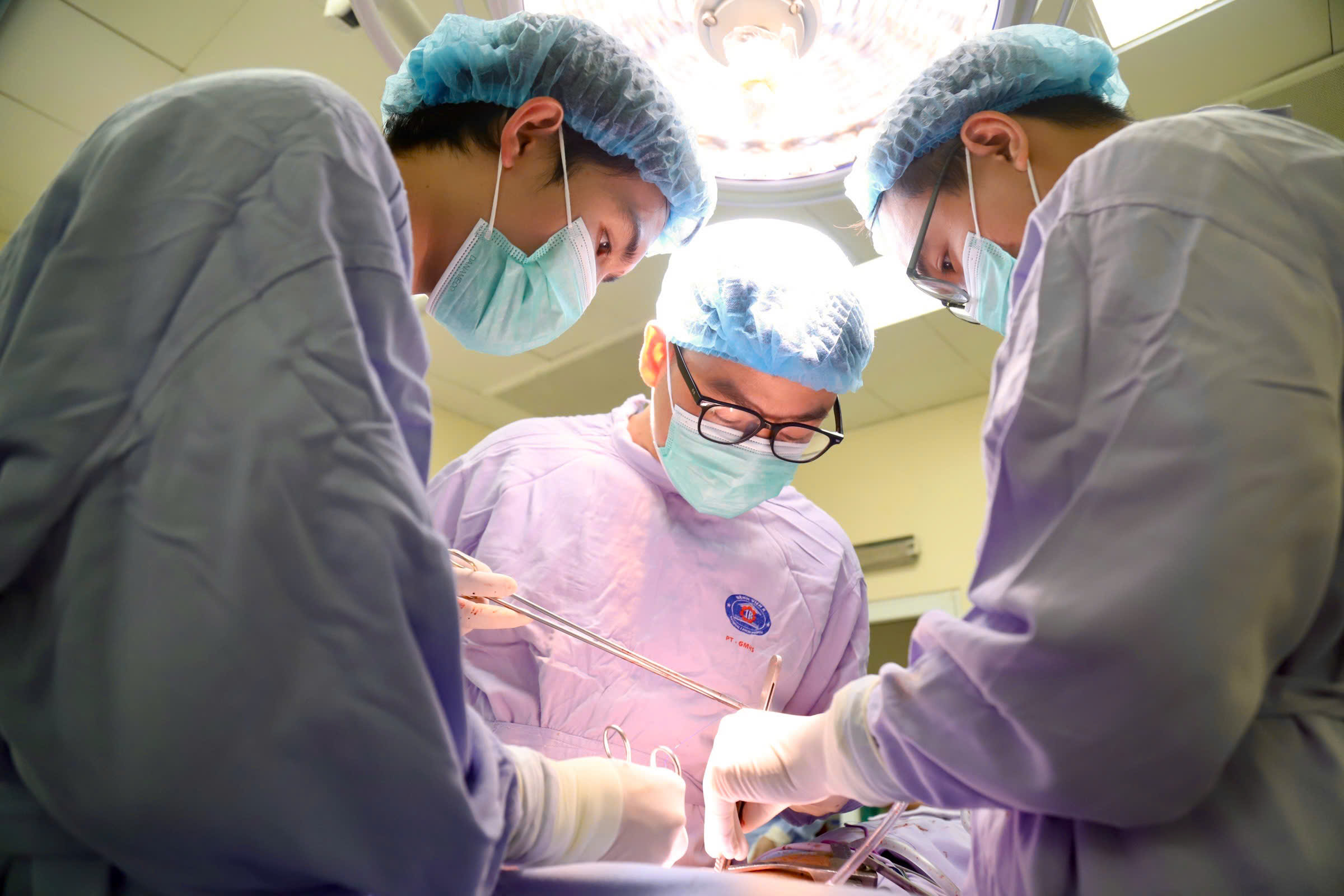 |
Doctors operate on a lung cancer patient. *Photo: Manh Ha.*
Each year, Vietnam records over 26,000 new cases of lung cancer, making it the leading cause of cancer-related deaths in the country. The disease has two main groups of causes: exogenous and endogenous factors. Smoking is the primary cause, accounting for 90% of cases. Tobacco smoke contains over 7,000 chemicals, including 70 carcinogens such as benzene, formaldehyde, and nitrosamine. These substances damage lung cells, leading to gene mutations.
Avoiding or quitting smoking is a sound decision that offers significant health benefits. However, it is important for long-term former smokers to note that they remain at risk for respiratory illnesses, chronic diseases, and cancer. Regular health monitoring, as recommended by doctors, is essential.
In lung cancer treatment, there is no universal protocol for all patients. Each case requires a tailored treatment strategy based on the disease stage, tumor location, respiratory function, and overall patient condition. The goal is to ensure treatment efficacy while maximizing the patient's quality of life. With early detection, the five-year survival rate reaches 90%. Therefore, regular screening is key.
Le Nga