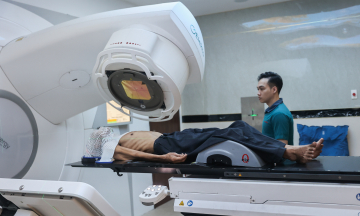
Initially, Nhu did not undergo regular follow-ups after her thyroid nodule was identified as benign. Recently, during a health check-up, an ultrasound revealed a new nodule, approximately 1 cm in size, adjacent to the benign one. This new nodule had unclear borders, was located close to the capsule, and showed suspected microcalcifications. A fine-needle aspiration biopsy subsequently confirmed it was malignant.
Doctor Pham Tuan Manh, a specialist in surgical oncology at the Oncology Center, Tam Anh General Hospital Ho Chi Minh City, advised Nhu to undergo a thyroidectomy.
Pre-operative ultrasound results had not indicated any lymph nodes suspicious for metastasis. During the surgery, the team planned to further assess the situation. If central neck lymph nodes suspicious for metastasis or extracapsular tumor invasion were discovered, a total thyroidectomy would be performed.
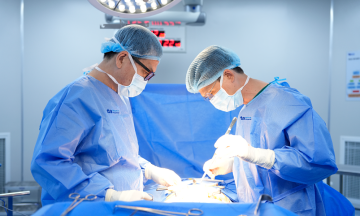
During the surgery, the team carefully dissected the recurrent laryngeal nerve, used an ultrasonic scalpel to remove the thyroid gland, and preserved the parathyroid glands. Doctor Manh meticulously examined the cervical lymph nodes and confirmed no signs of metastasis, allowing the team to conclude the operation.
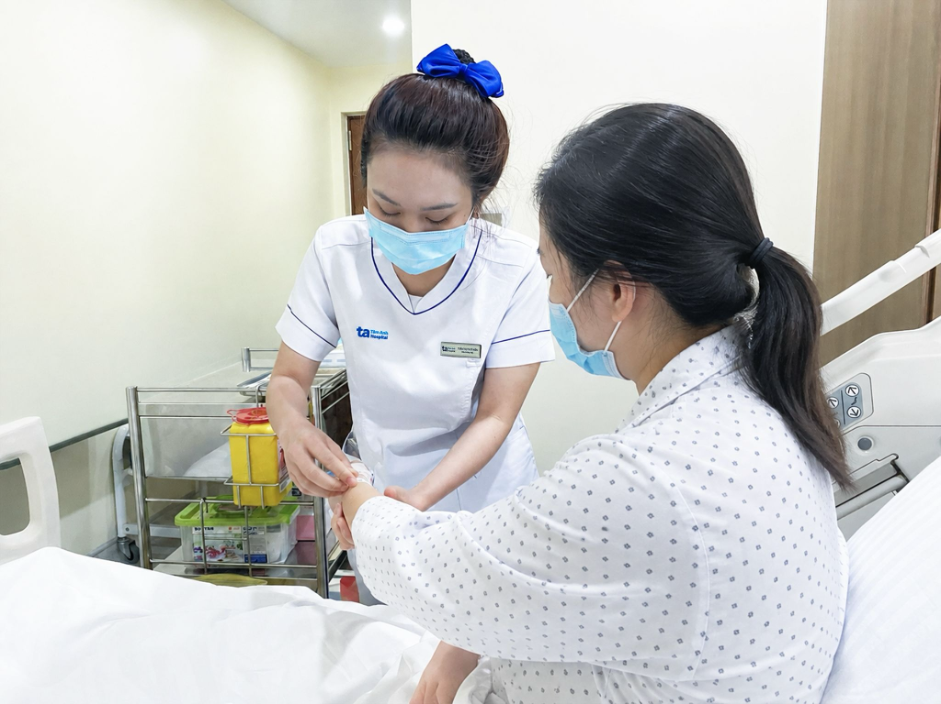 |
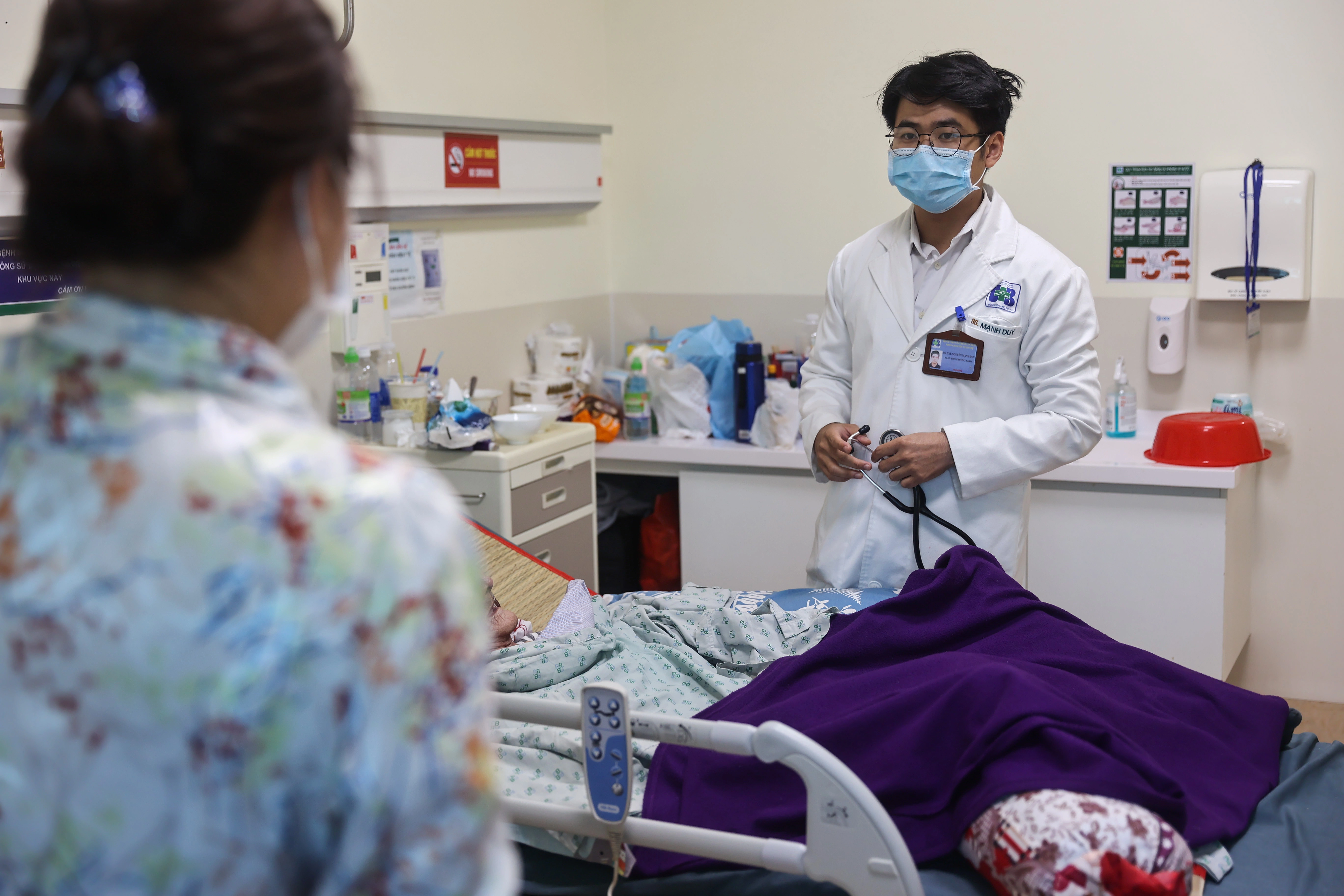
A nurse cares for Nhu after surgery. *Photo: Tam Anh General Hospital* |
Following the operation, Nhu experienced no hoarseness and could eat and speak normally. Her wound was dry and painless, and she was discharged after 12 hours of monitoring, with her health status assessed as stable. Patients typically need radioactive iodine therapy to destroy any remaining microscopic malignant cells, which are undetectable by the naked eye or conventional microscopy, to prevent cancer metastasis to cervical lymph nodes and other organs such as bones, liver, or lungs. Afterwards, she will need to take thyroid hormone replacement to compensate for the deficient hormone levels. Thyroid-stimulating hormone (TSH) suppression is also a key endocrine therapy in thyroid cancer treatment to prevent recurrence and metastasis.
Doctor Manh explained that thyroid nodules are a common endocrine disorder, with approximately 90% being benign. Many individuals mistakenly believe that benign thyroid nodules are stable and only require surgery if they grow large, leading to complacency and missed follow-up appointments. While benign thyroid nodules rarely transform into malignancy, patients still require regular check-ups. During cellular regeneration, mutations can occur, leading to the formation of cancer adjacent to or hidden within a benign nodule, which makes early detection challenging. Thyroid cancer often progresses slowly with a good prognosis; if detected early, before metastasis, the 5-year survival rate can be as high as 99%. However, late treatment can lead to metastasis, making the disease prolonged and more complex.
The exact cause of thyroid cancer is currently unknown. However, several factors can increase the risk of developing the disease, including being female aged 25-65, exposure to radiation, and a family history of thyroid cancer, particularly for medullary thyroid cancer.
Doctors advise patients with thyroid nodules, particularly those with multiple nodules, to undergo regular check-ups to detect any abnormalities and manage them promptly.
Patients experiencing symptoms such as difficulty swallowing, hoarseness, shortness of breath, neck pain, or palpable neck lumps should seek early medical attention. Depending on the specific condition, doctors may recommend monitoring, regular thyroid ultrasounds every 6-12 months, thyroid function tests, or a biopsy if necessary.
Khai Minh
*Patient's name has been changed.
| Readers can submit questions about cancer here for doctors to answer. |