A CT scan of Mrs. My at Tam Anh General Hospital, TP HCM, revealed a subsolid nodule in the upper lobe of her left lung, measuring 9x4 mm. This nodule was located near major blood vessels and the nervous system. Associate Professor, Doctor Vu Huu Vinh, Director of the Thoracic - Vascular Surgery Center, explained that most ground-glass opacity (GGO/GGN) lung nodules under 3 cm are benign. However, Mrs. My's tumor had a consolidation-to-tumor ratio (CTR) above 0.5, indicating an invasive tumor rather than just a ground-glass lesion, with a malignancy risk exceeding 85%.
According to Associate Professor Vinh, performing a needle biopsy on very small lung tumors (under 1 cm) is often difficult to do accurately. This can lead to multiple needle punctures, causing pain and affecting lung structure. The amount of sample obtained might also be insufficient to definitively confirm the tumor's nature.
After consultation, doctors decided to surgically remove the tumor completely. This was combined with an intraoperative frozen biopsy to accurately determine the nature of the lesion, which would then guide subsequent treatment.
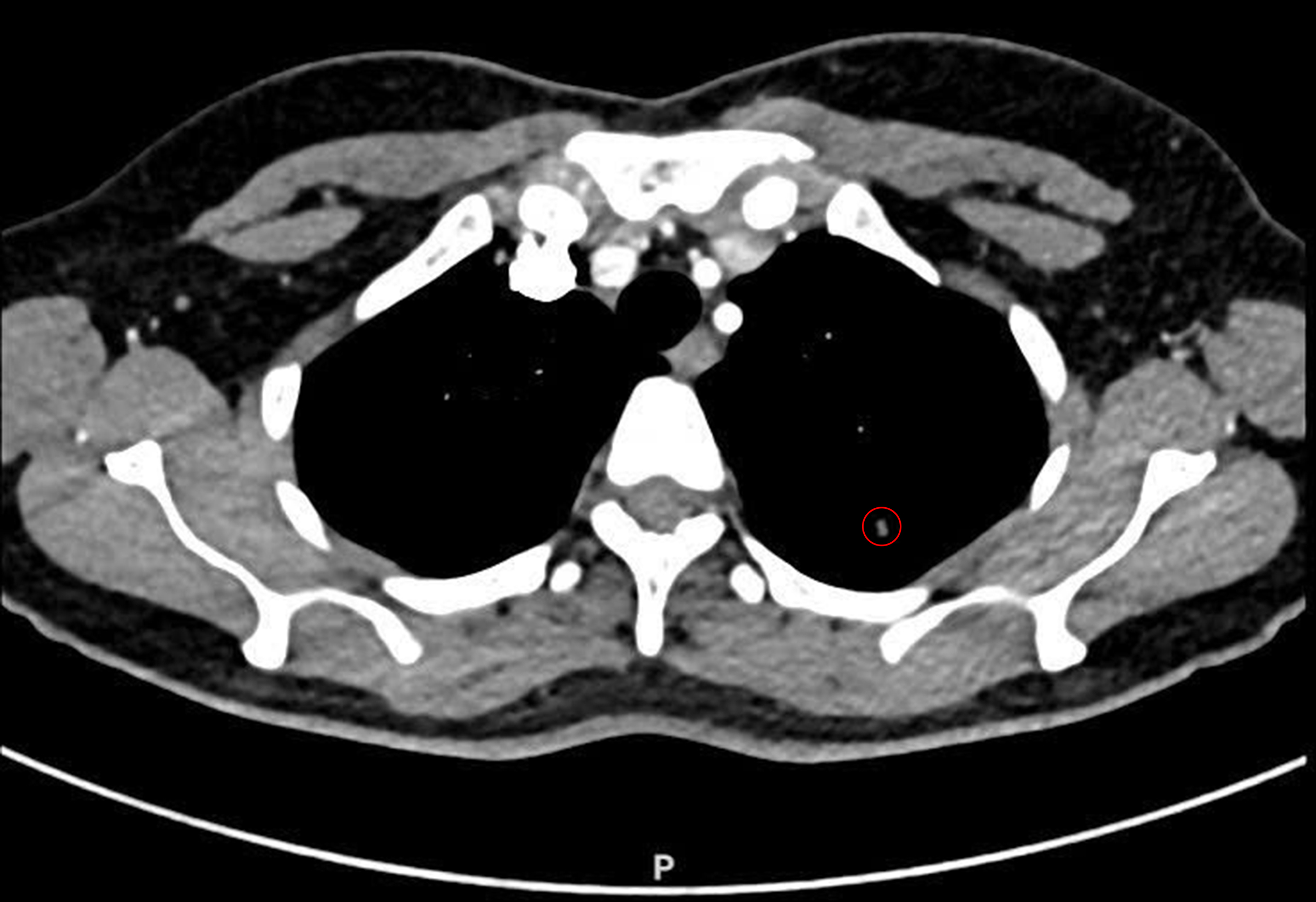 |
CT scan showing Mrs. My's lung nodule, very small in size (red circle) but with a very high malignancy rate. *Photo: Tam Anh General Hospital* |
Thanks to the early detection of the small, albeit malignant, tumor, doctors could perform a curative surgery by removing only a portion of the lung containing the tumor. This procedure, which involved resecting about 10% of lung capacity, avoided the need to remove the entire lung lobe.
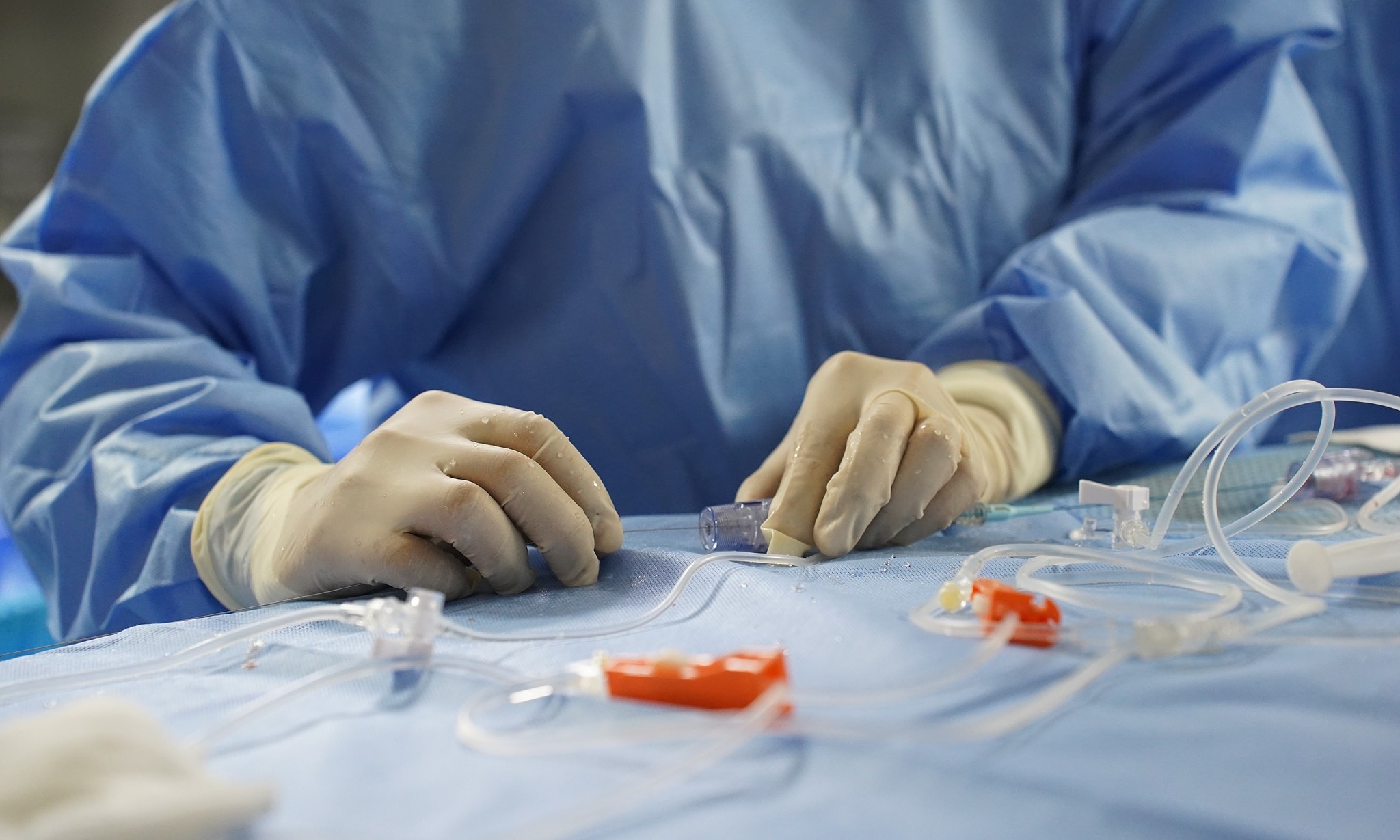
Mrs. My underwent robotic surgery using the Da Vinci Xi system. The magnified 3D camera system, combined with four flexible robotic arms, allowed the surgical team to clearly observe the boundary between healthy tissue and the portion of lung tissue to be removed. This enabled precise dissection of the tumor within the confined thoracic cavity.
After successful dissection, the specimen was sent for frozen biopsy, which confirmed adenocarcinoma.
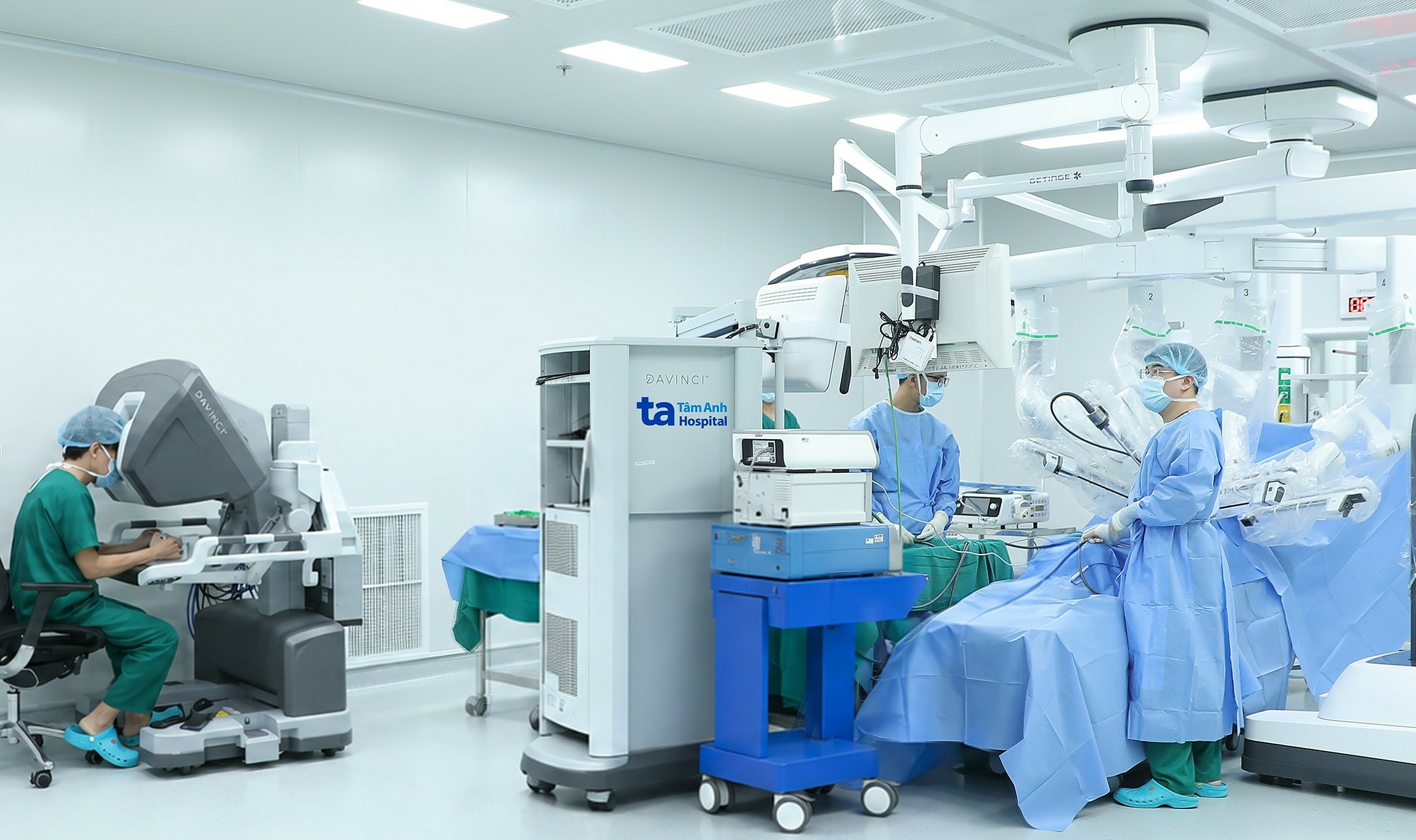 |
Associate Professor Vinh (left) with the surgical team performing a lung lobectomy for a patient. *Photo: Hospital provided* |
The team clamped the blood vessels leading to segments S1 and S2, which contained the tumor, and injected indocyanine green (ICG) fluorescent dye. The healthy lung tissue absorbed the dye and emitted a green light, while the diseased lung segment (due to clamped blood vessels) did not fluoresce. This contrast helped the team clearly identify the boundary between the diseased and healthy lung, allowing for nearly 100% precise removal of the affected lung segment.
Thanks to robotic surgery combined with ICG technology, the tumor was completely removed with clear margins of malignant cells. The patient experienced minimal pain, was discharged after two days, and required no further adjuvant treatment.
According to Associate Professor Vinh, integrating ICG fluorescence technology on the Da Vinci Xi robot (Da Vinci Firefly) allows the camera to capture ICG signals and display them directly on the screen. This enables surgeons to easily assess perfusion and anatomical boundaries during surgery. This technology is widely applied in surgeries for lung cancer, colorectal cancer, hepatobiliary-pancreatic conditions, urological conditions, gynecological conditions, and thoracic and vascular procedures.
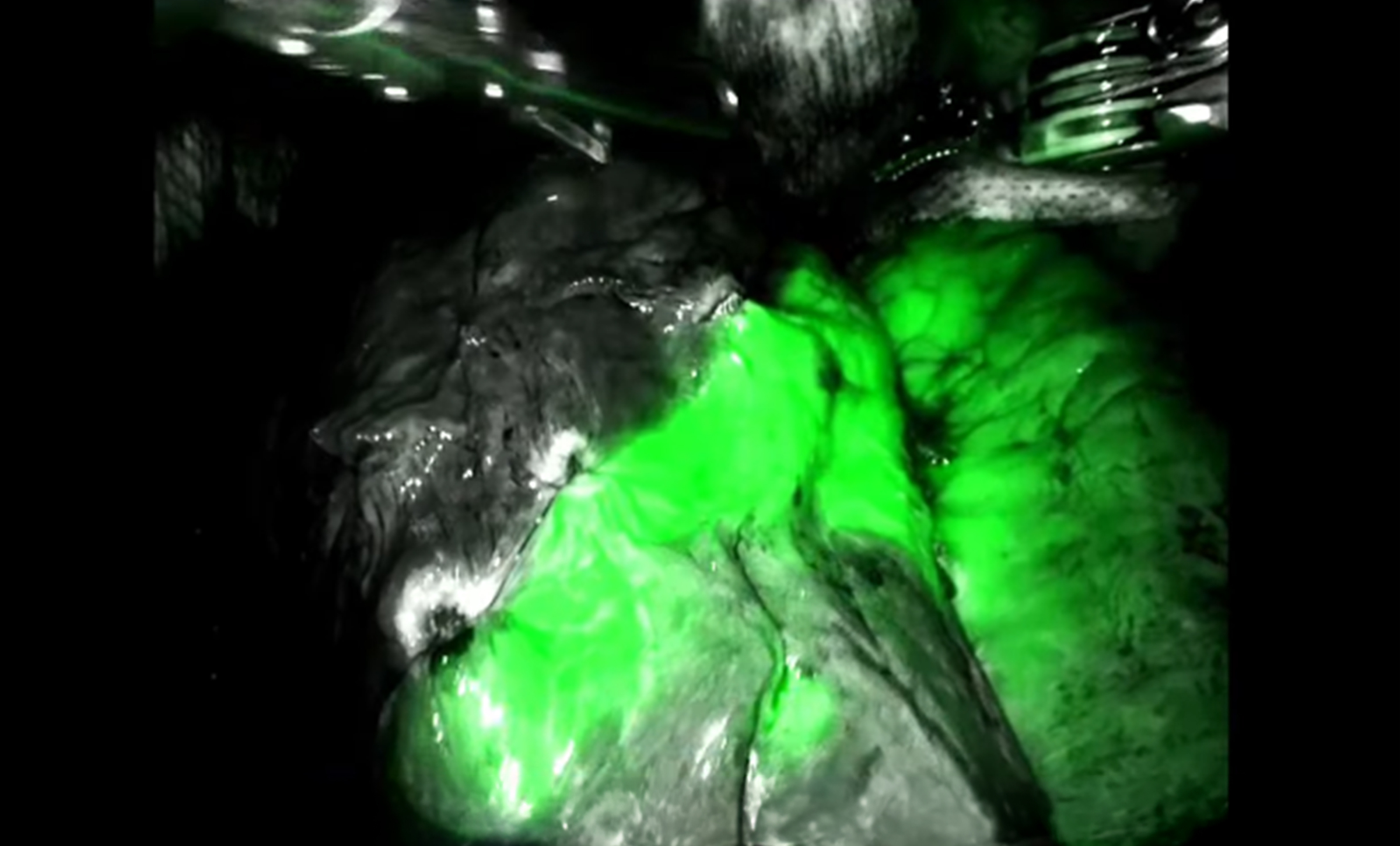 |
ICG technology helps differentiate between healthy lung segments (glowing) and diseased lung segments (darker areas). *Photo: Tam Anh General Hospital* |
Globocan 2022 reported that Vietnam had over 24,400 new cases and nearly 22,600 deaths due to lung cancer. Older adults, smokers, those working in toxic environments, or individuals with a family history of the disease have a higher risk. Lung cancer is trending younger and also appears in non-smoking women.
In its early stages, the disease often presents no clear symptoms, making it easy to overlook. Associate Professor Vinh advises everyone, especially high-risk groups, to undergo annual health check-ups and screenings as recommended by a doctor. Early detection increases the chances of cure, allows for less invasive techniques, maximizes lung preservation, and helps maintain physical condition and respiratory function after treatment.
Bao Anh
*Patient's name has been changed
| Readers can submit questions about cancer here for doctors to answer. |