Young athletes frequently experience ankle injuries, particularly in high-intensity sports requiring foot landings, according to Colonel, Doctor, Second-Degree Specialist Do Huu Luong. Doctor Luong, who heads the Sports Medicine Department at the Institute of Orthopedics and Traumatology, Military Hospital 175, shared this insight at a hospital-organized training session on 12/9, focusing on the application of endoscopic techniques for treating ankle pathologies.
The ankle's ligament system, particularly the thinner external ligaments, is prone to injury. Actions causing the foot to turn inward during landing frequently lead to sprains and ligament damage. Recently, sports like pickleball have reported a rise in such injuries, including sprains, ankle ligament damage, and Achilles tendon ruptures.
A common error among amateur athletes is neglecting warm-ups. Doctor Luong emphasizes the importance of warming up the body, focusing on the feet and ankles, and progressively increasing activity intensity. This approach helps the body adapt and prevents overexertion, especially when skill levels are not yet adequate.
"Players should avoid overextending themselves for the ball if their abilities are not up to the task, as this significantly elevates injury risk," the doctor stated.
Associate Professor, Doctor Phan Dinh Mung, Deputy Director of Military Hospital 175 and Director of the Institute of Orthopedics and Traumatology, advises athletes to stop activity if they experience pain or unusual symptoms. While muscle soreness or joint fatigue from overexertion typically resolves after one or two days of rest, persistent pain lasting over 3-4 days or restricted movement warrants a visit to a specialized medical center for assessment.
"Early diagnosis is crucial," Doctor Mung emphasized. "Some initial injuries present with only a few isolated symptoms, but if they are allowed to worsen, the treatment prognosis and recovery potential will be significantly diminished."
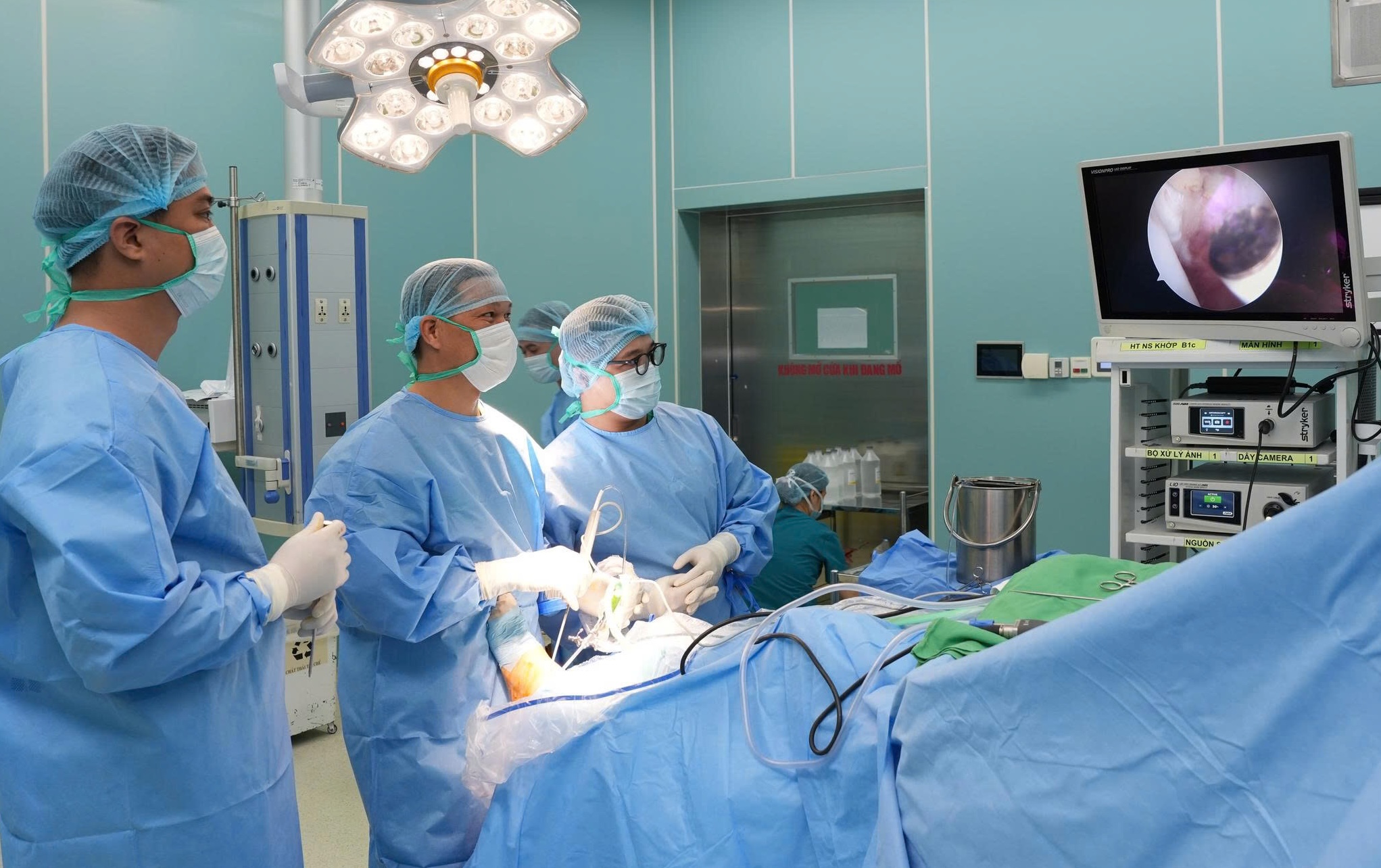 |
Doctors at Military Hospital 175 perform surgery during the training on applying endoscopic techniques to treat ankle pathologies on 12/9. *Photo: Hospital provided*.
Common sports injuries range from sprains, ligament damage, and cartilage damage to Achilles tendon ruptures and, with significant impact, fractures. Most sprains respond well to conservative treatment, often without surgery, allowing patients to recover within 6-8 weeks and resume sports activities. However, inadequate treatment increases the risk of recurrent injuries, potentially impairing ankle function and overall mobility.
Upon sustaining an injury, patients should prioritize rest, apply compression and cold packs, and immobilize the ankle appropriately. Severe pain or restricted movement necessitates a medical evaluation.
Endoscopic surgery for ankle ligament injuries is reserved for specific cases. Doctor Luong explains that patients typically undergo conservative treatment first. However, complete ligament ruptures or fractures might require early intervention based on their severity. Individuals with chronic ligament injuries should consult a specialized center for comprehensive assessment and to select the most suitable treatment.
Associate Professor Mung noted that Military Hospital 175 regularly trains its doctors on advanced endoscopic techniques for ankle pathologies. This method utilizes small incisions to insert instruments, allowing for precise observation and treatment of intra-articular injuries while minimizing soft tissue damage compared to traditional open surgery. The treatment aims not only to repair the injury but also to restore patient function, enabling a return to daily life and sports.
Le Phuong