The emergency team from Tam Anh General Clinic, District 7, arrived at the scene 7 minutes after the emergency call. The patient was conscious and able to communicate, but his lips were pale, breathing was difficult, and he experienced sharp chest pain. His blood oxygen saturation (SpO₂) was only 82% (normal is 95% or higher), pulse was rapid at 120 beats per minute, and blood pressure was around 120 mmHg. Doctor Phan Quang Dat, a first-degree specialist in emergency medicine, noted multiple sharp pain points along the left ribs, abdominal distension, and epigastric pain. A large abrasion, approximately 20x10 cm, with a clear tire mark, was visible on his right lower rib area. The patient also had numerous abrasions on both hands, cheeks, and chin.
Doctor Dat assessed that while the patient was conscious, his vital signs indicated a rapidly deteriorating and critical condition. He was placed in an ambulance, connected to a multi-parameter monitor to track SpO₂, ECG, blood pressure, and respiratory rate, and given oxygen. He was then transported to Tam Anh General Clinic, District 7, the nearest medical facility equipped for specialized emergency care.
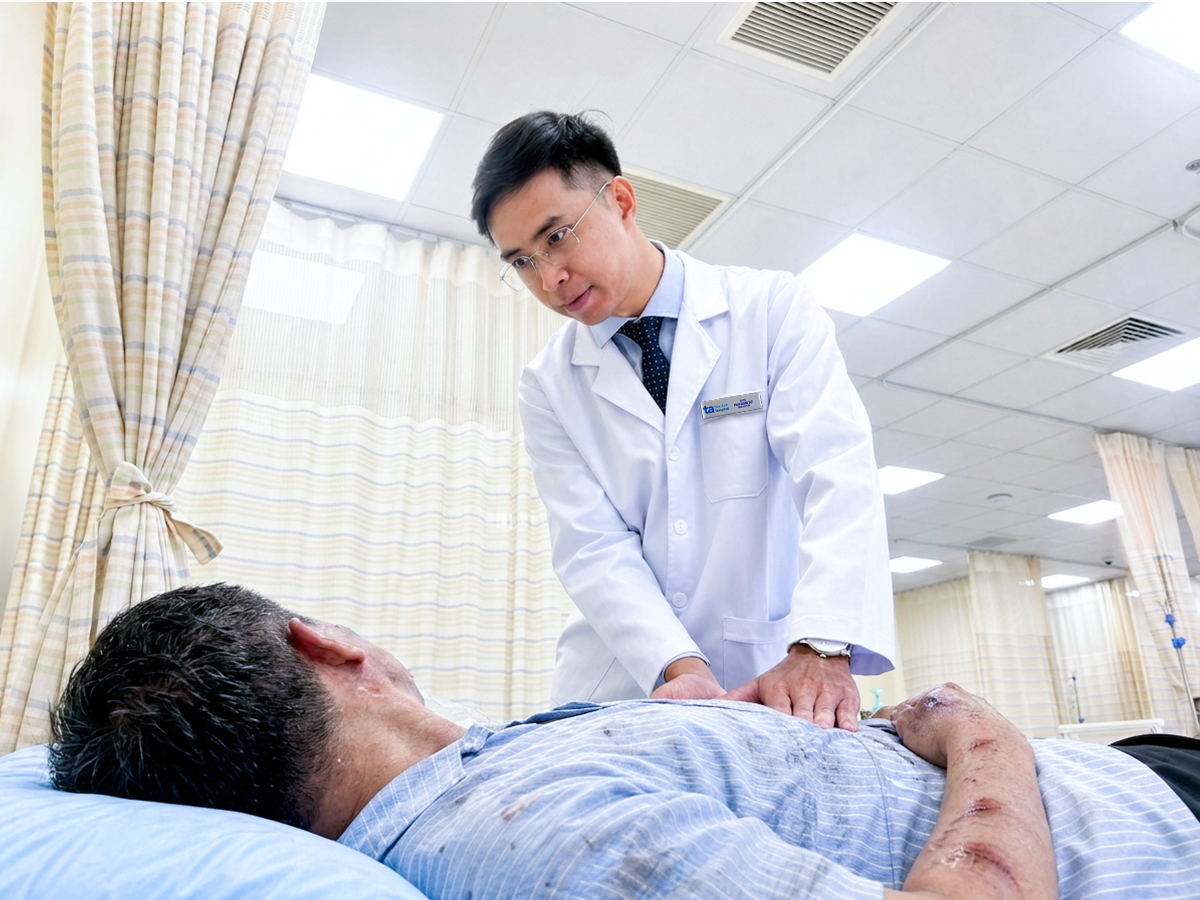 |
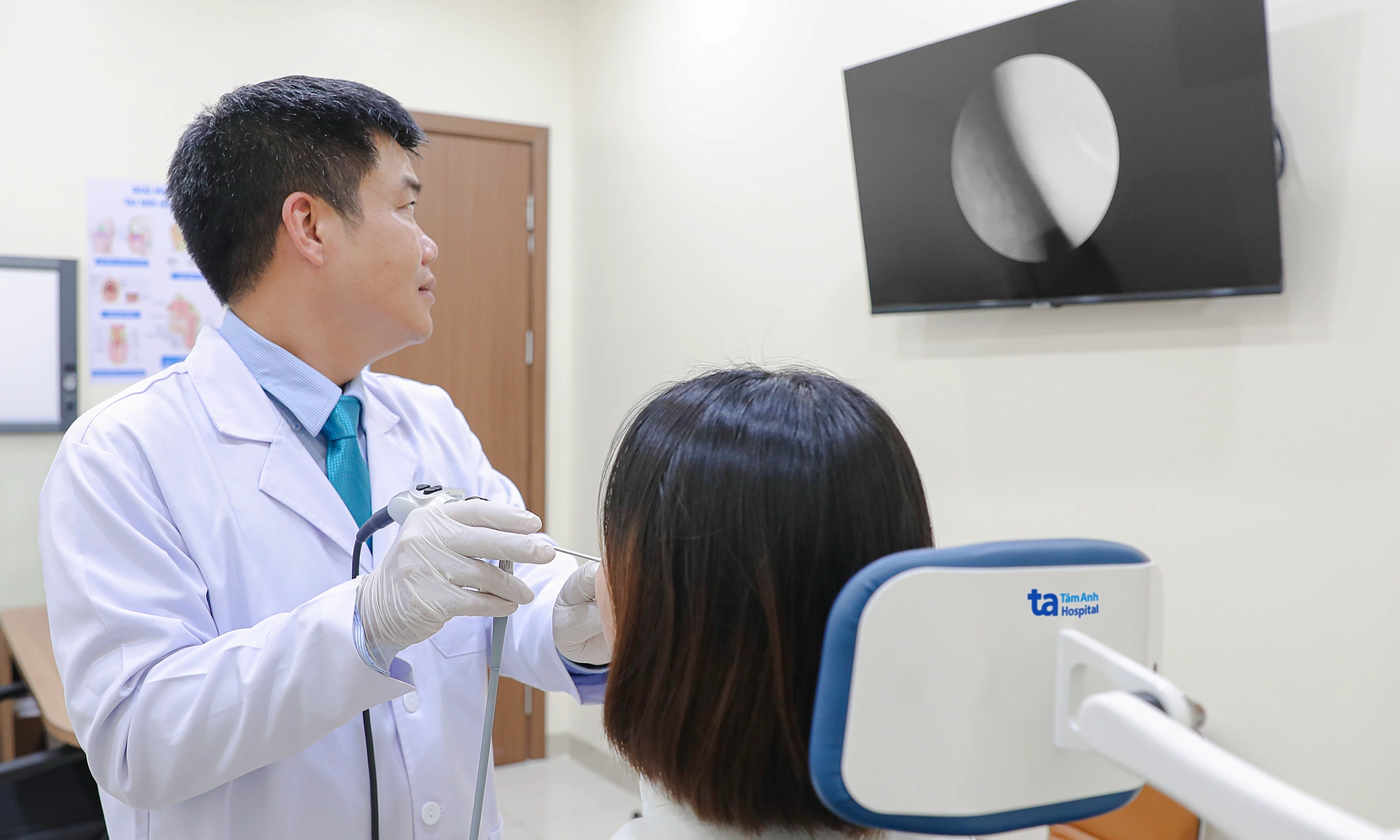
Doctor Dat assessing Anh Xieu's injuries. Photo: Tam Anh General Clinic, District 7 |
At the clinic, the patient's SpO₂ dropped to about 75%, his pulse surged from 120 to 130 then to 160 beats per minute, his lips turned blue, he was sweating profusely, his limbs were cold, and he showed signs of drowsiness. His Glasgow Coma Scale (GCS) score decreased from 15 to 6. According to Doctor Dat, this indicated a severe decline in consciousness, an inability to protect his airway, and a risk of cardiac arrest if not promptly managed.
Recognizing the risk of progressive respiratory and circulatory failure, the team immediately activated an in-hospital red alert. The patient underwent a comprehensive assessment and multi-specialty consultation. With a portable ultrasound machine at the bedside, doctors quickly scanned for internal injuries. He was diagnosed with severe polytrauma, respiratory failure, and a high risk of traumatic shock, along with chest and abdominal injuries. On-site ultrasound images suggested concurrent chest trauma, lung contusion, ruptured spleen, urethral injury, hemothorax, multiple rib fractures, and blunt abdominal trauma.
Doctors immediately inserted a specialized tube through his mouth into the trachea to maintain his airway and assist oxygen delivery to his lungs. For polytrauma patients, especially those with chest injuries, shock or respiratory failure can progress rapidly, making timely airway control critical for survival.
Once his airway was secured, doctors determined that Anh Xieu was stable enough for transfer to the nearest facility capable of surgical intervention for his internal injuries. Airway management and respiratory support were maintained throughout the transfer.
At the receiving hospital, Anh Xieu was confirmed to have a ruptured spleen and kidney. He was immediately taken for emergency surgery and then transferred to the Intensive Care Unit for continued treatment. His condition gradually stabilized, and he is now recovering.
According to Doctor Dat, polytrauma patients, especially those with suspected organ contusions or blunt trauma, can experience internal bleeding without clear external signs. Therefore, emergency teams must promptly identify risks through vital signs and provide timely treatment to prevent severe deterioration during transfer.
Nhu Ngoc
*Patient's name has been changed
| On 10/9 at 8 p.m., an online health consultation program titled "Emergency 24/7: Specialized Care from the First Minute: Expert Doctors - Multi-Specialty Consultation - High-Tech Equipment" will be broadcast on the channels of the Tam Anh General Hospital system. Master of Science Doctor Vo Duy Tuong and Doctor Phan Quang Dat, a first-degree specialist in emergency medicine from Tam Anh General Clinic, District 7, will participate in the consultation. Readers can submit questions here. |