Eng English
China 中国人

Eng English
China 中国人
  • News
  • World
  • Business
  • Entertainment
  • Sports
  • Law
  • Education
  • Health
  • Lifestyle
  • Travel
  • Science
  • Digital
  • Automobiles
  • Trở lại Thể thao
  • Health
Monday, 18/5/2026 | 08:02 GMT+7

Managing a safe pregnancy for women with epilepsy

Thom, 34, who developed epilepsy seven years ago after childbirth, successfully had a healthy second baby thanks to careful medication adjustment and close monitoring by doctors.

Thom visited Tam Anh General Hospital in Ho Chi Minh City last year for a pre-conception health check, having a history of epilepsy. Doctor Nguyen Thi Minh Duc, Head of the Neurology Department at the Neurology Center, explained that certain anti-epileptic medications can pose risks to the fetus, including neural tube defects, cleft lip and palate, blood clotting disorders, heart and spinal defects, and developmental delays. Seizures themselves can cause pregnant women to fall, leading to abdominal injuries, respiratory muscle spasms, or temporary cessation of breathing. These complications increase the risk of fetal distress, hemorrhage, miscarriage, or preterm birth, and can even be life-threatening.

A collaborative treatment plan was developed by specialists from the Neurology and Obstetrics and Gynecology Centers to control Thom's epilepsy while minimizing medication effects on the fetus.

Six months before conception, Doctor Duc advised Thom on an anti-epileptic drug considered safer for pregnancy. Throughout this monitoring period, Thom experienced no seizures, leading doctors to deem her fit for pregnancy. She was also prescribed high-dose folic acid to reduce the risk of neural tube defects in the fetus.
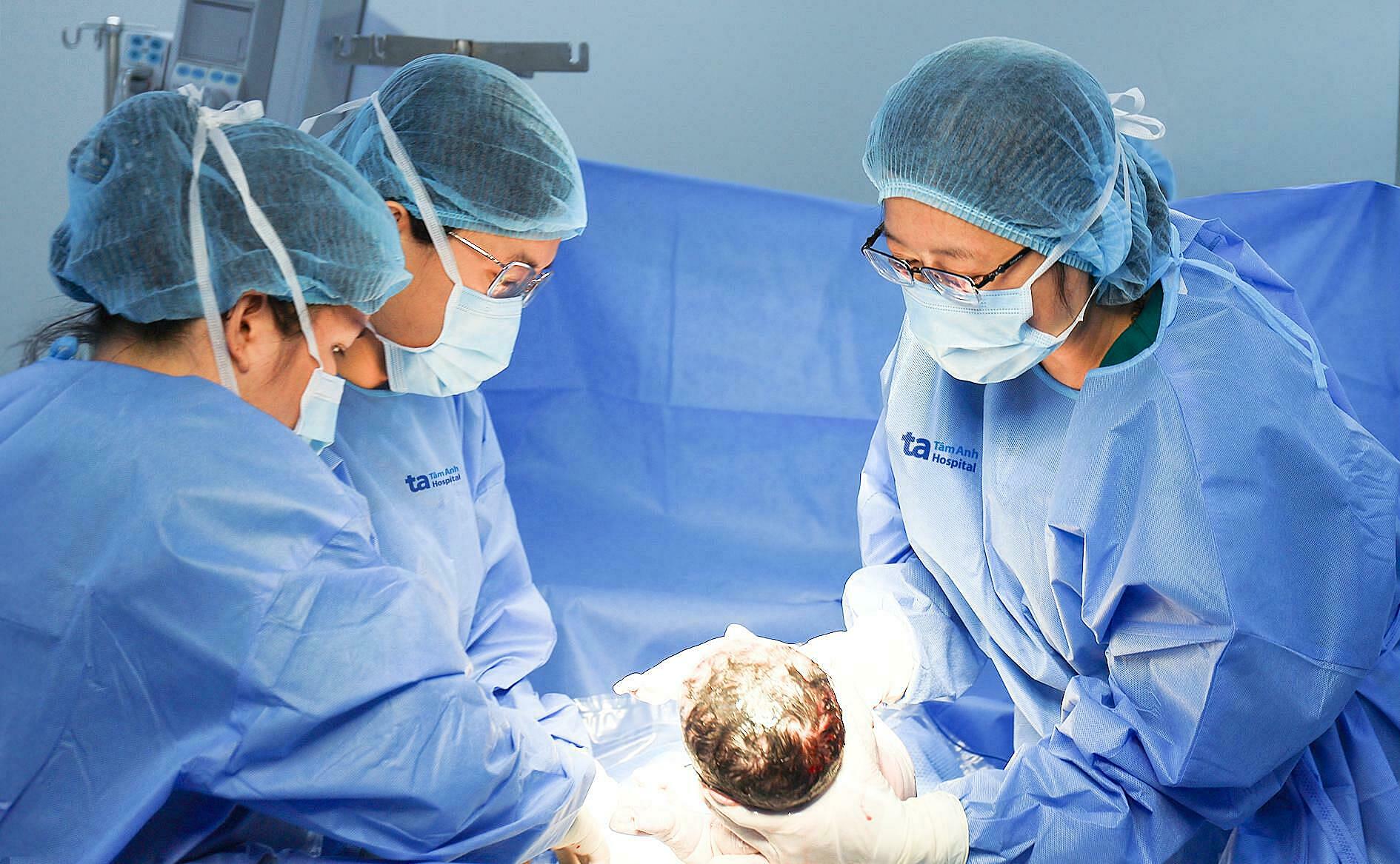
Doctor Nguyen Thi Yen Thu (right), Obstetrics and Gynecology Center, with the team performing a cesarean section for the patient. Photo: Tam Anh General Hospital

According to Doctor Duc, metabolic changes during pregnancy can lower anti-epileptic drug concentrations in the blood, increasing the risk of seizure recurrence. Consequently, Thom underwent regular blood tests and electroencephalogram (EEG) monitoring to adjust her medication as needed.

By the 11th week of pregnancy, an EEG revealed abnormal brain activity. Doctors increased Thom's medication dosage to prevent seizures, ensuring fetal safety.

Doctor Nguyen Thi Yen Thu of the Obstetrics and Gynecology Center noted that pregnant women with epilepsy face a higher risk of preeclampsia, gestational hypertension, gestational diabetes, and congenital abnormalities compared to others. Thom's health indicators were closely monitored, alongside regular prenatal ultrasounds to detect any fetal abnormalities.

During her third trimester, Thom developed polyhydramnios, increasing her risk of preterm birth and postpartum hemorrhage. Her doctors adjusted her nutrition and monitored her pregnancy frequently. At the 38th week, the medical team opted for a planned cesarean section due to the risk of seizures during labor. A healthy baby boy weighing 4.1 kg was delivered safely. Thom continued her epilepsy treatment, ensured adequate sleep, managed stress, and breastfed her baby normally.

Doctor Thu explained that most anti-epileptic drugs are excreted into breast milk at very low concentrations, making infant exposure almost negligible. To minimize the amount of medication the baby absorbed through milk, Thom received guidance on optimal breastfeeding times. If the baby showed signs of excessive drowsiness, fussiness, poor feeding, or slower development compared to peers, a specialist consultation would be necessary.
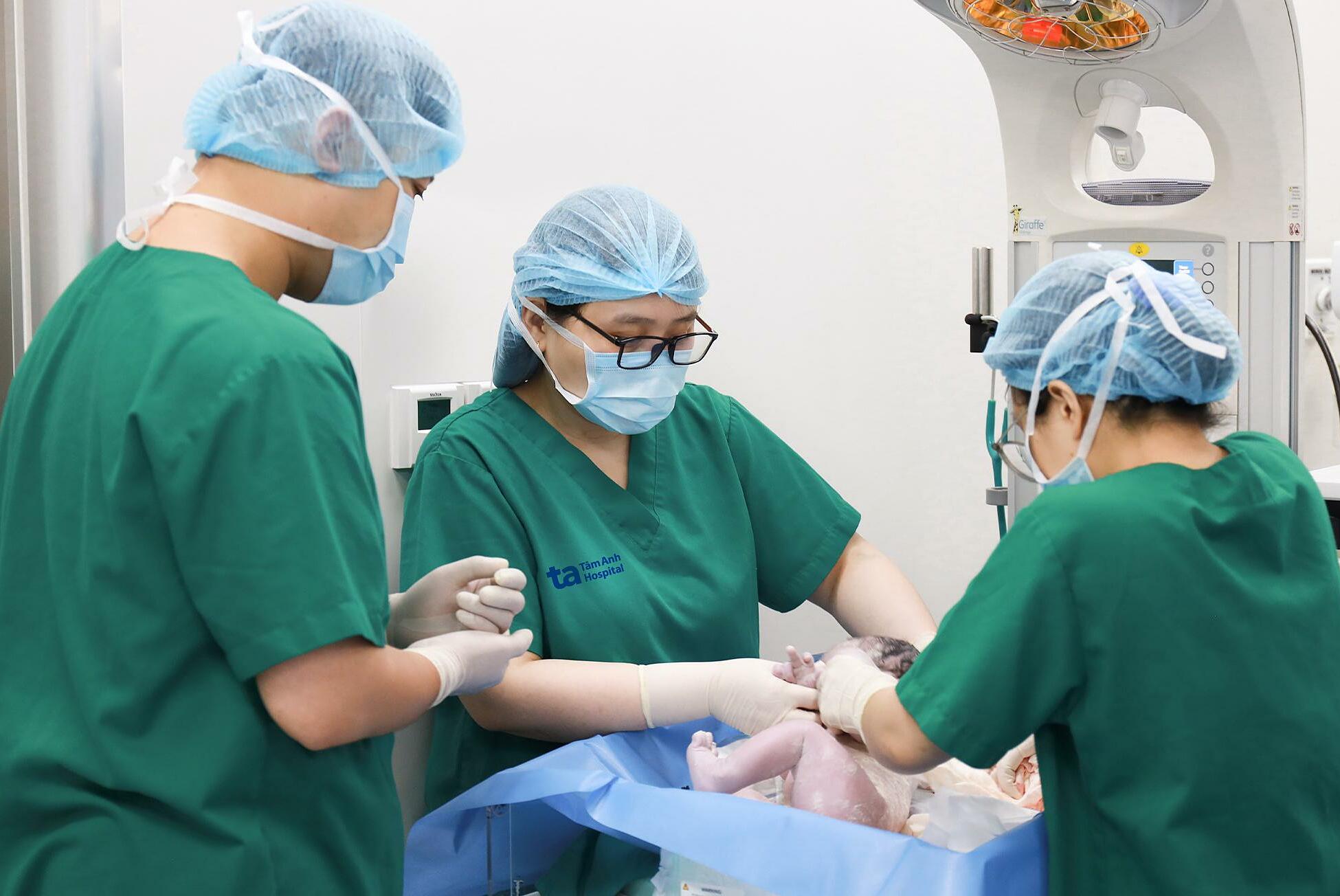
The newborn boy's health status was assessed by the Neonatal team immediately in the operating room. Photo: Tam Anh General Hospital

Doctor Duc affirmed that women with epilepsy can still have healthy pregnancies and babies with proper disease management before and during gestation. Patients planning pregnancy should seek specialist consultation early, adhere to their medication regimen, and attend follow-up appointments to prevent complications for both mother and child.

Ngoc Chau

*Patient's name has been changed.
By VnExpress: https://vnexpress.net/kiem-soat-thai-ky-an-toan-cho-thai-phu-dong-kinh-5074891.html
Tags: epileptic pregnant women pregnancy

News in the same category

End-stage renal failure due to hereditary polycystic kidney disease

End-stage renal failure due to hereditary polycystic kidney disease

Liu, 48, suffers from polycystic kidney disease, a condition shared by seven other family members, and has progressed to end-stage renal failure, requiring regular dialysis.

Doctor advises on first aid for children's falls

Doctor advises on first aid for children's falls

Children need immediate injury assessment, bleeding control, cold compresses, monitoring for severe symptoms, and prompt hospital intervention.

19-month-old girl severely bitten in face by dog

19-month-old girl severely bitten in face by dog

Two dogs fighting over food, one attacked a 19-month-old girl, biting her cheek, forehead, and temple.

Why WHO declared an international emergency over the Ebola outbreak

Why WHO declared an international emergency over the Ebola outbreak

The lack of an Ebola vaccine, conflict hindering outbreak control, and the risk of pathogen spread prompted WHO to declare the outbreak an international emergency.

5 fruits and vegetables for healthy eyes to eat weekly

5 fruits and vegetables for healthy eyes to eat weekly

Eating a variety of red, orange, and yellow fruits and vegetables, such as pumpkin, corn, and persimmons, can provide essential nutrients for eye health and reduce the risk of eye diseases.

Should you drink smoothies instead of breakfast for weight loss?

Should you drink smoothies instead of breakfast for weight loss?

I plan to drink smoothies instead of breakfast to lose weight. Is this method effective? (Thuy Dung, 30)

Dizziness, lightheadedness – warning signs of cardiovascular disease

Dizziness, lightheadedness – warning signs of cardiovascular disease

Dizziness and lightheadedness, especially when accompanied by palpitations, a rapid heartbeat, or chest pain, can signal underlying conditions such as arrhythmia, coronary artery disease, or heart failure.

Resection of necrotic small intestine due to hernia

Resection of necrotic small intestine due to hernia

Mrs. Luu, 70 years old, experienced severe upper abdominal pain and vomited blood due to a strangulated hernia causing intestinal obstruction. Doctors performed surgery to resect nearly 80 cm of intestine to prevent necrosis.

What happens to the body when you consistently skip breakfast?

What happens to the body when you consistently skip breakfast?

Regularly skipping breakfast disrupts hunger hormones, often leading to compensatory eating later in the day, increased fat accumulation, and a heightened risk of overweight, diabetes, and cardiovascular diseases.

Syncope due to overactive autonomic nervous system

Syncope due to overactive autonomic nervous system

Ms. Trang, 51, experienced dizziness, sweating, and then fainted after a 3-minute gym session; doctors diagnosed an overactive autonomic nervous system causing a drop in blood pressure.

Eng English
China 中国人
  • News
  • World
  • Business
  • Entertainment
  • Sports
  • Law
  • Education
  • Health
  • Lifestyle
  • Travel
  • Science
  • Digital
  • Automobiles
FPT Tower, 10 Pham Van Bach Street, Dich Vong Ward,
Cau Giay District, Hanoi, Vietnam
Email: contacts@vnportal.net
Tel: 028 7300 9999 - Ext 8556
Advertise with us: 090 293 9644
Register
© Copyright 2026 vnnow.net. All rights reserved.
Terms of use Privacy policy Cookies